 Skip to content

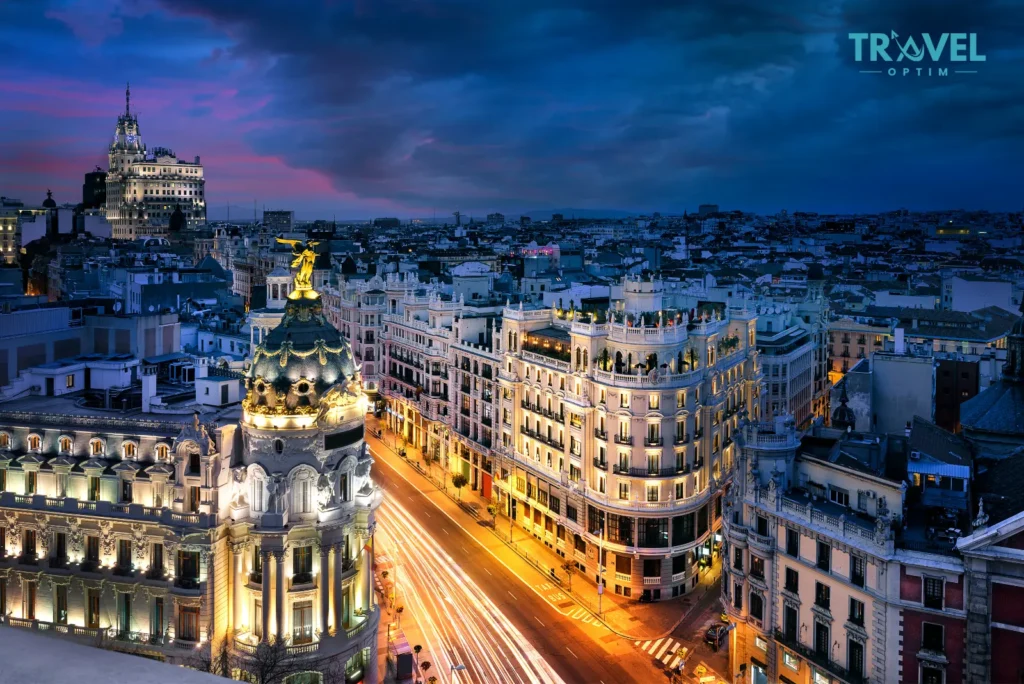
Planning to visit Madrid for the first time and wondering which places you should explore first? Spain’s capital is known for its royal heritage, historic squares, world-famous museums, beautiful parks, and lively neighborhoods.
With so much to discover, choosing what to see can be challenging, especially when your time is limited. From iconic landmarks and museums to local markets and historic neighborhoods, how do you decide which attractions in Madrid are truly worth visiting?
To help you plan your trip, I’ve selected and ranked 15 must-see places in Madrid, based on their importance for first-time visitors to the Spanish capital.
For each attraction, you’ll find an overview of its main highlights and practical information to help you plan your visit.
Whether you have just one day, a weekend, or several days in Madrid, this guide will help you prioritize your sightseeing and create an itinerary that suits your interests.
Discover the 15 must-see attractions in Madrid, ranked in order of priority for your first visit.
Only have one day to explore Madrid?
Check out my guide, Madrid in One Day on Foot: Optimized Walking Itinerary and Interactive Map, to discover the city’s must-see attractions along a walking route of approximately 9 km (5.6 miles).
- 1 – Puerta del Sol: Madrid’s Historic and Geographic Heart
- 2- Plaza Mayor : la plus célèbre place historique de Madrid
- 3 – Royal Palace: Spain’s Most Impressive Royal Residence
- 4 – Almudena Cathedral: Madrid’s Main Cathedral
- 5 – The Art Triangle: One of the World’s Greatest Museum Districts
- 6 – Gran Vía: Madrid’s Most Famous Avenue
- 7 – El Retiro Park: Madrid’s Green Oasis
- 8 – Puerta de Alcalá: One of Madrid’s Most Iconic Landmarks
- 9 – Plaza de Cibeles: Madrid’s Monumental Square
- 10 – Temple of Debod: Madrid’s Most Unexpected Monument
- 11 – Santiago Bernabéu Stadium: The Home of Madrid Football
- 12 – Las Ventas Bullring: Spain’s Most Famous Bullring
- 13 – Plaza de España: One of Madrid’s Most Iconic Squares
- 14 – Plaza de Oriente: One of the Best Views of the Royal Palace
- 15 – Mercado de San Miguel: Madrid’s Most Famous Food Market
- Overview Map of Madrid’s 15 Must-See Attractions
- In Conclusion
- Plan Your Trip with the TravelOptim Madrid App
1 – Puerta del Sol: Madrid’s Historic and Geographic Heart
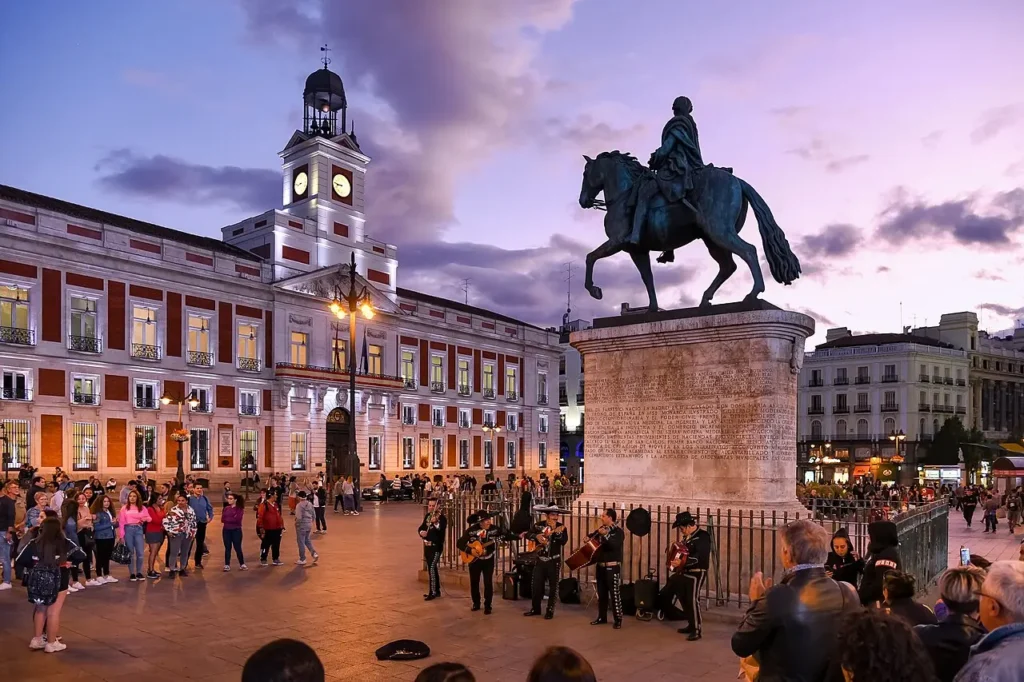
If you had to choose just one place to begin exploring Madrid, Puerta del Sol would undoubtedly be the best place to start. A true hub of the Spanish capital, this vast square is a popular meeting point for locals, the setting of numerous historic events, and one of the liveliest places in the city. Almost every first visit to Madrid passes through here, making it the number-one must-see on this list.
Its name, meaning “Gate of the Sun,” dates back to the Middle Ages, when one of the gates in Madrid’s old city walls stood at this location. Over the centuries, the square gradually became a political, economic, and social center of the capital. Even today, it remains an important reference point for Spain’s road network thanks to the famous Kilómetro Cero (Kilometer Zero), from which distances on the country’s national roads are traditionally measured. Puerta del Sol is also famous for Spain’s televised New Year’s Eve celebrations, when thousands of people gather in front of the clock on the Casa de Correos to eat the traditional twelve grapes at midnight.
Several iconic landmarks around the square are worth a closer look. The most famous is undoubtedly the Statue of the Bear and the Strawberry Tree (El Oso y el Madroño), Madrid’s official symbol and a popular meeting point. You can also admire the Casa de Correos, easily recognizable by its historic clock, as well as the equestrian statue of King Charles III, a monarch closely associated with the major transformations and modernization of Madrid during the 18th century. Take a moment to simply enjoy the constant energy of the square, with street performers, musicians, locals, and travelers passing through throughout the day.
Jorge Franganillo, CC BY 2.0, via Wikimedia Commons
Practical Information
📍 Neighborhood: Centro
🚇 Metro: Sol (Lines 1, 2, and 3)
⏱️ Recommended time: 20 to 45 minutes
🎟️ Admission: Free
My TravelOptim Tip
Take a photo with your feet on the Kilómetro Cero (Kilometer Zero) plaque, then head toward Plaza Mayor along Calle Mayor. It’s the most logical route for exploring Madrid’s historic center.
2- Plaza Mayor : la plus célèbre place historique de Madrid
2 – Plaza Mayor: Madrid’s Most Famous Historic Square
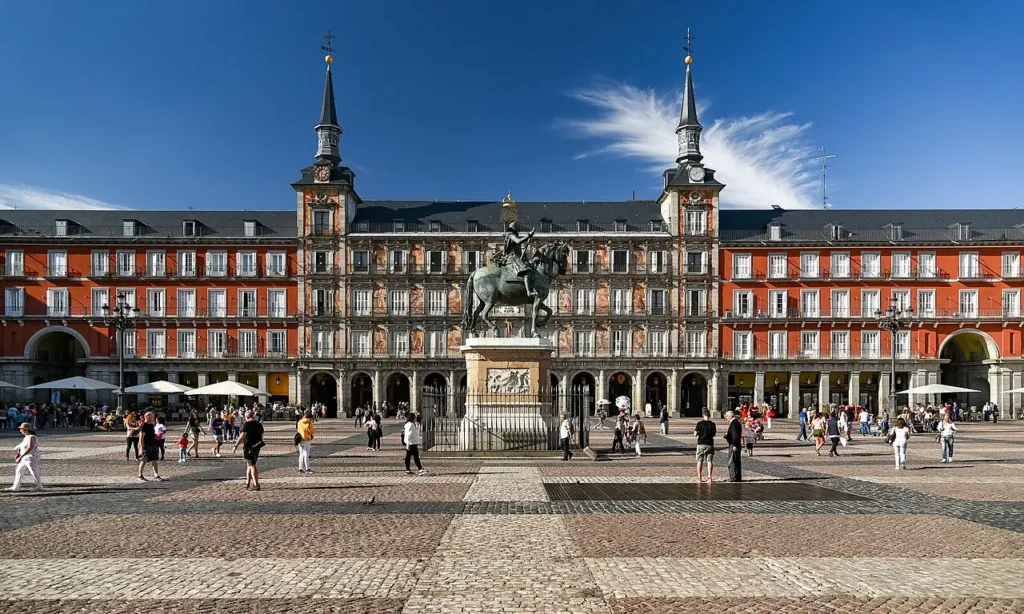
No trip to Madrid would be complete without a visit to Plaza Mayor. With its uniform red façades, elegant arcades, and lively atmosphere, this square is one of the most iconic landmarks in the Spanish capital. Located just a short walk from Puerta del Sol, it has been one of Madrid’s main gathering places for centuries.
The present-day square was built in the early 17th century during the reign of Philip III, whose equestrian statue now stands at the center of the plaza. Throughout its history, Plaza Mayor has hosted markets, royal celebrations, bullfights, religious ceremonies, and even trials during the Spanish Inquisition. Several fires partially destroyed the square over the centuries before it was rebuilt into the form you see today.
The main attraction is the square itself. Take the time to admire its nine entrances, the arcades surrounding the plaza, the magnificent Casa de la Panadería, easily recognizable by its colorful frescoes, and the equestrian statue of Philip III at the center of Plaza Mayor. Café terraces and street performers also contribute to the square’s unique atmosphere.
Jorge Franganillo, CC BY 2.0, via Wikimedia Commons

Practical Information
📍 Neighborhood: Los Austrias
🚇 Metro: Sol (Lines 1, 2, and 3) or Ópera (Lines 2, 5, and R)
⏱️ Recommended time: 20 to 45 minutes
🎟️ Admission: Free
My TravelOptim Tip
While you’re here, try a bocadillo de calamares, Madrid’s iconic fried calamari sandwich. Several well-known spots serving this local specialty can be found in the streets surrounding Plaza Mayor.
3 – Royal Palace: Spain’s Most Impressive Royal Residence
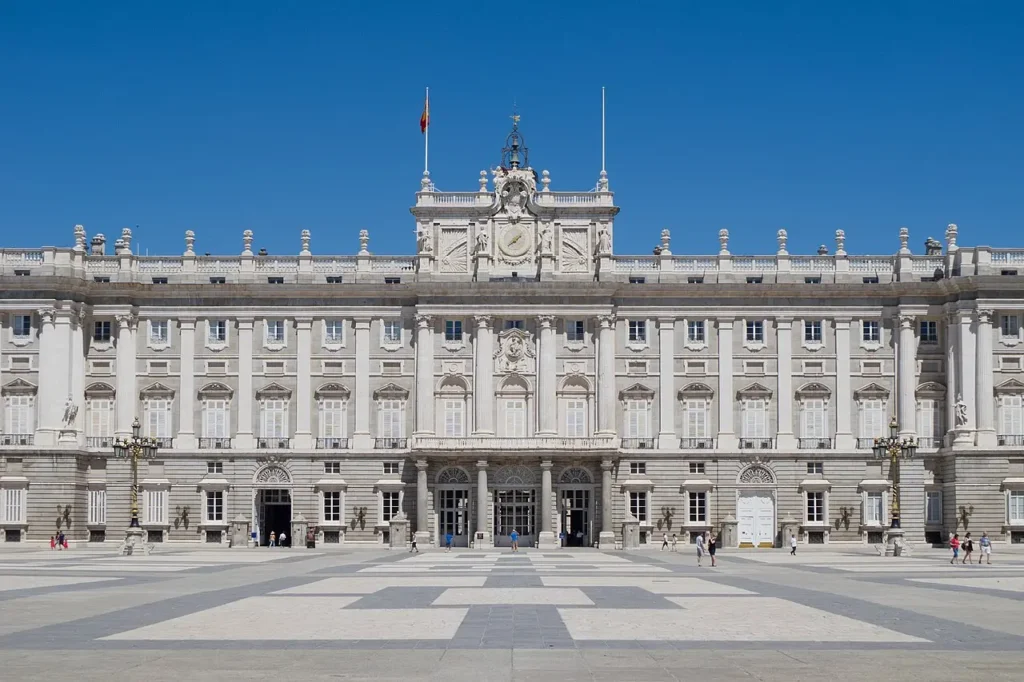
Overlooking Madrid’s historic center, the Royal Palace of Madrid is one of the most spectacular landmarks in the Spanish capital. With its monumental scale, majestic architecture, and richly decorated rooms, it is one of the most memorable places to visit on a first trip to Madrid. Although the Spanish royal family no longer lives there, the palace remains an important symbol of the Spanish monarchy.
The palace’s history dates back to the 18th century. After the former Royal Alcázar of Madrid was destroyed by fire in 1734, King Philip V ordered the construction of a new royal residence worthy of Europe’s great courts. Construction continued for several decades, eventually creating one of the largest royal palaces in Western Europe. Today, the palace is still used for certain official state ceremonies.
Inside, several rooms are particularly worth seeing. Highlights include the Grand Staircase, Throne Room, Hall of the Guards, Royal Chapel, and Hall of Mirrors. The royal apartments also offer a fascinating glimpse into the splendor of the Spanish monarchy through their elaborate decorations, works of art, and historic furnishings. Outside, the vast Plaza de la Armería offers impressive views of the palace’s main façade.
Carlos Delgado, CC BY-SA 3.0, via Wikimedia Commons

Practical Information
📍 Neighborhood: Los Austrias
🚇 Metro: Ópera (Lines 2, 5, and R)
⏱️ Recommended time: 1 hr 30 min to 2 hr 30 min
🎟️ Admission: From €14 (depending on the type of visit)
My TravelOptim Tip
Before or after your visit, head to Plaza de la Armería, between the Royal Palace and Almudena Cathedral. It offers one of the best viewpoints for photographing both landmarks in a single shot.
Cette conversation vous a-t-elle été utile jusqu’ici ?
4 – Almudena Cathedral: Madrid’s Main Cathedral
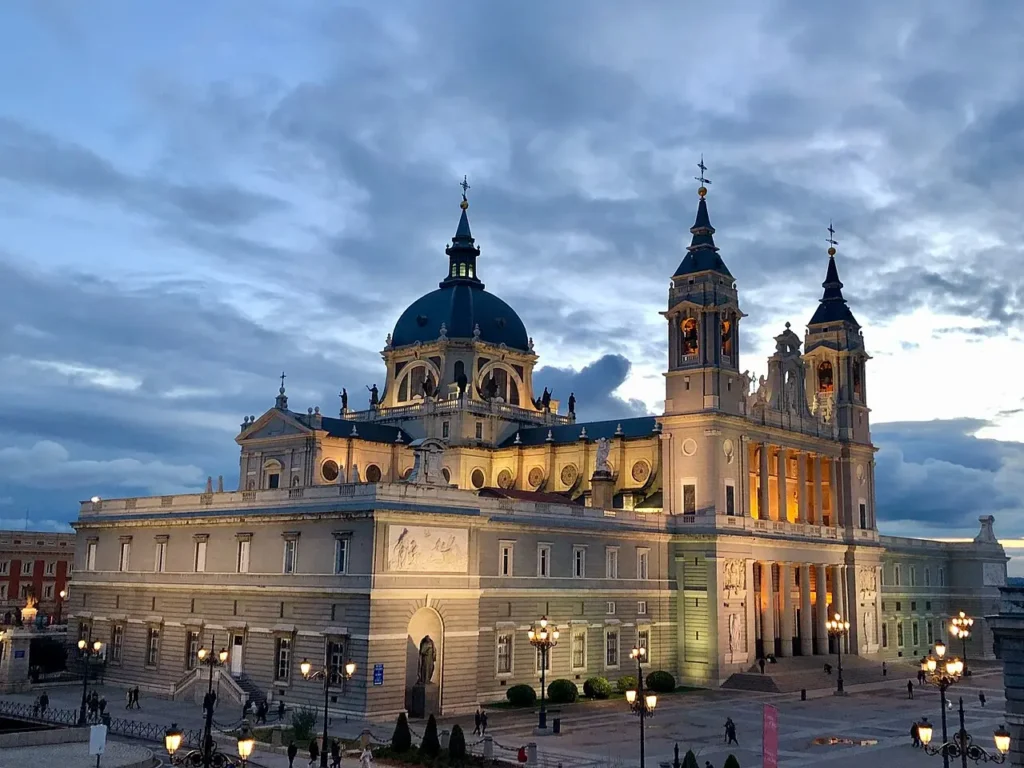
Located directly opposite the Royal Palace, Almudena Cathedral is Madrid’s most important religious landmark. Although much newer than Europe’s great historic cathedrals, it impresses visitors with its size, elegant architecture, and exceptional location in the heart of the Spanish capital. A visit offers a different perspective on Madrid, combining religious heritage, sacred art, and panoramic views over the historic center.
The cathedral’s history is relatively recent. Construction began in the late 19th century but continued for more than a hundred years due to numerous interruptions. It was finally consecrated in 1993 by Pope John Paul II, marking a historic occasion as it became the first Spanish cathedral to be consecrated by a pope. Its name comes from the Virgin of Almudena, the patron saint of Madrid, who holds a special place in the city’s religious traditions.
The interior stands out for its bright, modern design, which is quite different from traditional Gothic cathedrals. Visitors can admire the colorful stained-glass windows, the main altar, the Neo-Romanesque crypt, and several chapels dedicated to different saints. One of the highlights is the dome and its panoramic terrace, offering impressive views of the Royal Palace, Plaza de la Armería, and the rooftops of Madrid’s historic center.
Riozujar, CC BY-SA 4.0, via Wikimedia Commons
Practical Information
📍 Neighborhood: Los Austrias
🚇 Metro: Ópera (Lines 2, 5, and R)
⏱️ Recommended time: 45 minutes to 1 hr 30 min
🎟️ Admission: Cathedral: free (donation suggested) – Dome and museum: from €7
My TravelOptim Tip
Don’t miss the panoramic dome. For just a few euros, you’ll get one of the best views of the Royal Palace and Madrid’s historic center.
5 – The Art Triangle: One of the World’s Greatest Museum Districts
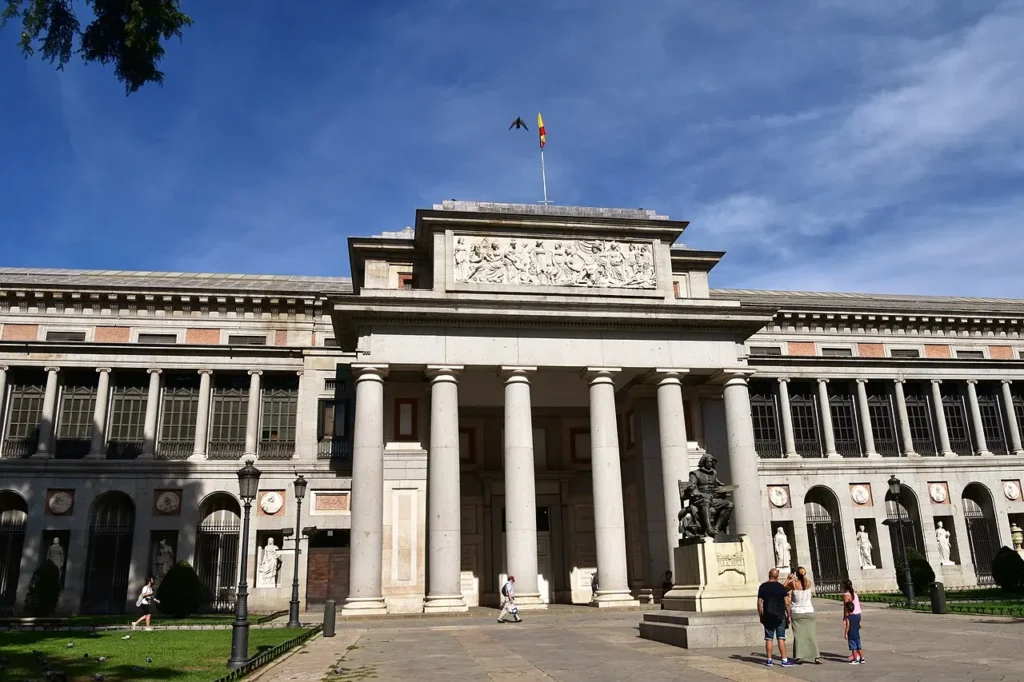
Madrid is home to one of Europe’s richest cultural scenes, but if there is one area to prioritize for discovering Spanish and international art, it is undoubtedly the Art Triangle. This unique cultural district brings together three major museums located within just a few minutes’ walk of one another: the Prado Museum, Reina Sofía Museum, and Thyssen-Bornemisza Museum. Whether you’re an art lover or simply curious, the Art Triangle is a must-see on a first trip to Madrid.
The origins of the Art Triangle are closely linked to the cultural development of Paseo del Prado, one of Madrid’s great historic avenues. Over the decades, three complementary institutions have come together in this area, covering several centuries of artistic creation. Together, they offer the opportunity to discover Spanish masters, European masterpieces, and major modern and contemporary art movements. Few cities in the world offer such a remarkable concentration of important works of art within such a small area.
Each museum has its own distinct identity. The Prado Museum is renowned for its collections of works by Velázquez, Goya, Rubens, and El Greco, as well as its iconic masterpiece, Las Meninas. The Reina Sofía Museum is home to Picasso’s famous Guernica, along with works by Dalí and Miró. Finally, the Thyssen-Bornemisza Museum perfectly complements the other two with a collection spanning nearly eight centuries of European art history. Even if your time in Madrid is limited, visiting at least one of these three museums will help you understand why the city ranks among the world’s great cultural capitals.
Richard Mortel from Riyadh, Saudi Arabia, CC BY 2.0, via Wikimedia Commons

Practical Information
📍 Neighborhood: Paseo del Prado
🚇 Metro: Banco de España (Line 2) or Estación del Arte (Line 1)
⏱️ Recommended time: 1 hr 30 min to 2 hr 30 min per museum
🎟️ Admission: From €15 per museum
My TravelOptim Tip
If you only have time for one museum on your first visit, I recommend prioritizing the Prado Museum. It is Madrid’s most iconic museum and offers an excellent introduction to the history of Spanish art.
6 – Gran Vía: Madrid’s Most Famous Avenue
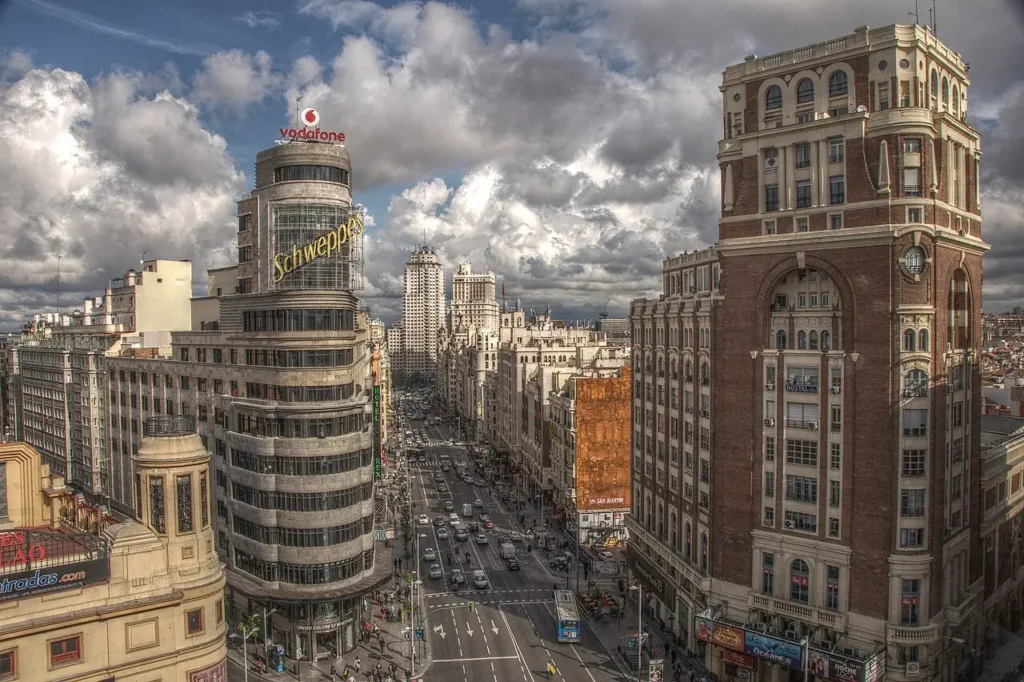
Often nicknamed “Madrid’s Broadway,” Gran Vía is the city’s most iconic avenue. Lined with impressive buildings, theaters, shops, hotels, and restaurants, it perfectly captures the modern and lively side of the Spanish capital. Whether you come for shopping, architecture, or simply to enjoy the atmosphere, Gran Vía is a must-see on any first visit to Madrid.
Construction began in the early 20th century as part of an ambitious project to modernize the city center and improve connections between different areas of Madrid. This major urban development project profoundly transformed the city and created one of Spain’s most prestigious avenues. Over the years, Gran Vía became the heart of Madrid’s entertainment scene, with cinemas, theaters, and major international brands establishing themselves along the avenue.
Walking along Gran Vía gives you the chance to admire several remarkable buildings, including the famous Metrópolis Building, easily recognizable by its black dome topped with a golden statue. Farther along stands the Telefónica Building, considered one of Europe’s earliest skyscrapers. Don’t miss the Carrión Building (Capitol) on Plaza del Callao, famous for its enormous illuminated Schweppes sign, which has become one of Madrid’s most photographed landmarks. Shoppers will find plenty of stores along the avenue, while architecture enthusiasts can admire its Art Deco, Neo-Baroque, and Modernist façades.
Español: Felipe Gabaldón, CC BY 2.0, via Wikimedia Commons
Practical Information
📍 Neighborhood: Centro
🚇 Metro: Gran Vía (Lines 1 and 5) or Callao (Lines 3 and 5)
⏱️ Recommended time: 1 to 2 hours
🎟️ Admission: Free
My TravelOptim Tip
Head up to one of Gran Vía’s rooftop terraces toward the end of the day. Watching the sunset over Madrid’s rooftops is one of the best experiences in the city center, and several viewpoints are free or relatively inexpensive.
7 – El Retiro Park: Madrid’s Green Oasis
Listed as a UNESCO World Heritage Site together with Paseo del Prado, El Retiro Park is Madrid’s most famous green space. A true oasis in the heart of the capital, it offers a welcome break between visits to monuments and museums. With its wide shaded paths, beautifully maintained gardens, fountains, and monuments, it is one of the favorite places of both locals and visitors.
Originally, El Retiro was part of the private gardens of the Spanish monarchy. Created in the 17th century for the royal court, it gradually became a public park in the 19th century. Today, its 125 hectares welcome walkers, runners, street performers, and families in a particularly pleasant setting. Its historical and landscape significance makes it one of Europe’s most remarkable urban parks.
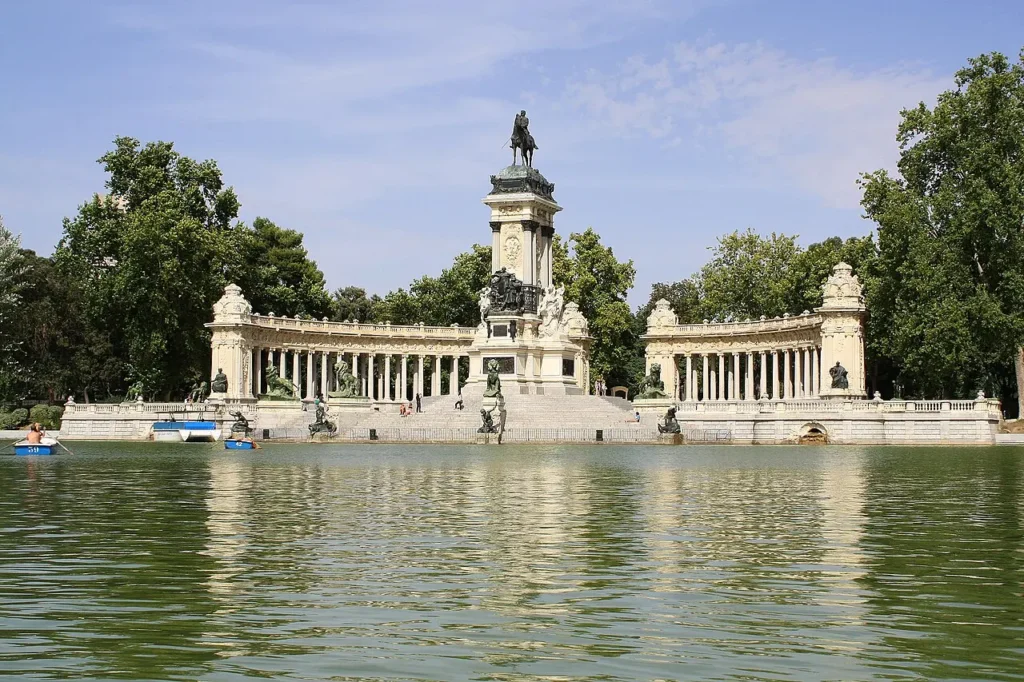
The park is home to several iconic landmarks. The best known is undoubtedly the Great Pond (Estanque Grande), where you can rent a rowboat while enjoying views of the monument dedicated to King Alfonso XII. Don’t miss the spectacular Crystal Palace (Palacio de Cristal) either, an elegant glass pavilion inspired by London’s Crystal Palace. The Rosaleda rose garden, numerous sculptures, fountains, and tree-lined paths are also well worth exploring.
Luis Granada, CC BY-SA 3.0 ES, via Wikimedia Commons
Practical Information
📍 Neighborhood: Retiro
🚇 Metro: Retiro (Line 2)
⏱️ Recommended time: 1 hr 30 min to 3 hours
🎟️ Admission: Free (boat rental costs extra)
My TravelOptim Tip
If the line isn’t too long, rent a rowboat on the Great Pond. It’s one of the most enjoyable activities in the park and one of the best spots for photographing the Monument to Alfonso XII
8 – Puerta de Alcalá: One of Madrid’s Most Iconic Landmarks
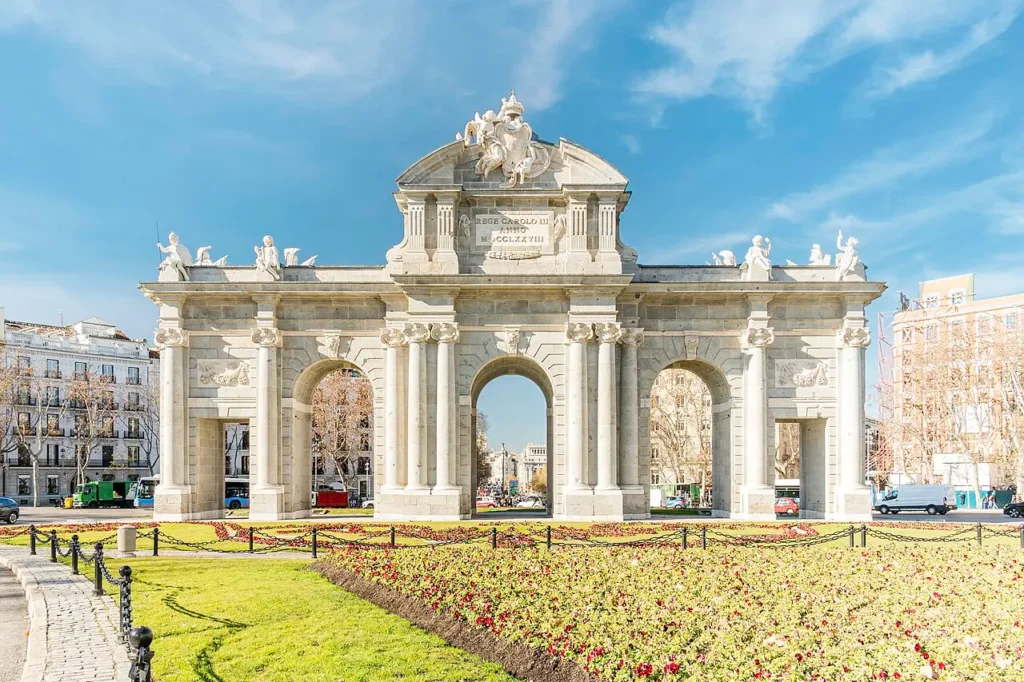
Majestic and elegant, Puerta de Alcalá is one of Madrid’s most recognizable landmarks. Located near the entrance to El Retiro Park, this imposing monumental gate has welcomed visitors to the city for more than two centuries. Often compared to a triumphal arch, it is one of the most photographed monuments in the Spanish capital and a must-see on any first visit to Madrid.
Puerta de Alcalá was commissioned by King Charles III and inaugurated in 1778. At the time, it marked one of the main entrances to Madrid for travelers arriving from eastern Spain. Designed by Italian architect Francesco Sabatini, it is considered one of the finest examples of Neoclassical architecture in the country. It also predates several similar European monuments, including the Arc de Triomphe in Paris.
The monument is impressive for both its size and the richness of its architectural details. Its five openings, columns, decorative sculptures, and royal ornaments reflect Charles III’s ambition to modernize Madrid. Puerta de Alcalá is particularly striking when illuminated in the evening. From the surrounding area, you can also enjoy attractive views toward El Retiro Park and Madrid’s grand boulevards.
Fernando Pascullo, CC BY-SA 4.0, via Wikimedia Commons
Practical Information
📍 Neighborhood: Retiro
🚇 Metro: Retiro (Line 2)
⏱️ Recommended time: 15 to 30 minutes
🎟️ Admission: Free
My TravelOptim Tip
For the best photo, position yourself on the El Retiro Park side toward the end of the day. From there, you can capture Puerta de Alcalá with its architectural details beautifully lit and avoid much of the backlighting.
9 – Plaza de Cibeles: Madrid’s Monumental Square
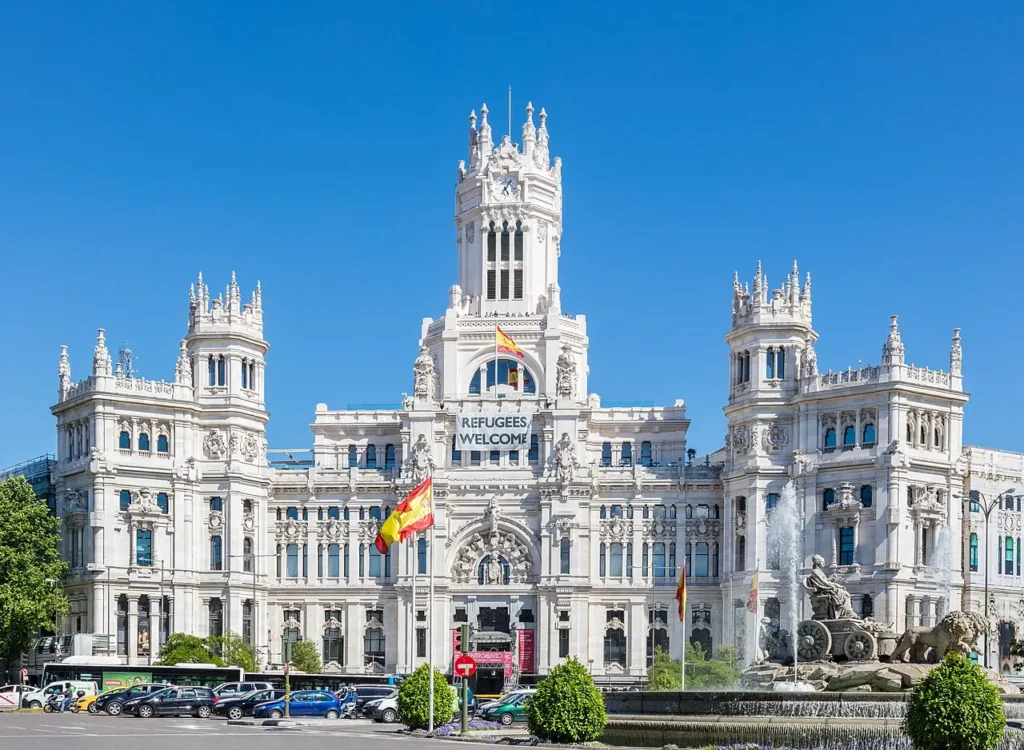
With its majestic fountain and iconic buildings, Plaza de Cibeles is one of Madrid’s most recognizable landmarks. Located at the intersection of several major avenues, it marks the transition between the historic center, the Salamanca district, and Paseo del Prado. Its elegant architecture and importance in Madrid’s cultural life make it a must-see on any first visit to the city.
The square takes its name from Cybele, the ancient goddess depicted in the famous fountain at its center, which dates back to the late 18th century. Over time, Plaza de Cibeles has become one of the symbols of the Spanish capital. It is also famous as the traditional gathering place for Real Madrid supporters celebrating the club’s major victories.
The main attraction is, of course, the Cibeles Fountain, depicting the goddess Cybele riding a chariot pulled by two lions. Several remarkable buildings surround the square, including the spectacular Palacio de Cibeles, originally built as Madrid’s main post office and now home to Madrid City Hall. You can also admire the Palacio de Linares and the Bank of Spain, which add to the monumental character of the square. Together, they create one of Madrid’s most impressive urban landscapes.
Diego Delso, CC BY-SA 4.0, via Wikimedia Commons
Practical Information
📍 Neighborhood: Centro
🚇 Metro: Banco de España (Line 2)
⏱️ Recommended time: 20 to 45 minutes
🎟️ Admission: Free
My TravelOptim Tip
Head up to the observation deck at Palacio de Cibeles. The panoramic view over Gran Vía, Cibeles Fountain, and Madrid’s rooftops is one of the best in the city, and admission is very affordable.
10 – Temple of Debod: Madrid’s Most Unexpected Monument
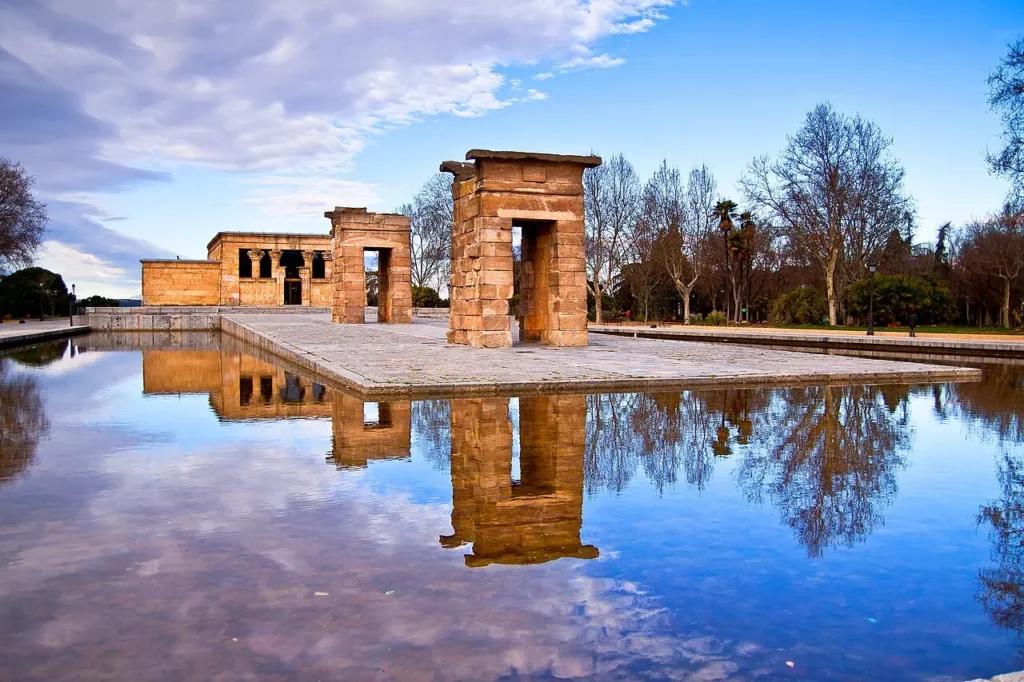
Few visitors expect to find an authentic ancient Egyptian temple in the heart of Madrid. Yet the Temple of Debod is one of the most unusual landmarks in the Spanish capital. Set on a hill overlooking the western side of the city, it attracts history enthusiasts, photographers, and visitors looking for one of Madrid’s best sunset spots.
The temple was originally built in southern Egypt in the 2nd century BC. In the 1960s, the construction of the Aswan High Dam threatened several ancient monuments with flooding. In recognition of Spain’s contribution to the UNESCO-led rescue efforts, Egypt donated the Temple of Debod to Spain. The monument was dismantled, transported, and reconstructed in Madrid, where it was officially opened in 1972.
Today, visitors can admire the different sections of the temple, its monumental gateways, and the pools surrounding it. The site also features a small exhibition explaining its history and relocation from Egypt. But what truly makes the Temple of Debod special is its setting. Located near Parque de la Montaña, it offers one of the best viewpoints in Madrid, especially as the sun begins to set over the hills west of the city.
Choniron, CC BY-SA 3.0 ES, via Wikimedia Commons
Practical Information
📍 Neighborhood: Princesa
🚇 Metro: Plaza de España (Lines 3 and 10) or Príncipe Pío (Lines 6, 10, and R)
⏱️ Recommended time: 20 to 45 minutes
🎟️ Admission: Free
My TravelOptim Tip
Plan your visit for about one hour before sunset to enjoy some of the best views over Madrid. Comfortable shoes are also a good idea, as reaching the site involves several stairs and some uphill walking from the surrounding neighborhoods.
11 – Santiago Bernabéu Stadium: The Home of Madrid Football
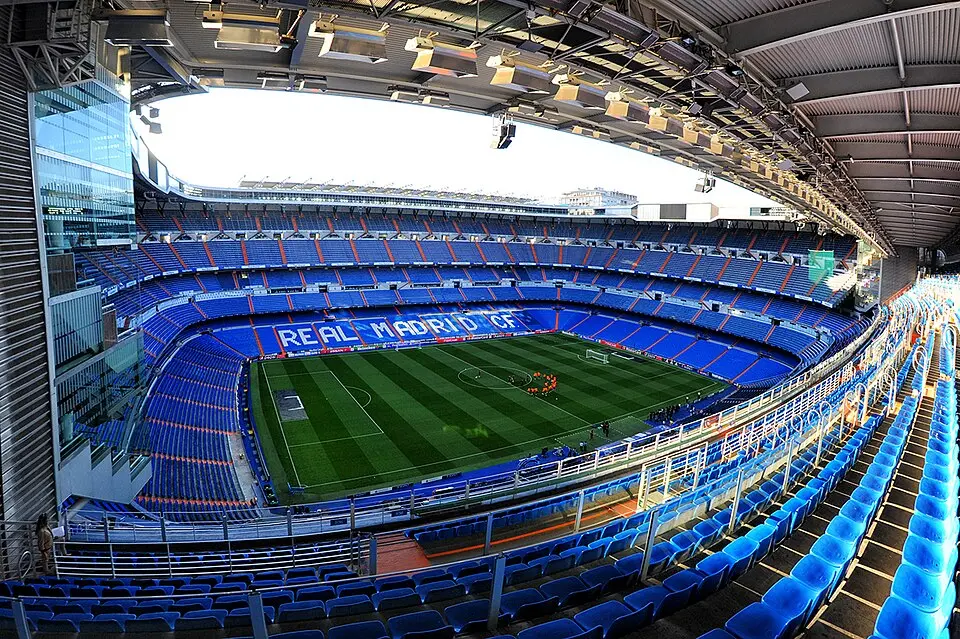
Even travelers who aren’t passionate about football have probably heard of the Santiago Bernabéu Stadium. Home to the world-famous Real Madrid, it is one of the most iconic football stadiums in the world. Extensively modernized in recent years, the stadium has also become a major tourist attraction, drawing millions of visitors.
Opened in 1947, the stadium is named after Santiago Bernabéu, a former player and legendary president of Real Madrid. Under his leadership, the club grew into one of the biggest names in world football. Over the decades, the Bernabéu has hosted countless historic matches, European finals, and international competitions. Its recent transformation has introduced state-of-the-art technology while preserving its status as one of Madrid’s most important sporting landmarks.
The stadium tour gives visitors the opportunity to explore its main areas and impressive architecture. You can admire the stands, view the pitch from different levels, explore exhibitions showcasing the club’s trophies, and enjoy a variety of interactive experiences. Even without attending a match, the sheer scale of the stadium and its remarkable history make it an impressive experience for many visitors.
Валерий Дед, CC BY 3.0, via Wikimedia Commons
Practical Information
📍 Neighborhood: Chamartín
🚇 Metro: Santiago Bernabéu (Line 10)
⏱️ Recommended time: 1 hr 30 min to 2 hours
🎟️ Admission: From €35
My TravelOptim Tip
Before booking your ticket, check the match and event schedule. Some areas of the stadium tour may be temporarily closed or offer limited access on event days.
12 – Las Ventas Bullring: Spain’s Most Famous Bullring
With its distinctive red-brick façade decorated with colorful ceramic tiles, Las Ventas Bullring is one of Madrid’s most recognizable landmarks. Considered one of the most prestigious bullrings in the world of bullfighting, it attracts both visitors interested in Spanish culture and those curious to learn more about this controversial but historically significant aspect of the country’s heritage.
Opened in 1931, Las Ventas was designed in a Neo-Mudéjar style inspired by traditional Spanish architecture. With a capacity of around 23,000 spectators, it is one of the largest bullrings in the world. For nearly a century, it has hosted some of Spain’s most important bullfighting events, as well as various cultural events and concerts.
Even without attending an event, the monument is worth seeing. Visitors can admire its remarkable exterior architecture, explore the museum dedicated to the history of bullfighting, and discover different areas of the arena through a guided or audio-guided tour. The vast central arena, spectator stands, and areas traditionally used by bullfighters provide insight into the historical and cultural significance of this Madrid landmark.
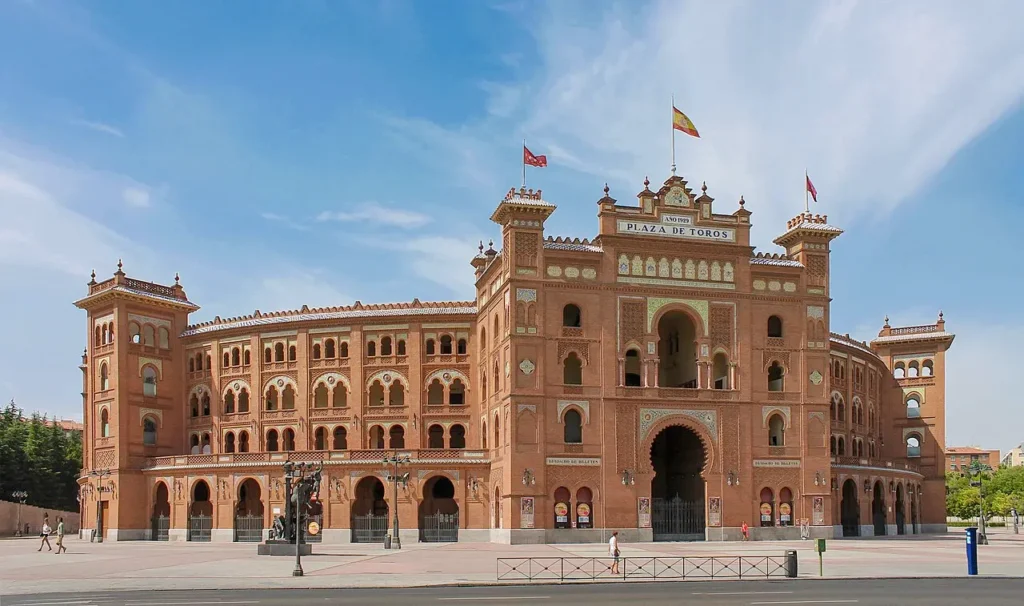
Luis García, CC BY-SA 3.0, via Wikimedia Commons
Practical Information
📍 Neighborhood: Salamanca
🚇 Metro: Ventas (Lines 2 and 5)
⏱️ Recommended time: 45 minutes to 1 hr 30 min
🎟️ Admission: From €16 for the tour
My TravelOptim Tip
Before going inside, walk around the exterior and use the statues of famous bullfighters as foreground elements in your photos. By framing them with the bullring in the background, you can capture one of the most characteristic views of Las Ventas.
13 – Plaza de España: One of Madrid’s Most Iconic Squares
Completely redesigned in recent years, Plaza de España is now one of Madrid’s most enjoyable public spaces. Located between Gran Vía, the Royal Palace, and the Temple of Debod, it is an important meeting point and crossroads for visitors exploring the city. Its large pedestrian areas, gardens, and monuments make it a worthwhile stop on a first visit to the Spanish capital.
The square was developed in the early 20th century as part of Madrid’s urban expansion. Over the decades, it became one of the city’s most recognizable public spaces. Its recent transformation has significantly improved the visitor experience by reducing road traffic and creating new green spaces and areas to relax.
The square’s most famous landmark is undoubtedly the monument dedicated to Miguel de Cervantes, author of Don Quixote. At the base of the monument stand the famous statues of Don Quixote and Sancho Panza, among the most photographed sculptures in Madrid. The square also offers impressive views of several iconic high-rise buildings, including the Torre de Madrid and Edificio España, which dominate the surrounding cityscape.
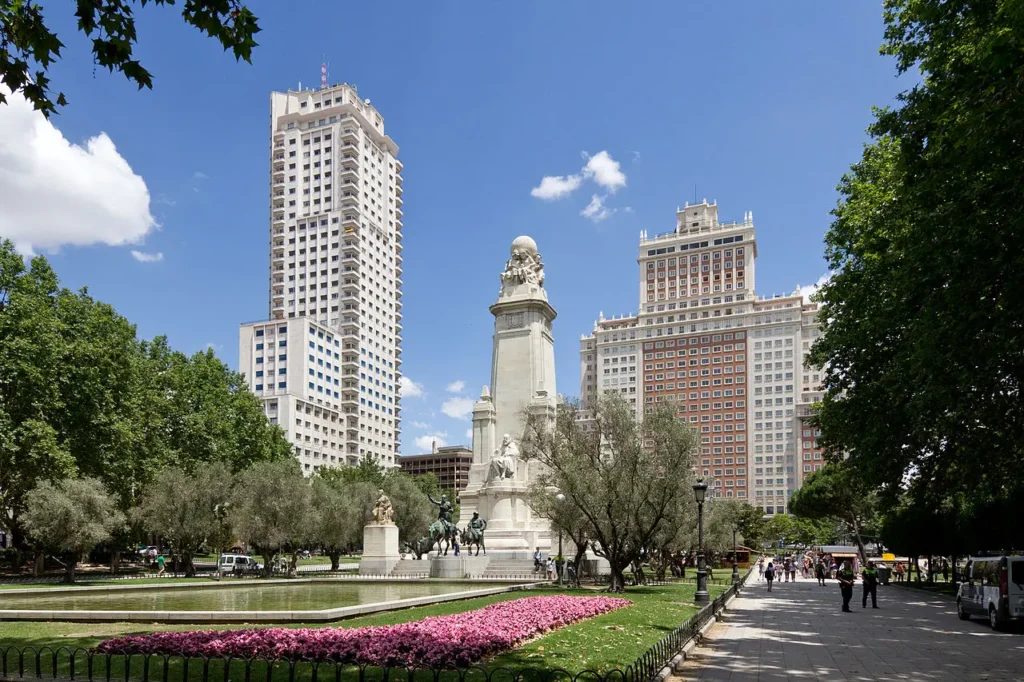
Carlos Delgado, CC BY-SA 3.0, via Wikimedia Commons
Practical Information
📍 Neighborhood: Centro
🚇 Metro: Plaza de España (Lines 3 and 10)
⏱️ Recommended time: 20 to 45 minutes
🎟️ Admission: Free
My TravelOptim Tip
Don’t miss the chance to take a photo with Don Quixote and Sancho Panza. Position yourself slightly to one side to include the Cervantes monument in the same frame for a much more striking composition.
14 – Plaza de Oriente: One of the Best Views of the Royal Palace
Located between the Royal Palace and the Teatro Real, Plaza de Oriente is one of Madrid’s most elegant squares. With its beautifully landscaped gardens, monumental statues, and exceptional views of the royal residence, it is a must-see for visitors looking to admire one of the most impressive architectural settings in the Spanish capital.
The square was first developed in the 19th century during the reign of Joseph Bonaparte and was later expanded and redesigned under subsequent Spanish monarchs. Its purpose was to enhance the setting of the Royal Palace by creating a large open space in front of its eastern façade. Over time, Plaza de Oriente became one of the most prestigious places in Madrid’s historic center and a symbol of the Spanish monarchy.
Visitors come primarily for the spectacular views of the Royal Palace. The geometric gardens, fountains, and pathways provide beautiful perspectives from which to admire the building. The square is also home to a remarkable collection of statues representing several Spanish monarchs, often referred to as the “Gallery of Kings.” On the opposite side of the square stands the majestic Teatro Real, Madrid’s main opera house, completing this impressive architectural ensemble.
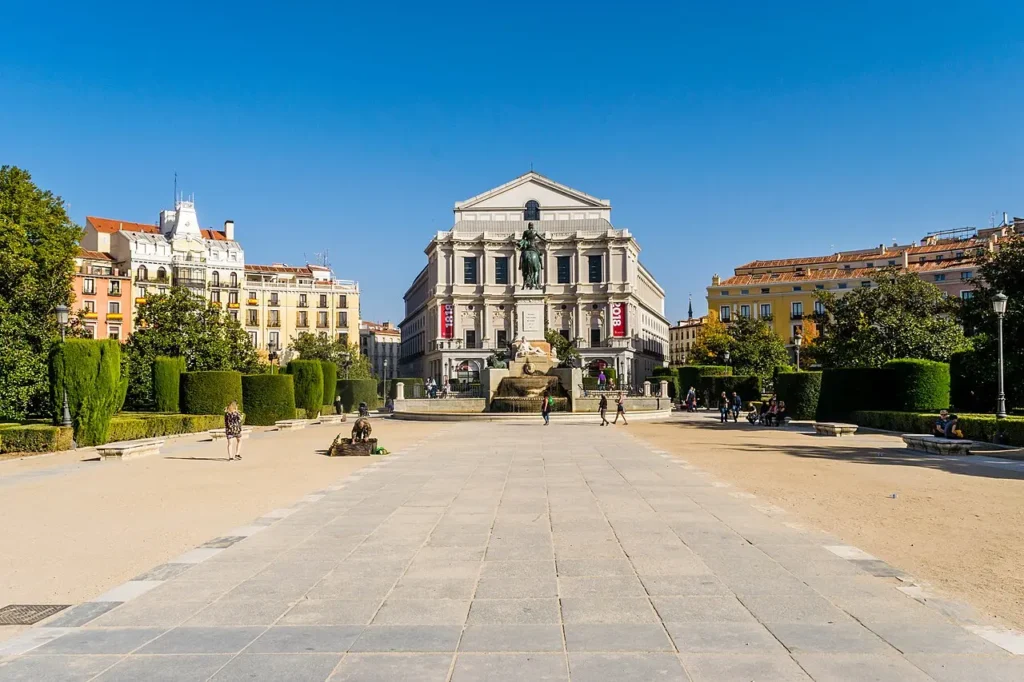
Oliver Gargan, CC BY-SA 4.0, via Wikimedia Commons
Practical Information
📍 Neighborhood: Los Austrias
🚇 Metro: Ópera (Lines 2, 5, and R)
⏱️ Recommended time: 20 to 45 minutes
🎟️ Admission: Free
My TravelOptim Tip
For one of the best photos of the Royal Palace, position yourself in the gardens of Plaza de Oriente and use the royal statues as foreground elements. The composition is often much more striking than a simple photo of the palace façade.
15 – Mercado de San Miguel: Madrid’s Most Famous Food Market
Located just a few steps from Plaza Mayor, Mercado de San Miguel is one of Madrid’s most visited attractions. Behind its beautiful iron structure and glass façades lies a true showcase of Spanish gastronomy. More than just a traditional market, it offers a culinary experience where visitors can sample a wide variety of local specialties in a lively and welcoming atmosphere.
Opened in 1916, Mercado de San Miguel is one of the few historic markets in Madrid to have preserved its original iron structure. Once dedicated primarily to selling fresh produce, it was completely reinvented in the early 21st century as an upscale food market. Today, it attracts visitors from around the world who come to discover Spanish flavors in one of the city’s most iconic settings.
The market brings together dozens of stalls offering tapas, Iberian ham, seafood, cheeses, pastries, wines, and regional specialties. Even if you’re not hungry, it’s worth stepping inside for the atmosphere, colors, and variety of food on display. Food lovers can create their own tasting experience by moving from one counter to another and sampling a wide range of Spanish flavors within just a few steps.
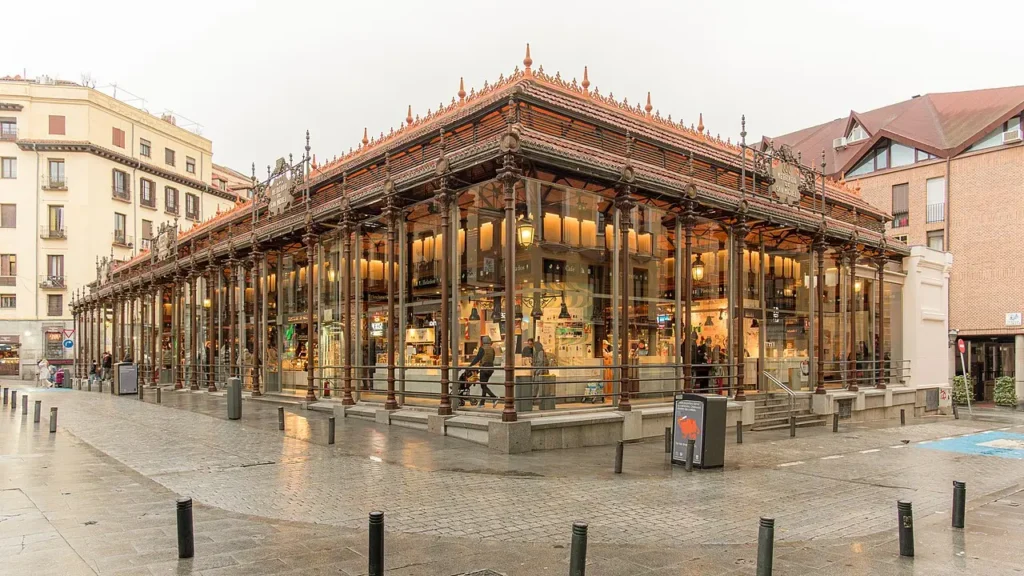
Fernando, CC BY-SA 4.0, via Wikimedia Commons
Practical Information
📍 Neighborhood: Los Austrias
🚇 Metro: Ópera (Lines 2, 5, and R) or Sol (Lines 1, 2, and 3)
⏱️ Recommended time: 30 minutes to 1 hour
🎟️ Admission: Free (food and drinks cost extra)
My TravelOptim Tip
Avoid the busiest lunch and dinner hours. You’ll enjoy a more relaxed atmosphere and have more room to move between the different stalls while putting together your own tasting experience.
Overview Map of Madrid’s 15 Must-See Attractions
To help you better visualize the places featured in this guide, I’ve created an interactive map bringing together Madrid’s 15 must-see attractions, the main museums in the Art Triangle, and the most useful nearby metro stations.
The map makes it easy to see where the city’s major sights are located, understand the distances between them, and plan your visits more efficiently—especially if you’re exploring Madrid for the first time.
In Conclusion
Madrid is a city that rewards both first-time visitors and those who take the time to explore it more deeply. Beyond each of these must-see attractions, you’ll find neighborhoods to wander through, museums to visit, viewpoints to admire, and countless experiences to enjoy.
If you’re visiting Madrid for the first time, these 15 must-see attractions provide an excellent starting point for discovering the best of the Spanish capital. They’ll help you better understand its history, its identity, and what makes the city so appealing to millions of visitors every year.
The most important thing, however, isn’t to see everything, but to truly enjoy the places that matter most to you. Take the time to wander, stop at a café terrace, observe everyday life in Madrid, and create a trip that reflects the way you like to travel.
Plan Your Trip with the TravelOptim Madrid App
Want to explore more of Madrid or create a personalized itinerary?
I created TravelOptim Madrid, an interactive web app that helps you discover the city’s must-see attractions, explore ready-made itineraries, view places on an interactive map, and build your own list of places to visit.
Accessible directly from your browser, with no download required, it can help you organize your trip before you leave and guide you as you explore Madrid.