 Skip to content

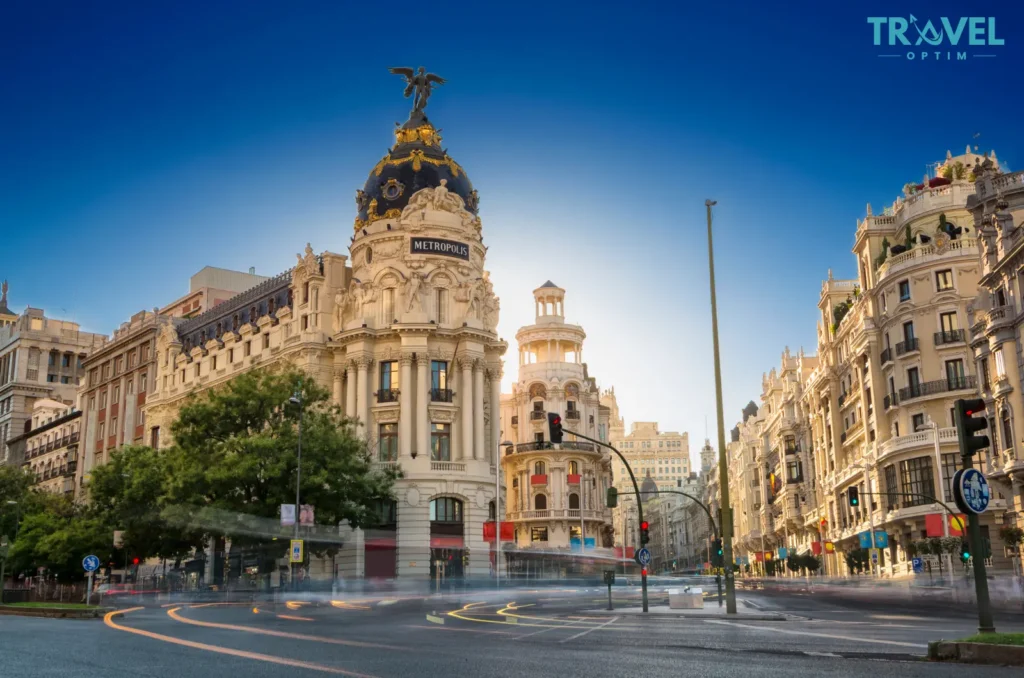
Madrid deserves far more than just one day. With its grand palaces, lively squares, world-class museums, beautiful parks and historic neighborhoods, the Spanish capital could easily keep you busy for several days.
But if you only have one day, it is still possible to experience many of Madrid’s must-see sights with a well-planned itinerary.
I’ve put together this one-day walking itinerary in Madrid to connect the city’s most iconic landmarks while keeping unnecessary travel to a minimum. The route covers approximately 9 km (5.6 miles), from Retiro Park to Gran Vía, with stops at the Art Triangle, Cibeles, Puerta del Sol, Plaza Mayor, the Royal Palace and the Temple of Debod.
Along the way, you’ll also find my TravelOptim tips and suggestions for places to take a break, grab a coffee or eat near the main stops. The itinerary is intentionally flexible, so you can spend more time at the places that interest you most and adapt the day to your own pace.
So, put on a comfortable pair of shoes and get ready to discover Madrid in one day, one stop at a time.
Visiting Madrid for the first time?
Check out my article: 15 Must-See Attractions in Madrid for Your First Visit to discover the places you simply shouldn’t miss in the Spanish capital.
- Madrid in One Day on Foot: Itinerary at a Glance
- 8:00 AM – El Retiro Park and Puerta de Alcalá
- 10:30 AM – Madrid’s Art Triangle
- 1:00 PM – Plaza de Cibeles
- 2:00 PM – Puerta del Sol
- 3:00 PM – Plaza Mayor
- 4:00 PM – Almudena Cathedral
- 5:00 PM – Royal Palace of Madrid
- 7:00 PM – Temple of Debod
- 8:00 PM – Plaza de España
- 9:00 PM – Gran Vía
- Explore the Full Itinerary on the Interactive Map
- In Conclusion
- Plan Your Trip with the TravelOptim Madrid App
Madrid in One Day on Foot: Itinerary at a Glance
Only have one day to explore Madrid? Here are the key details to help you get an overview of the route before you start.
- Distance: approximately 9 km (5.6 miles)
- Duration: a full day, from 8:00 a.m. to 9:00 p.m.
- Starting point: Retiro Park – Retiro metro station (Line 2)
- Ending point: Gran Vía – Gran Vía metro station (Lines 1 and 5)
- Getting around: mainly on foot
- Number of stops: 10
- Route: Retiro → Art Triangle → Plaza de Cibeles → Puerta del Sol → Plaza Mayor → Almudena Cathedral → Royal Palace → Temple of Debod → Plaza de España → Gran Vía
The schedule is intentionally flexible. The suggested times are simply a guide and can be adjusted depending on how long you spend sightseeing, eating and taking breaks.
8:00 AM – El Retiro Park and Puerta de Alcalá
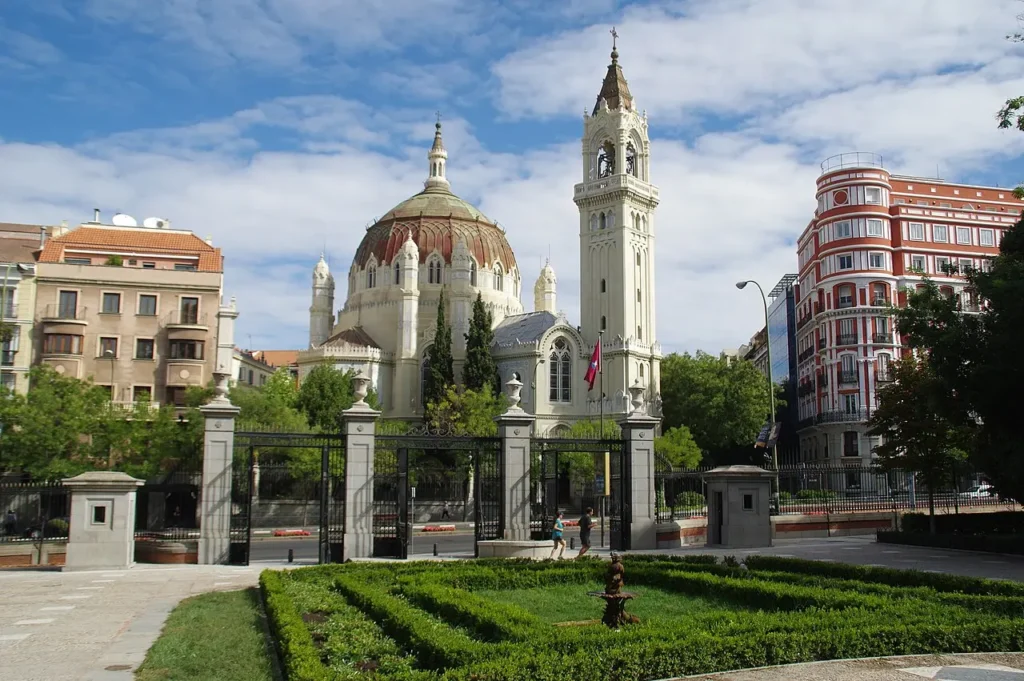
After leaving Retiro metro station (Line 2), walk along Calle de Alcalá toward the majestic Puerta de Alcalá, just a few minutes away on foot. Along the way, take a moment to admire the elegant Iglesia de San Manuel y San Benito, easily recognizable by its impressive Byzantine-style dome overlooking this part of the city.
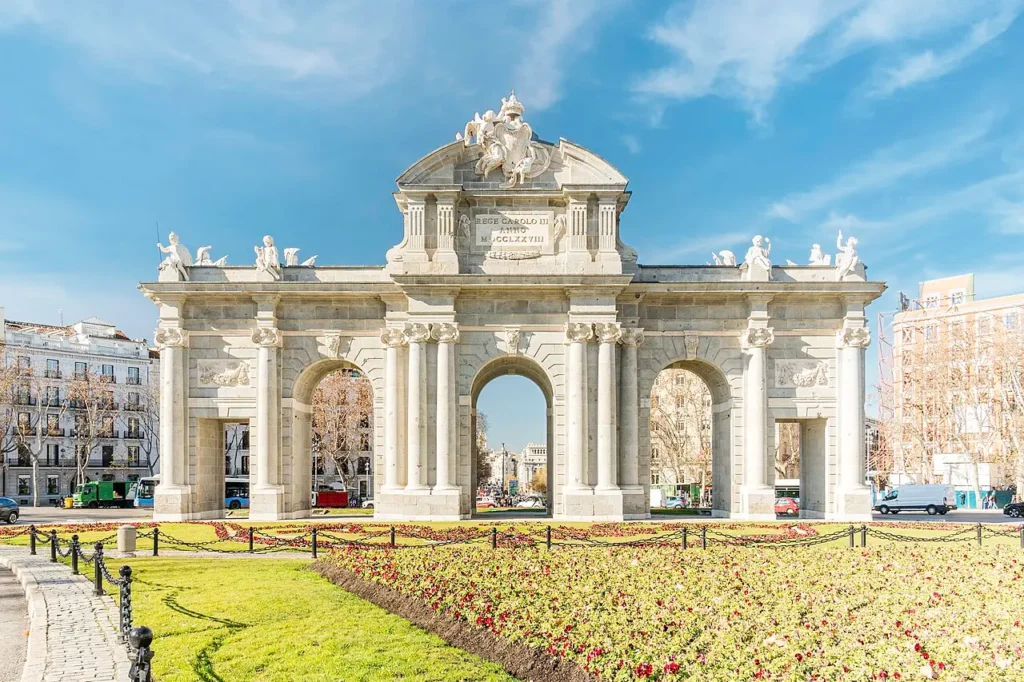
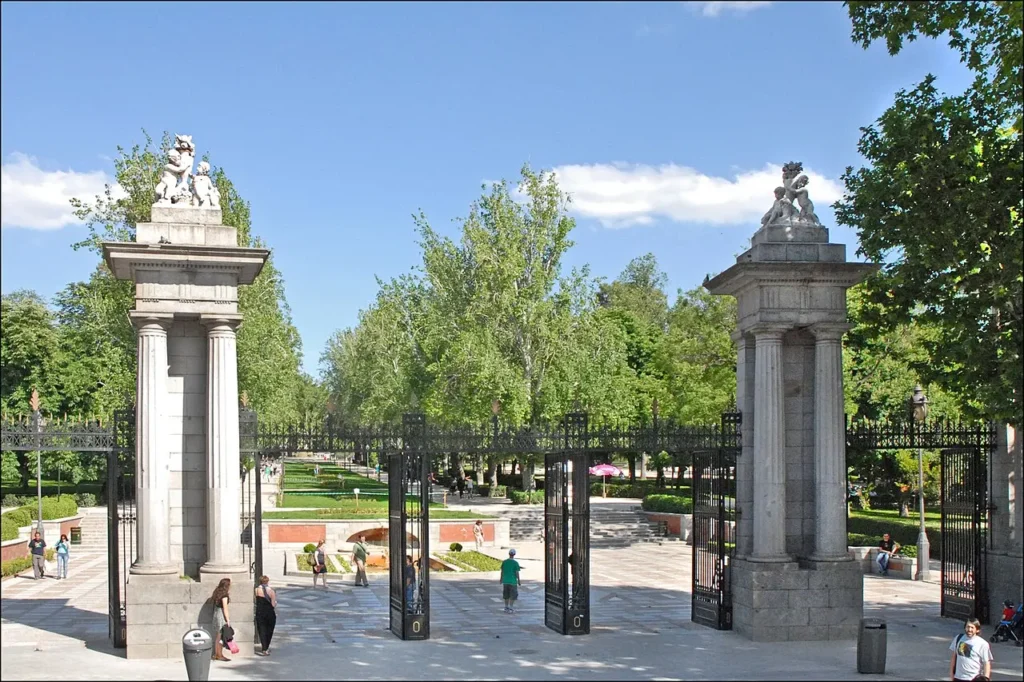
You’ll soon arrive at Puerta de Alcalá, one of Madrid’s most iconic landmarks. Built in the 18th century during the reign of Charles III, it once served as one of the main gateways into the Spanish capital. Just behind it stands Puerta Real, one of the most prestigious entrances to El Retiro Park and the starting point for your visit.
Known as Madrid’s green oasis, El Retiro Park covers more than 125 hectares. With its gardens, wide tree-lined paths, sculptures, fountains, monuments, and palaces, it offers a peaceful escape in the heart of the city. Exploring the entire park could easily take half a day. For this one-day itinerary, we’ll focus on its main highlights so you can make the most of your time without missing the essentials.
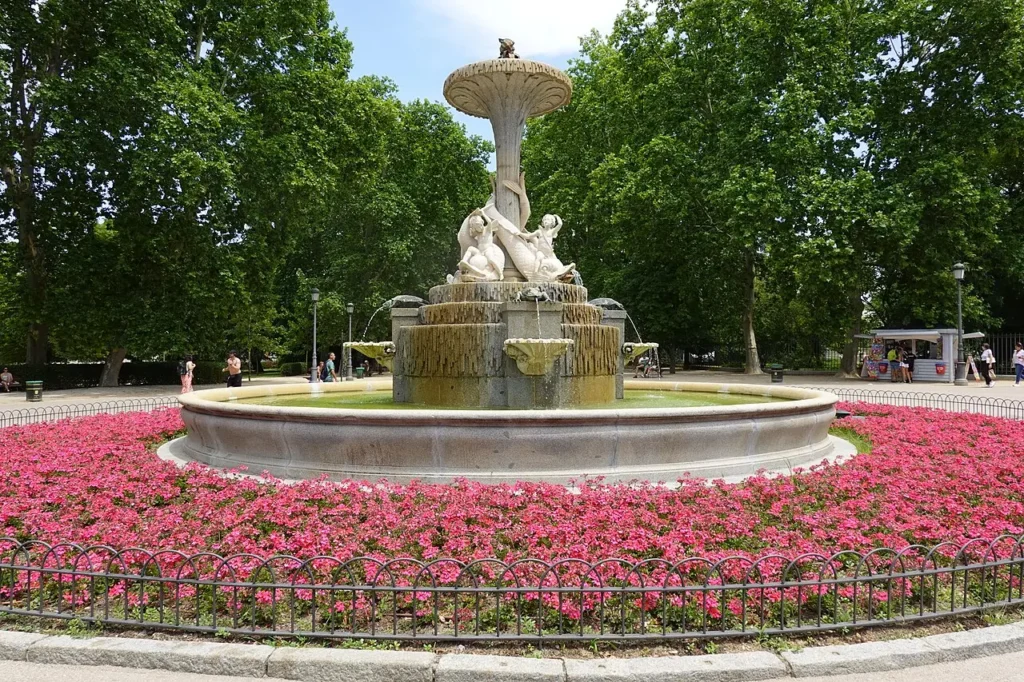
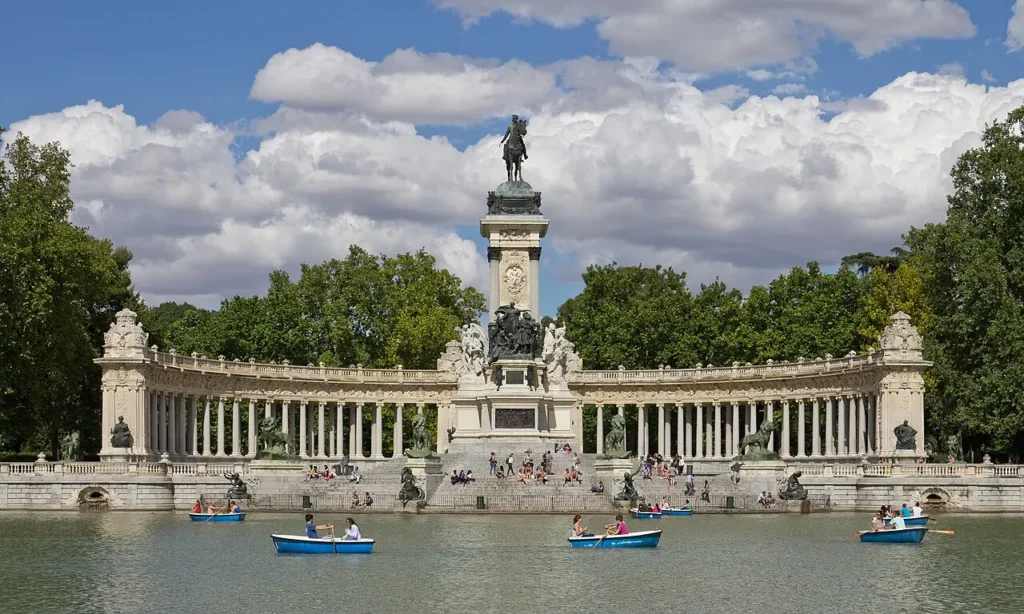
As you enter through Puerta Real, you’ll first come across the Fuente de los Galápagos, before reaching the Great Pond (Estanque Grande) and the impressive Monument to Alfonso XII, one of the park’s most beautiful viewpoints. Renting one of the famous rowboats is a classic Retiro experience, but rentals generally begin around 10:00 AM. Since our itinerary starts at 8:00 AM, it’s best to continue exploring the park to stay on schedule.
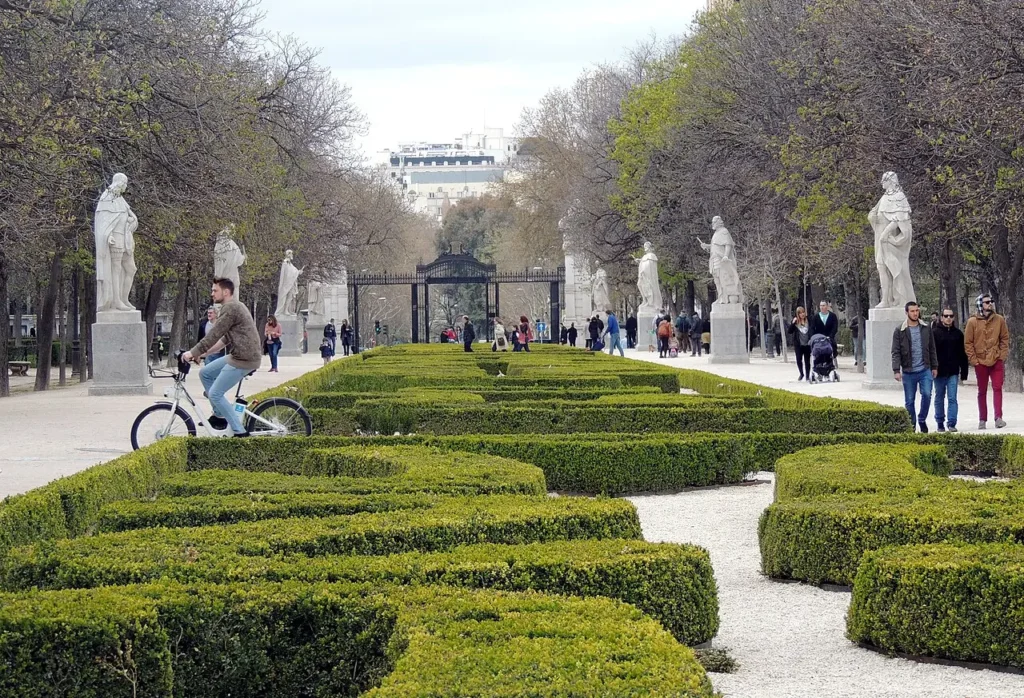
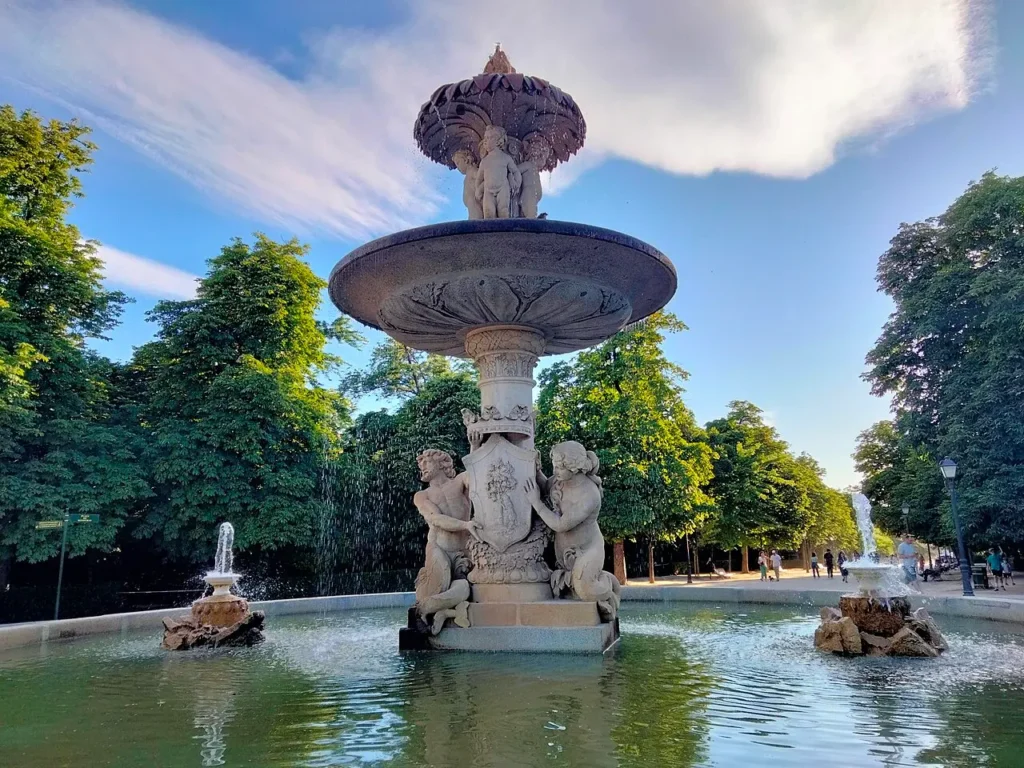
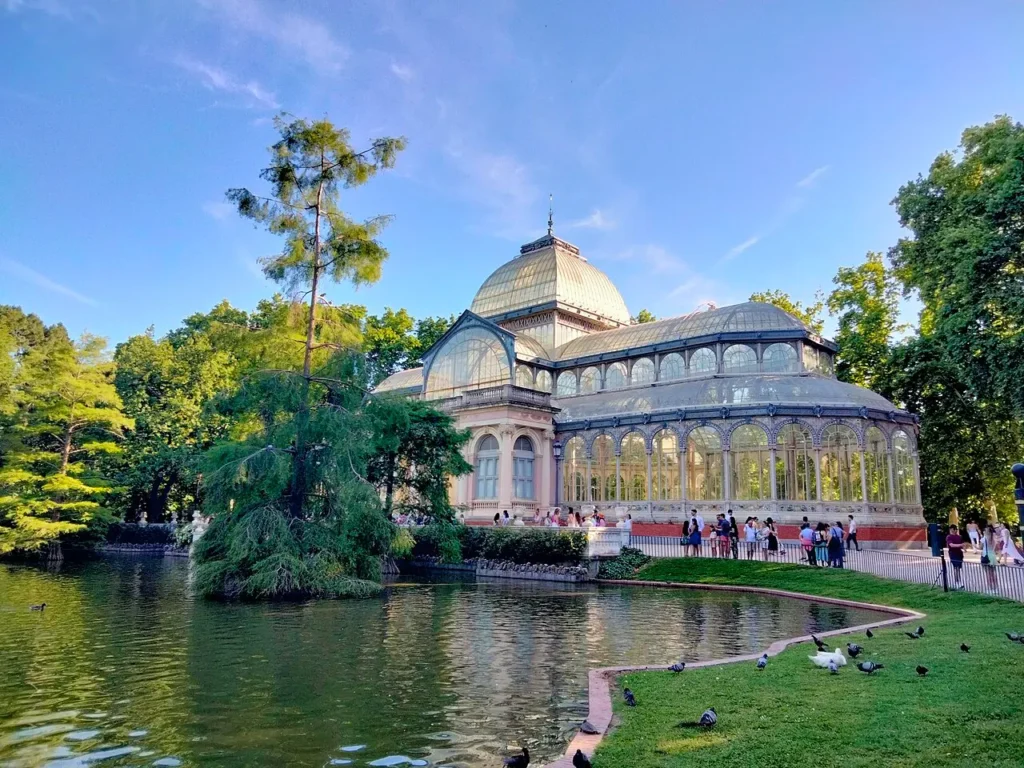
From the Great Pond, follow the Paseo de las Estatuas, an elegant promenade lined with statues representing several Spanish monarchs. Return to the Great Pond and continue toward the Fuente de la Alcachofa, one of the park’s historic fountains, before reaching the Palacio de Velázquez, now used for temporary exhibitions. A few minutes farther on, you’ll find the spectacular Palacio de Cristal, probably the most photographed landmark in El Retiro. With its striking glass architecture and small pond, it is one of Madrid’s most iconic sights.
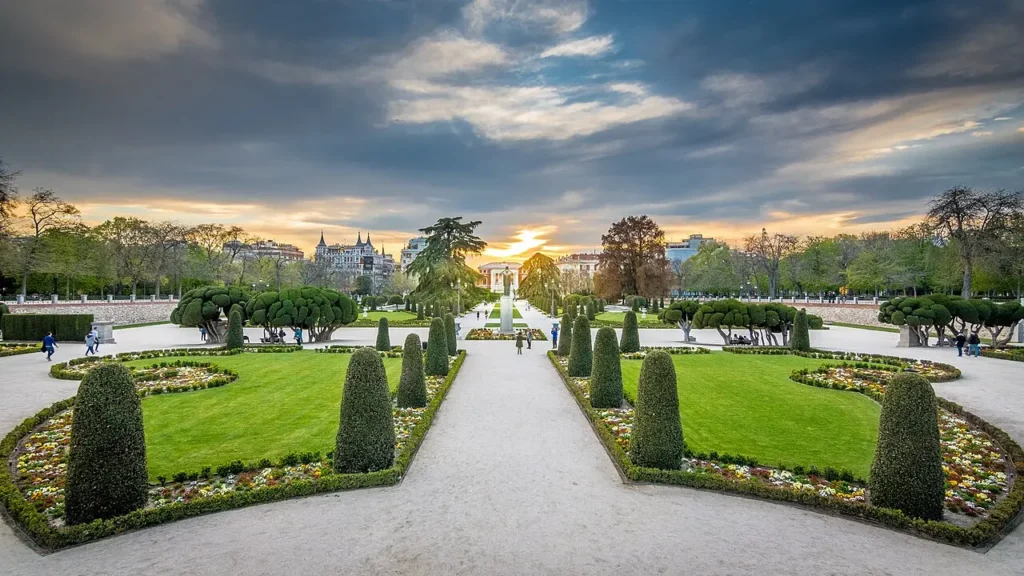
Your walk through El Retiro ends at Plaza del Parterre, home to Madrid’s oldest tree, an impressive bald cypress more than 400 years old. From there, leave the park through Puerta de Felipe IV and continue toward Madrid’s Art Triangle.
- Concepcion AMAT ORTA…, CC BY 3.0, via Wikimedia Commons
- Fernando Pascullo, CC BY-SA 4.0, via Wikimedia Commons
- Jean-Pierre Dalbéra from Paris, France, CC BY 2.0, via Wikimedia Commons
- Joseolgon, CC BY 4.0, via Wikimedia Commons
- Carlos Delgado, CC BY-SA 3.0, via Wikimedia Commons
- Jose Luis Cernadas Iglesias from Coruña, España, CC BY 2.0, via Wikimedia Commons
- Enric, CC BY-SA 4.0, via Wikimedia Commons
- Enric, CC BY-SA 4.0, via Wikimedia Commons
- dziambel from Polska, CC BY-SA 2.0, via Wikimedia Commons
Where to Take a Break?
Before entering the park (Puerta de Alcalá):
- Maison Glacée
- Maison Kayser – Puerta de Alcalá
- Cappuccino Madrid
- Paseo de Leones
At the park exit (Puerta de Felipe IV):
- Viena Capellanes
My TravelOptim Tip
If you’re comfortable cycling, consider renting a BiciMAD bike near Puerta Real. It’s an easy way to explore more of the park’s highlights, such as La Rosaleda, Casita del Pescador, and some of its quieter gardens, without adding too much time to your visit. You can then return the bike near the Prado Museum and continue naturally along the itinerary.
10:30 AM – Madrid’s Art Triangle
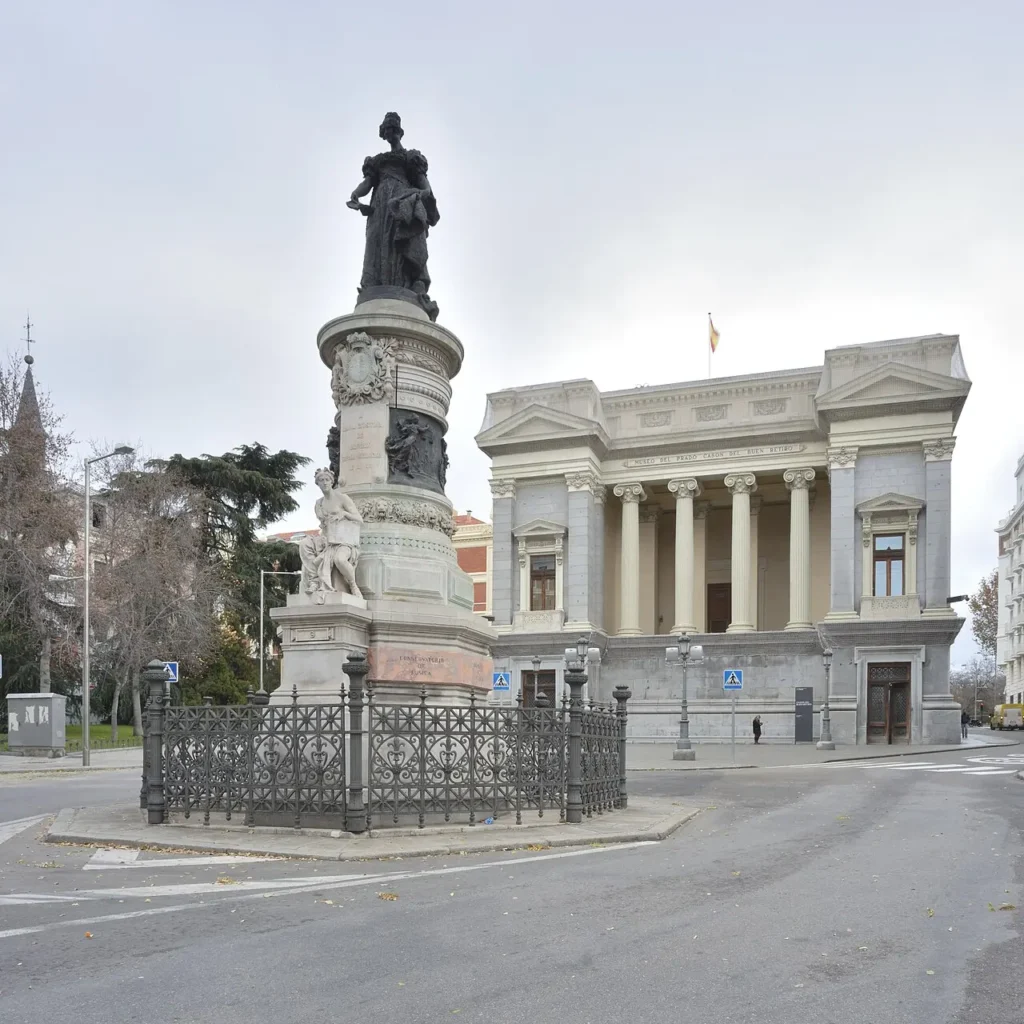
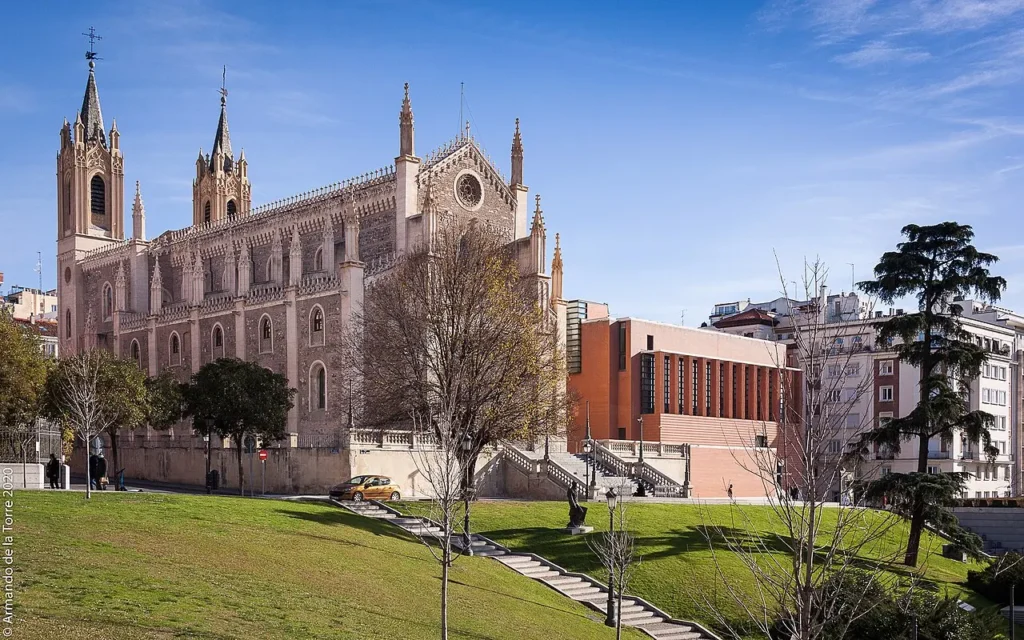
After leaving El Retiro Park through Puerta de Felipe IV, you can reach Paseo del Prado in just a few minutes. Along the way, you’ll pass the Monumento a María Cristina de Borbón before catching sight of the majestic Iglesia de San Jerónimo el Real, one of Madrid’s oldest churches. Built in the 15th century, it is particularly known for hosting several royal ceremonies and provides a beautiful contrast with the more modern architecture of the nearby museums.
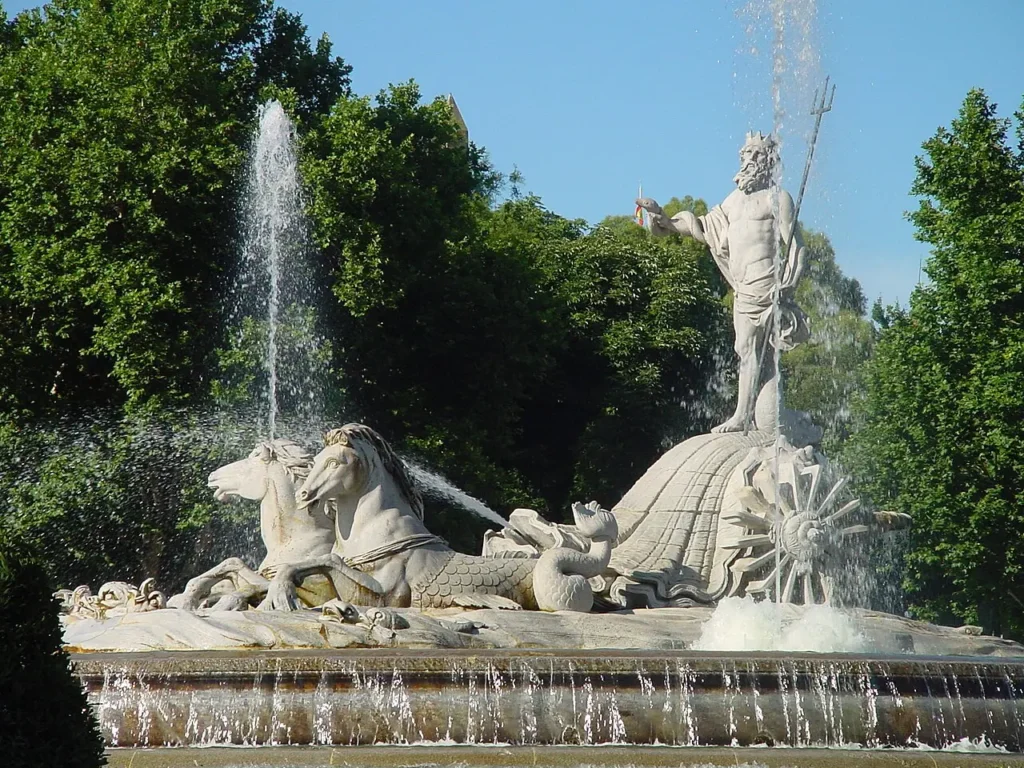
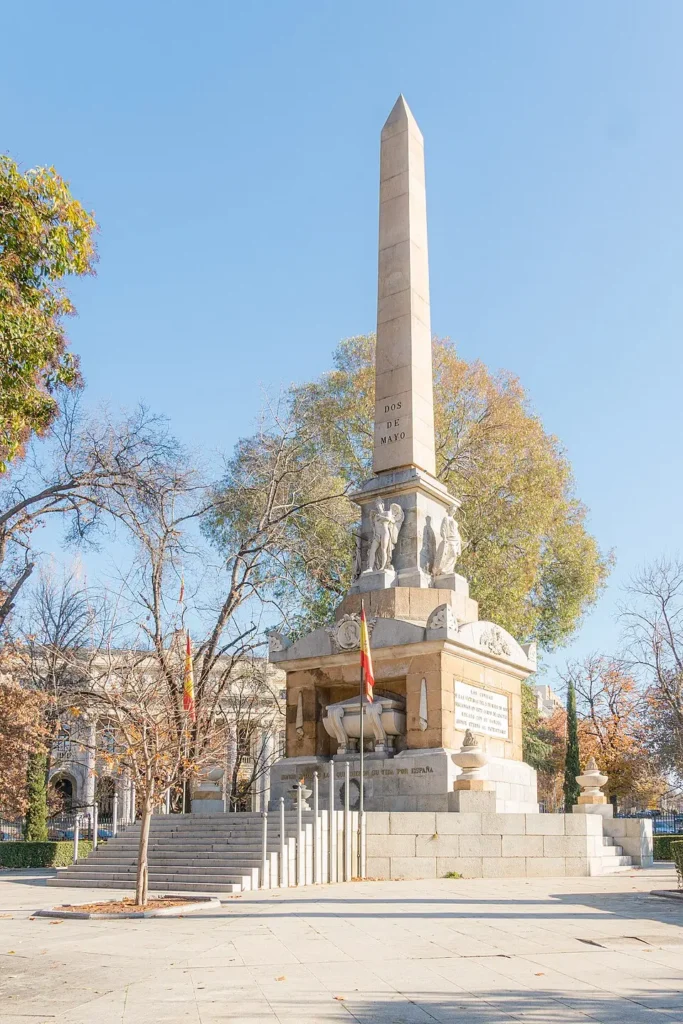
You’ll then arrive at Paseo del Arte, one of Europe’s most prestigious cultural avenues. Take a moment to admire the Neptune Fountain, where Atlético de Madrid supporters traditionally gather to celebrate the club’s major victories. A little farther on stands the Monument to Those Who Fell for Spain, dedicated to the victims of the March 11, 2004 attacks.
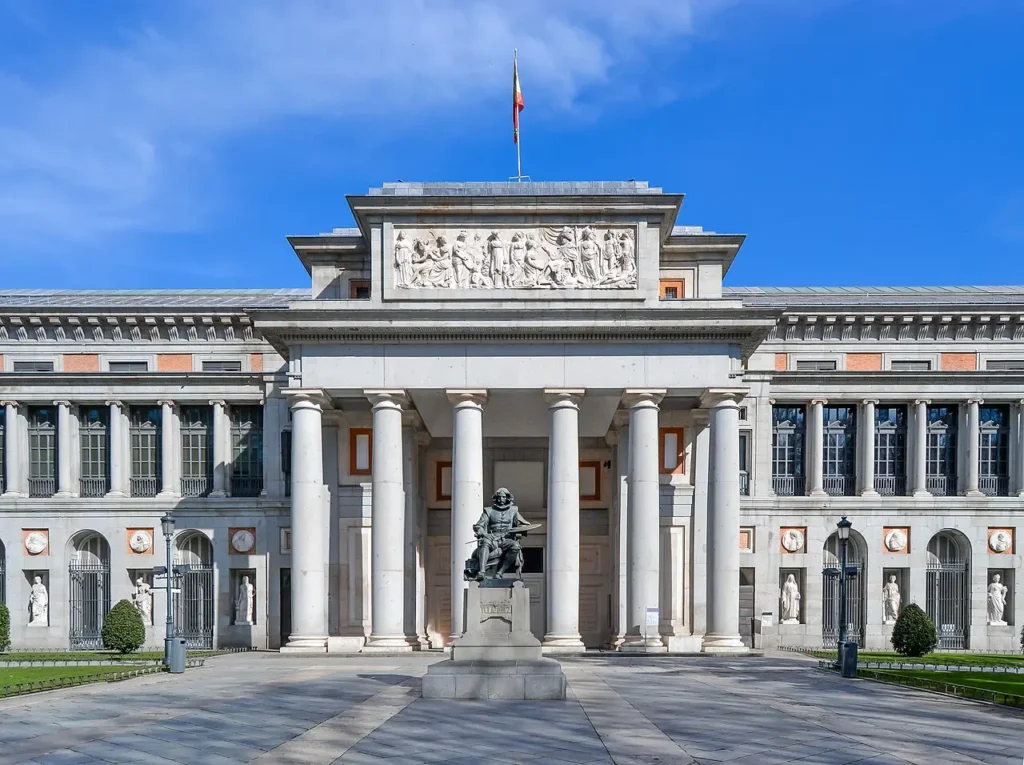
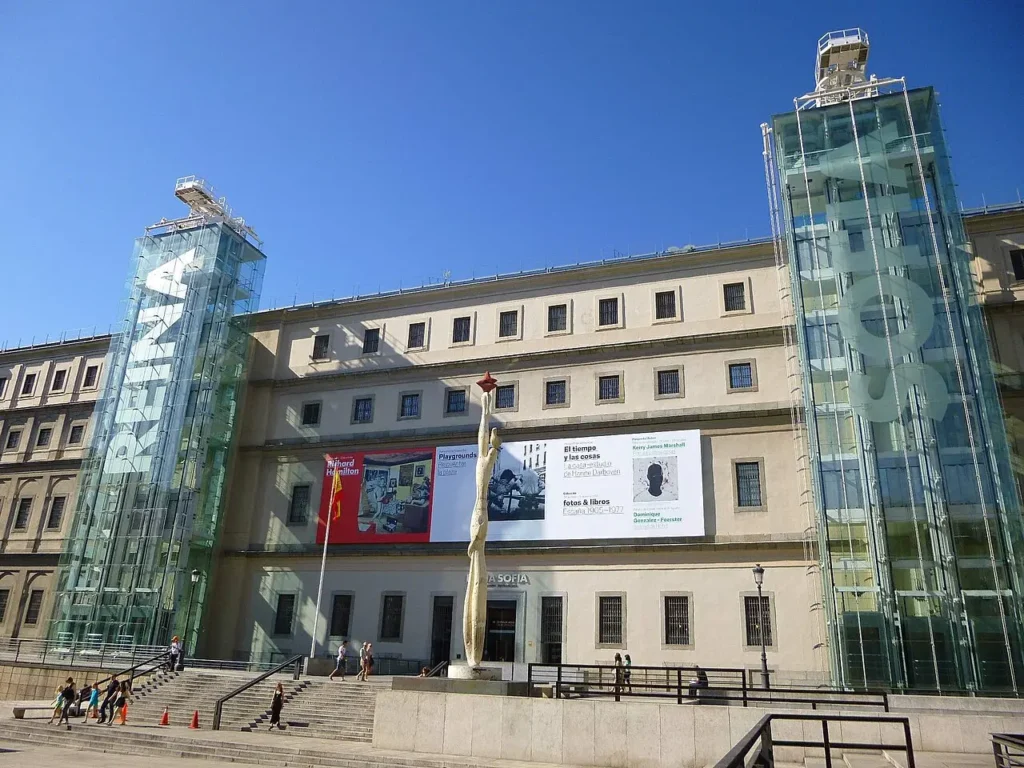
This is where you’ll find Madrid’s famous Art Triangle, home to three of the city’s most important museums. A full museum visit can easily take several hours, so if you only have one day in Madrid, I recommend choosing just one based on your interests.
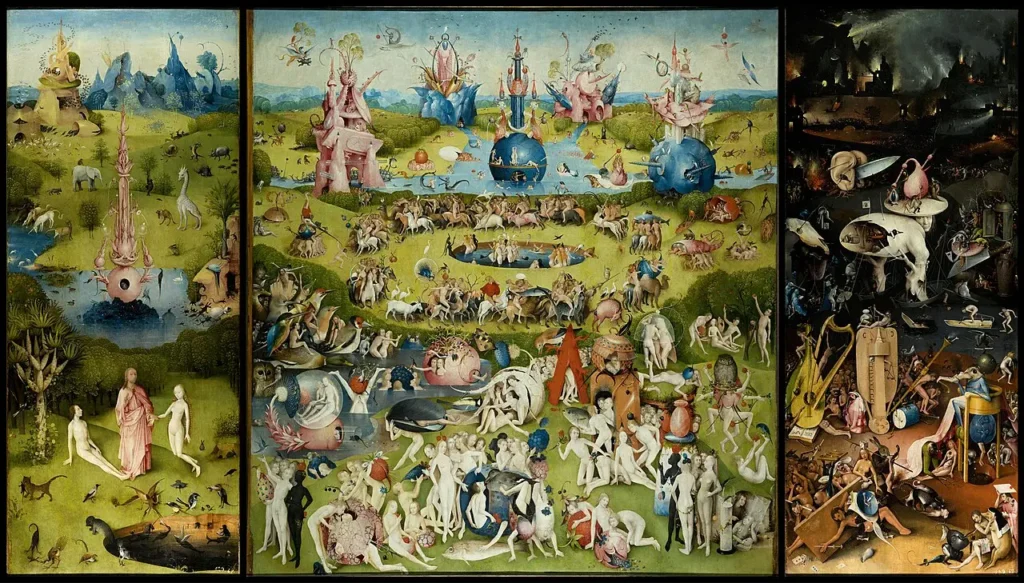
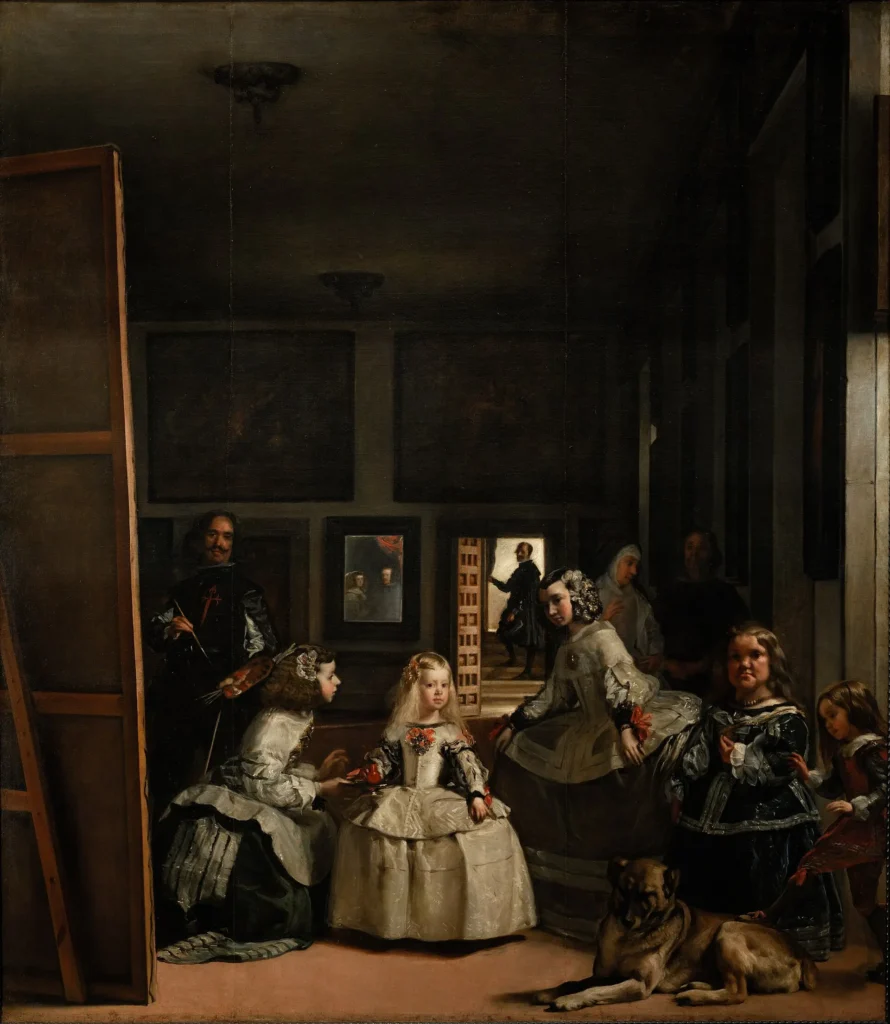
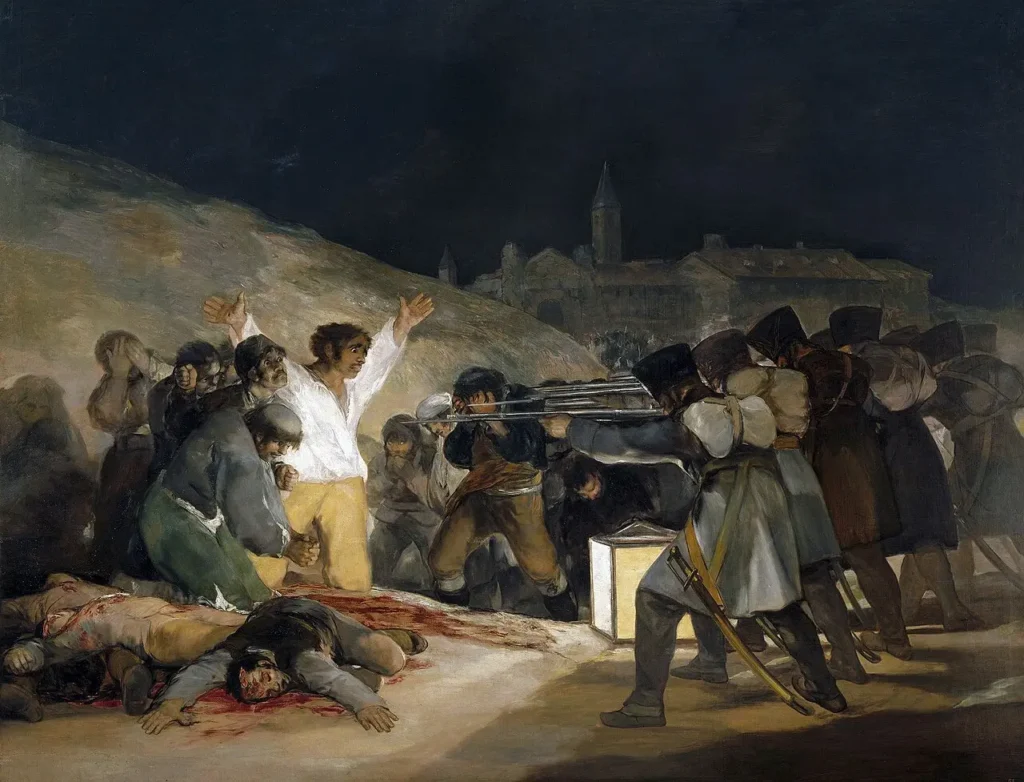
If this is your first visit to the Spanish capital, the Prado Museum is probably the best choice. One of the world’s great museums of Spanish and European painting, it houses masterpieces such as Hieronymus Bosch’s The Garden of Earthly Delights, a fascinating triptych filled with symbolism; Diego Velázquez’s Las Meninas, considered one of the greatest paintings in art history; and Francisco de Goya’s The Third of May 1808, a powerful depiction of the execution of Madrid resistance fighters during the Napoleonic occupation.
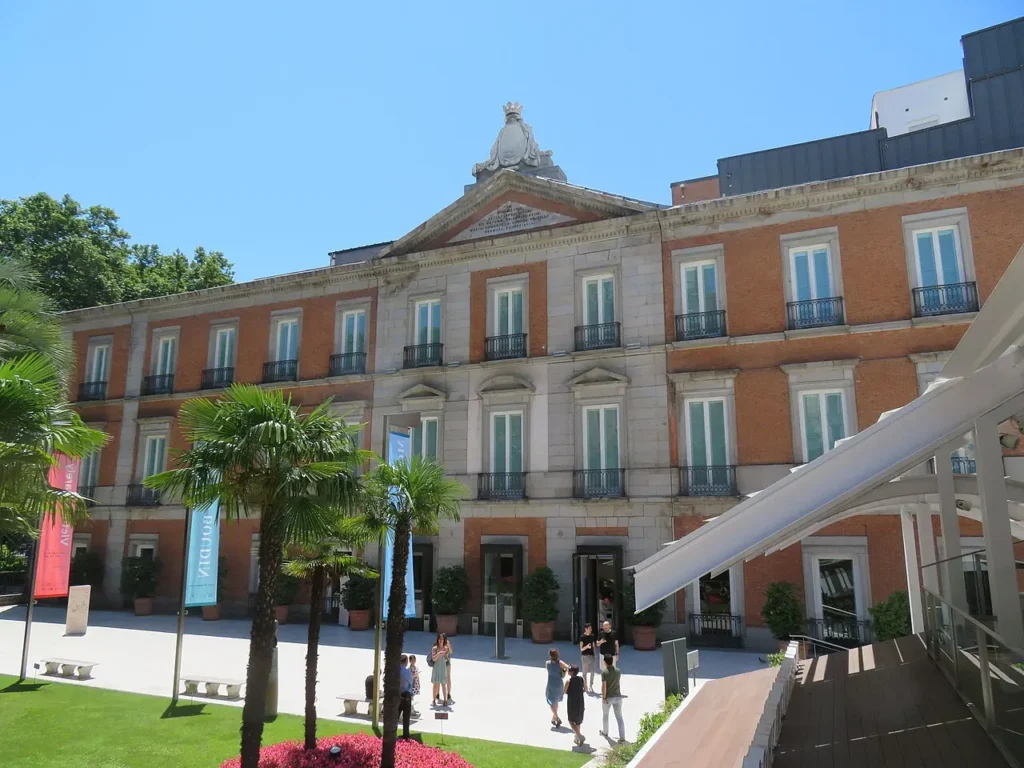
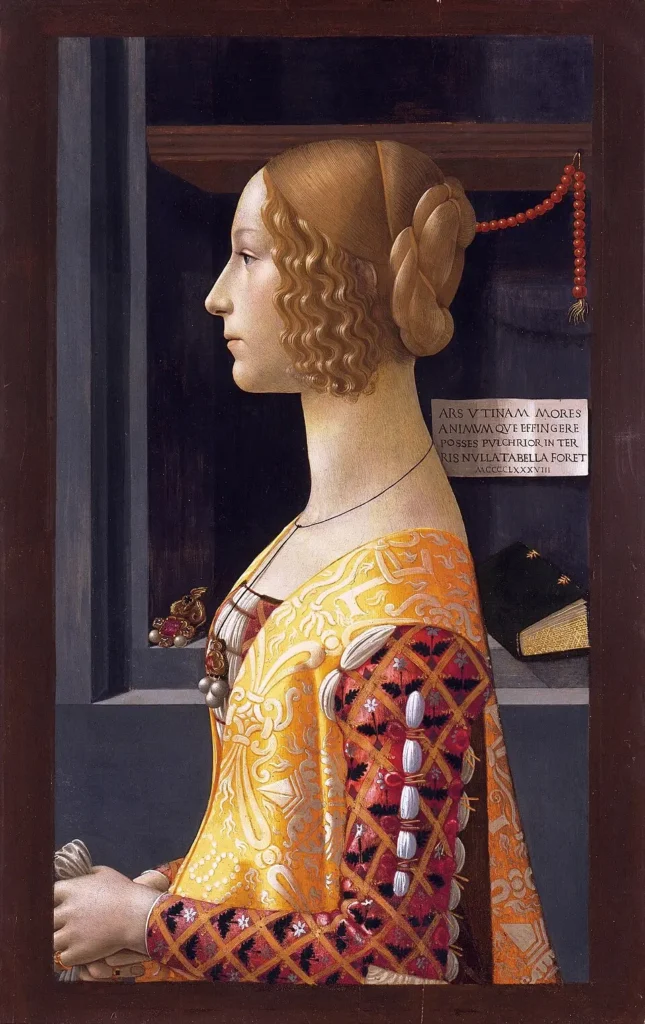
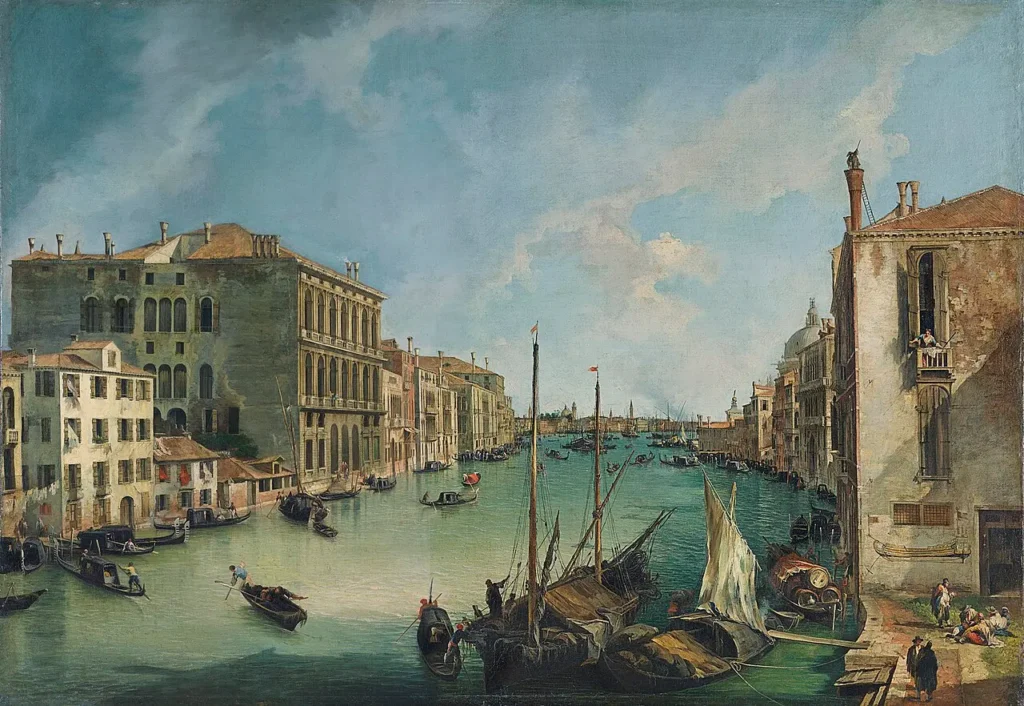
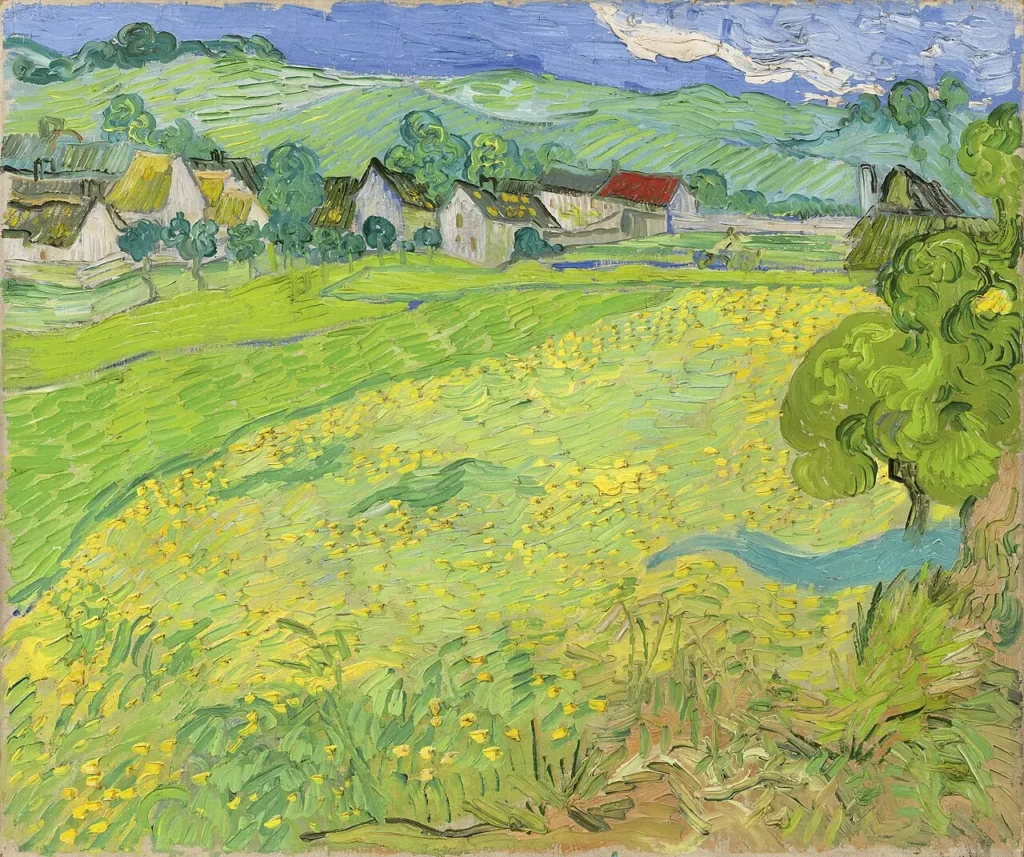
Would you rather explore works from different periods and major artistic movements? The Thyssen-Bornemisza Museum is an excellent alternative. Its collection spans nearly seven centuries of art history and includes Domenico Ghirlandaio’s Portrait of Giovanna Tornabuoni, Canaletto’s View of Venice, and Vincent van Gogh’s Les Vessenots in Auvers, a striking example of the Dutch master’s expressive brushwork.
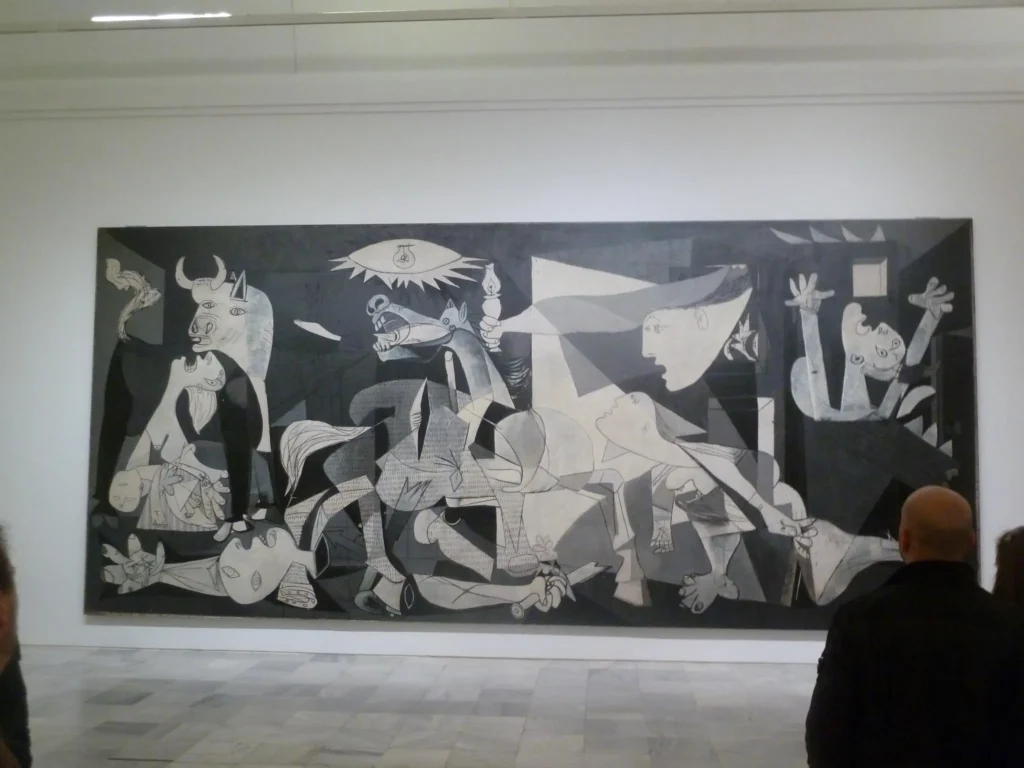
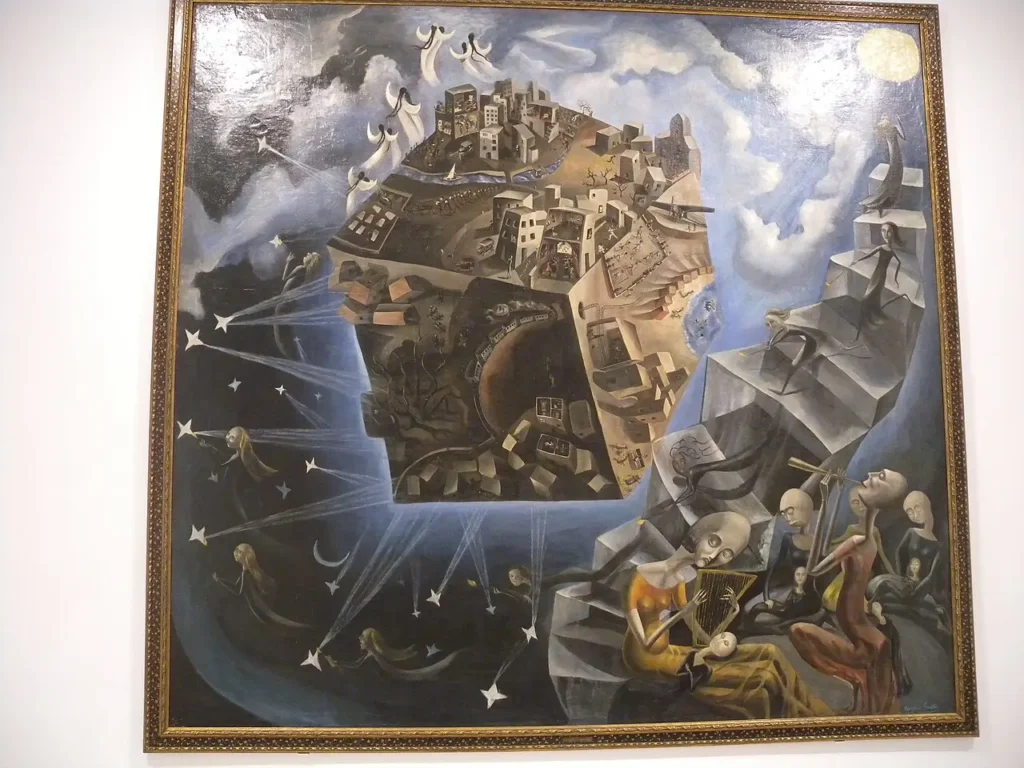
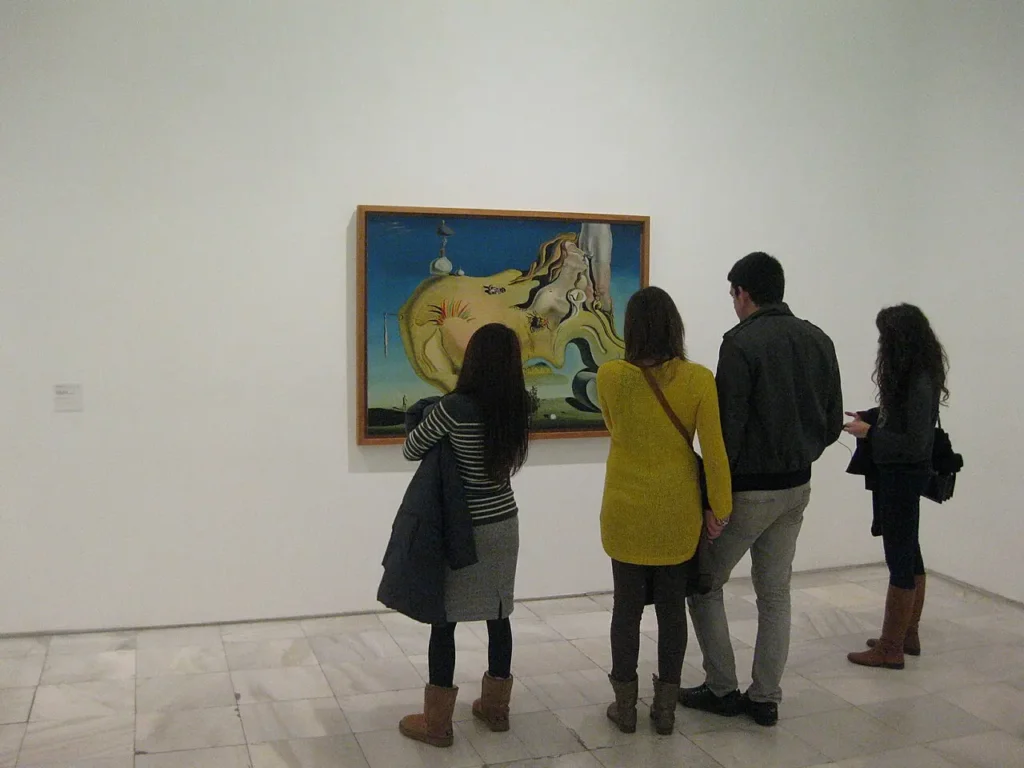
Finally, lovers of modern and contemporary art should head to the Reina Sofía Museum. Here, you can see Pablo Picasso’s Guernica, the monumental painting that became a universal anti-war symbol; Ángeles Santos’s A World, one of the major works of 20th-century Spanish painting; and Salvador Dalí’s The Great Masturbator, an iconic work of the Surrealist movement.
- Javier Perez Montes, CC BY-SA 4.0, via Wikimedia Commons
- Atrio54, CC BY-SA 4.0, via Wikimedia Commons
- Dirección General de Turismo. Consejería de Economía e Innovación Tecnológica. Comunidad de Madrid., CC BY 3.0 ES, via Wikimedia Commons
- Fernando, CC BY-SA 4.0, via Wikimedia Commons
- Emilio J. Rodríguez Posada, CC BY-SA 2.0, via Wikimedia Commons
- Hieronymus Bosch, Public domain, via Wikimedia Commons
- Diego Velázquez, Public domain, via Wikimedia Commons
- Francisco Goya, Public domain, via Wikimedia Commons
- Kyle Magnuson from Los Angeles, United States, CC BY 2.0, via Wikimedia Commons
- Domenico Ghirlandaio, Public domain, via Wikimedia Commons
- Canaletto, Public domain, via Wikimedia Commons
- Vincent van Gogh, Public domain, via Wikimedia Commons
- Zarateman, CC BY-SA 4.0, via Wikimedia Commons
- Citizen59, CC BY-SA 2.0, via flickr
- Marko Kudjerski from Toronto, Canada, CC BY 2.0, via Wikimedia Commons
- Wolf Gang, CC BY-SA 2.0, via Wikimedia Commons
Where to Take a Break?
- Cocina de Neptuno
- Los Rotos
- Osom Cantine
- El Botánico Restaurante Terraza
- Roost Chicken Atocha
- Restaurante Tablafina
My TravelOptim Tip
Whichever museum you choose, buy your ticket online before your visit to avoid long lines, especially during peak season. Once inside, follow the museum’s recommended masterpieces route. All three museums offer suggested routes designed to help visitors discover their must-see works in a limited amount of time. It’s the best way to make the most of your visit while staying on schedule for the rest of the day.
1:00 PM – Plaza de Cibeles
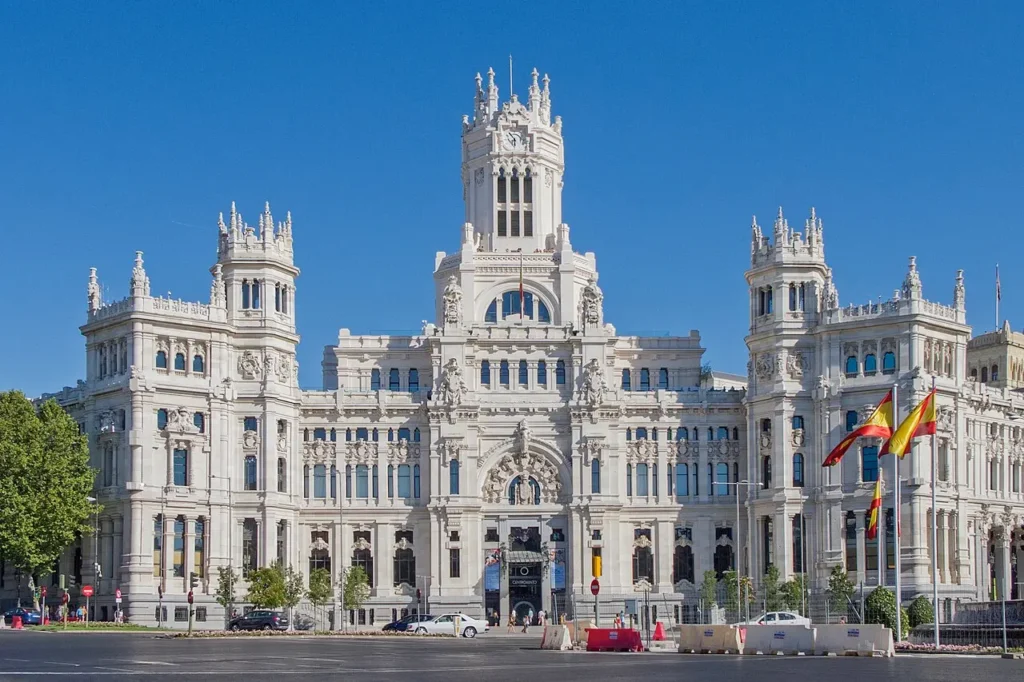
After leaving the Art Triangle, continue along Paseo del Prado toward Plaza de Cibeles. Within a few minutes, the imposing silhouette of the Palacio de Cibeles will appear at the end of the avenue, announcing your arrival at one of Madrid’s most iconic squares.
It’s impossible to miss the spectacular Palacio de Cibeles, the former Communications Palace that now serves as Madrid City Hall. With its richly decorated white façade and monumental architecture, it is one of the most photographed buildings in the Spanish capital.
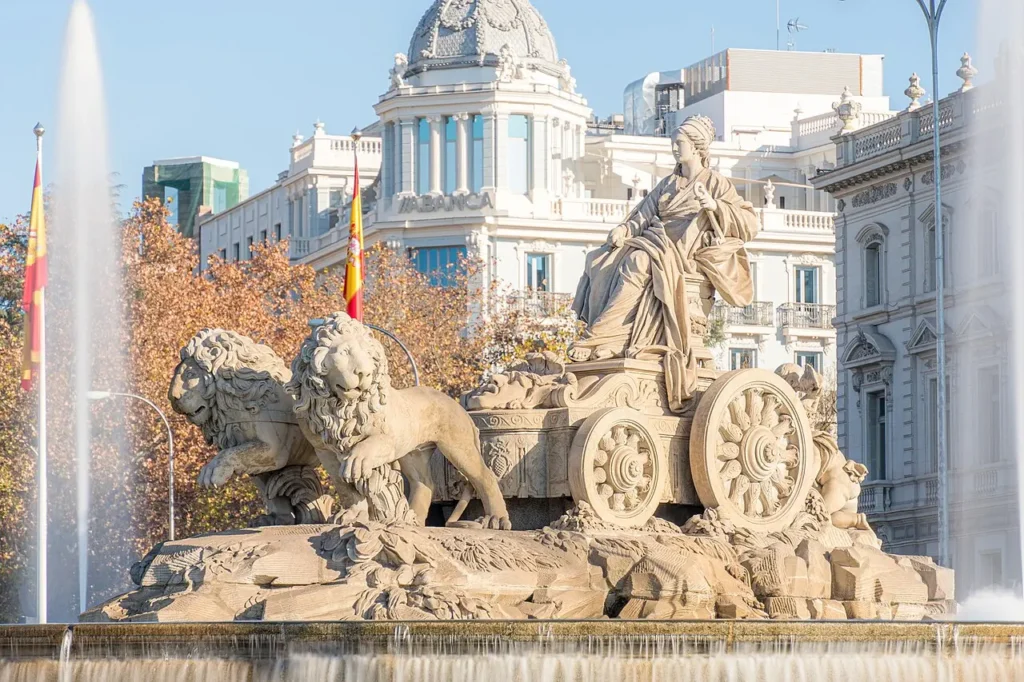
At the center of the square stands the famous Cibeles Fountain, depicting the goddess Cybele riding a chariot pulled by two lions. Far more than just a fountain, it has become a symbol of Madrid and the traditional gathering place where Real Madrid supporters celebrate the club’s major victories.
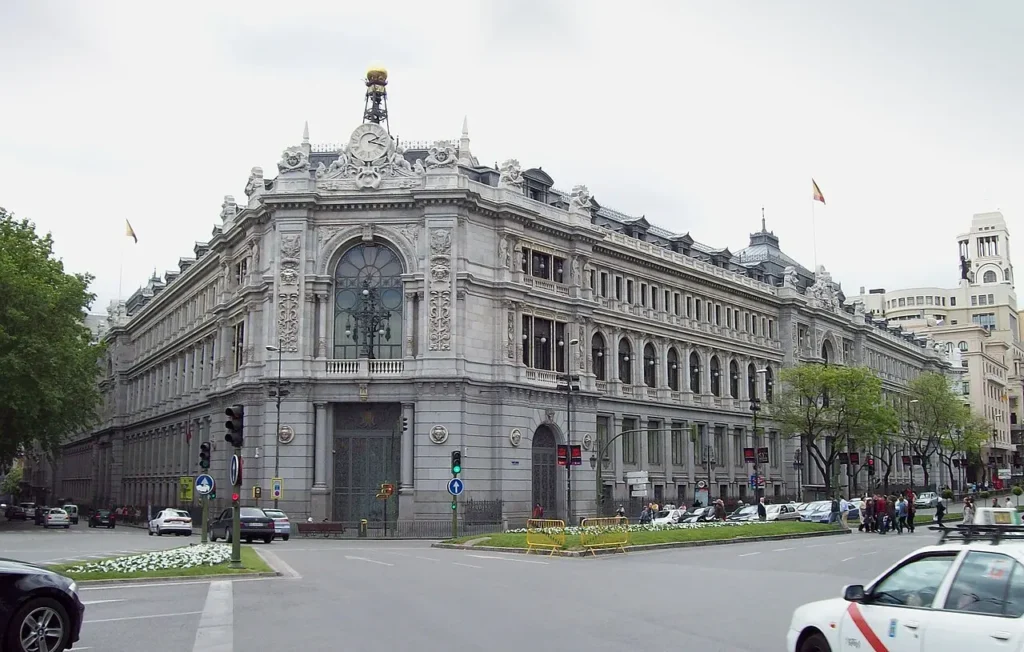
Facing the palace stands the impressive Banco de España, home to the Bank of Spain since the late 19th century. Its reputation extends well beyond its architecture: a popular legend claims that its vault is connected to the waters of the Cibeles Fountain as part of a security system designed to protect its gold reserves in the event of an attempted robbery.
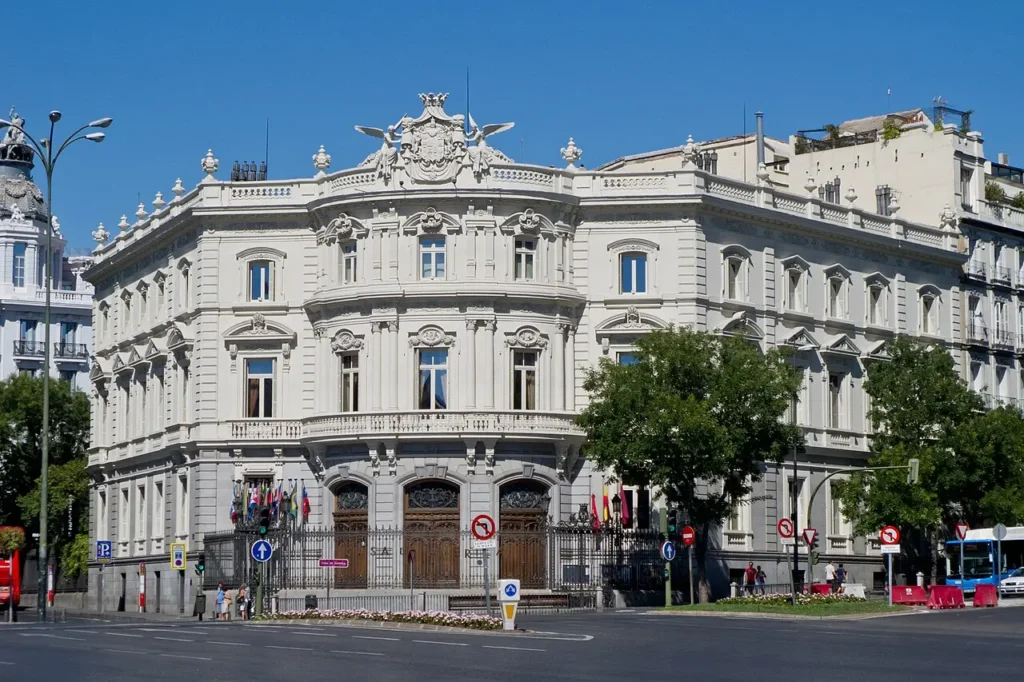
Take a moment to admire the Palacio de Linares as well, a remarkable 19th-century palace that is now home to Casa de América, a cultural institution dedicated to strengthening ties between Spain and Latin America. Its elegant façade adds to the monumental character of the square.
- Carlos Delgado, CC BY-SA 3.0, via Wikimedia Commons
- Fernando, CC BY-SA 4.0, via Wikimedia Commons
- Luis García, CC BY-SA 3.0, via Wikimedia Commons
- Carlos Delgado, CC BY-SA 3.0, via Wikimedia Commons
Where to Take a Break?
- Restaurante Vinoteca García de la Navarra
- Azotea Cibeles
- Taberna Montalbán
- Em Sherif Madrid
- Bareto Alcalá
- Raimunda
My TravelOptim Tip
If your schedule allows, head up to Mirador Madrid, located at the top of the Palacio de Cibeles. For €4 (adult admission), you’ll enjoy one of the best panoramic views of Madrid, with excellent views over Gran Vía, El Retiro Park, Paseo del Prado, and the city’s rooftops. Be sure to book your time slot online in advance, especially during busy periods.
2:00 PM – Puerta del Sol
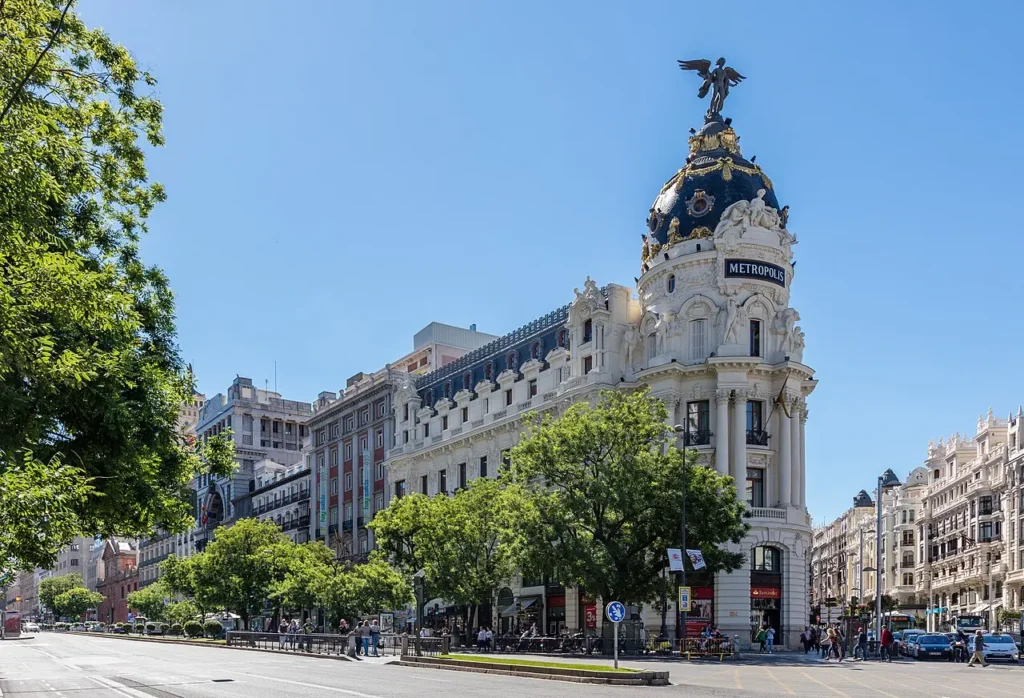
After leaving Plaza de Cibeles, follow Calle de Alcalá toward Puerta del Sol. As you walk, remember to look up and admire the magnificent façades lining this historic avenue. Along the way, you’ll pass the famous Metrópolis Building, easily recognizable by its elegant black dome topped with a golden winged statue. It is undoubtedly one of the most photographed buildings in Madrid. Just a few meters farther on stands the Palacio de la Equitativa, another iconic landmark whose architecture reflects the prestige Calle de Alcalá already enjoyed in the early 20th century.
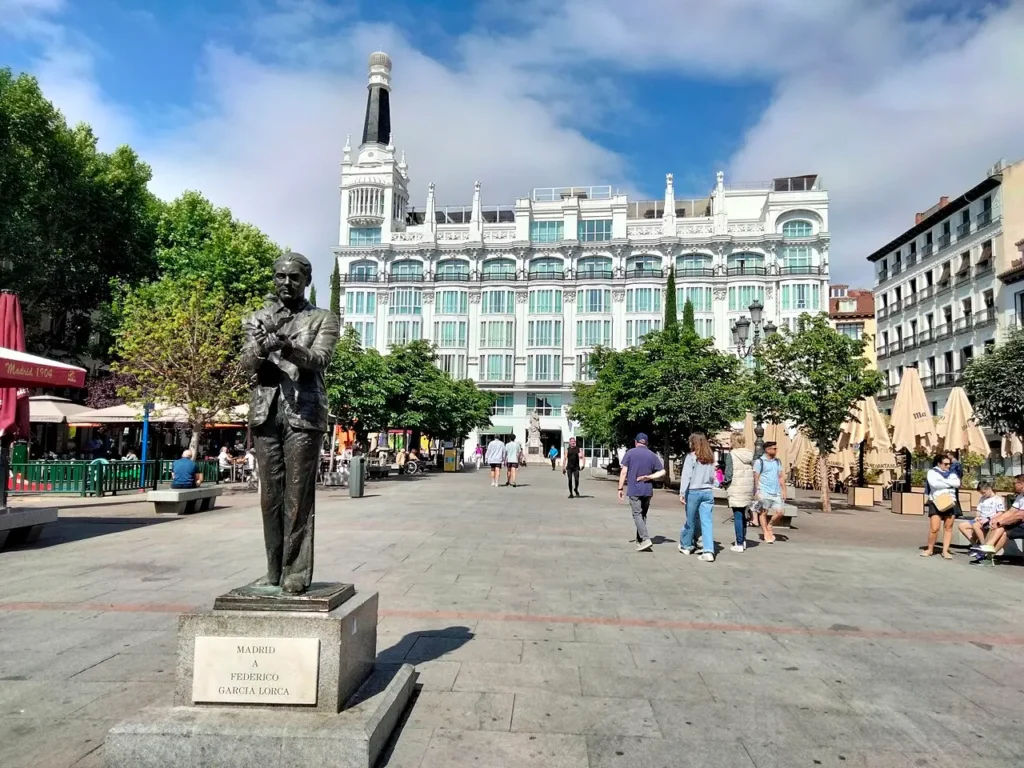
If you have a little extra time, I recommend taking a short detour to Plaza de Santa Ana. Popular with locals, this lively square is surrounded by café terraces and historic theaters and features statues of the writers Calderón de la Barca and Federico García Lorca. It makes for a pleasant stop before continuing toward the heart of Madrid.
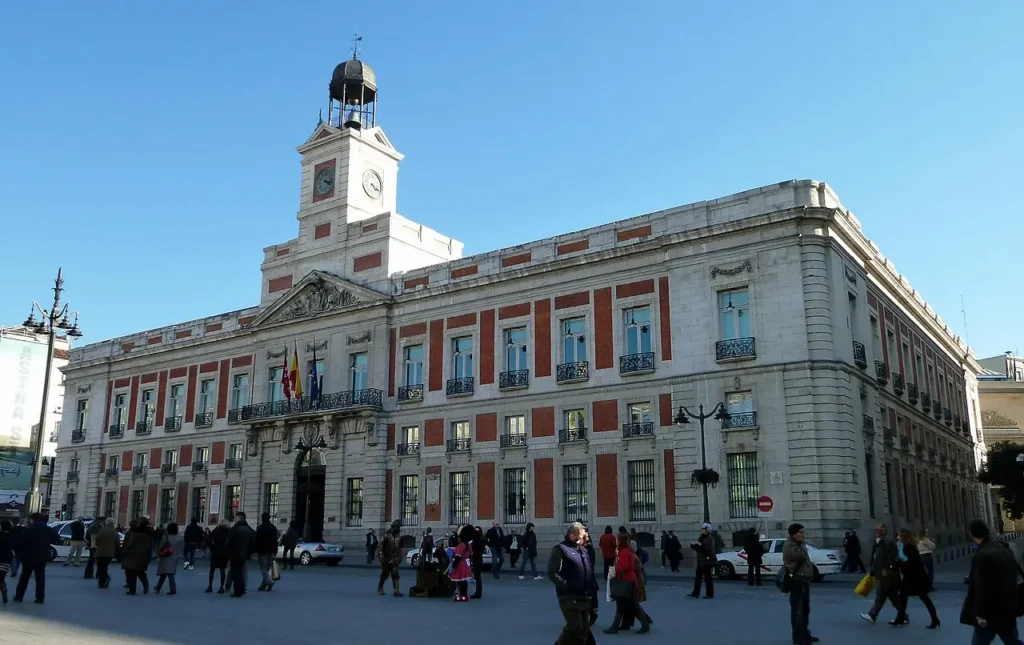
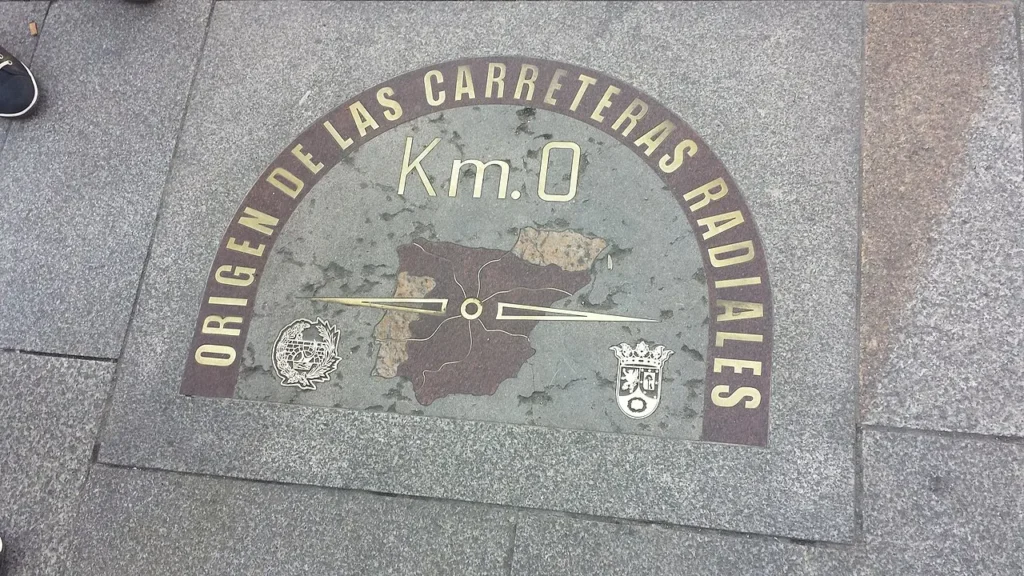
A few minutes later, you’ll arrive at Puerta del Sol, the true heart of the Spanish capital. Your attention will immediately be drawn to the Casa de Correos, easily recognizable by its clock tower. Every December 31, millions of Spaniards follow the twelve midnight chimes of this famous clock as part of the country’s traditional New Year’s Eve celebrations. At the foot of the building, you’ll find the famous Kilómetro Cero (Kilometer Zero), the official starting point for Spain’s main national roads and one of the most photographed spots in Madrid.
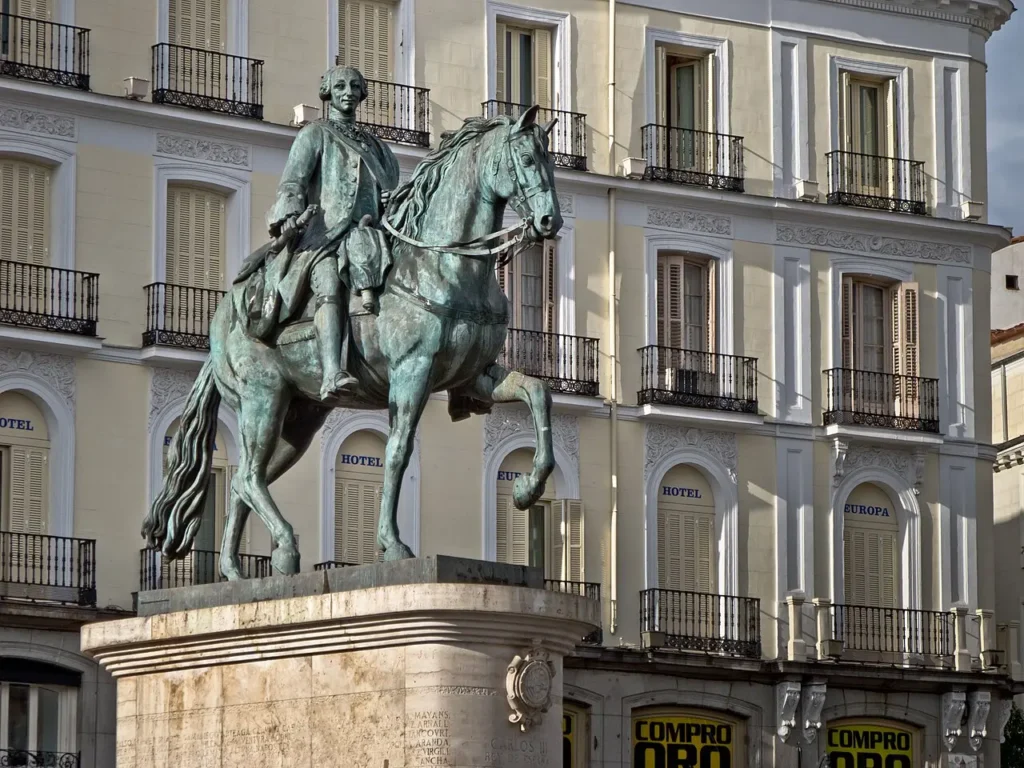
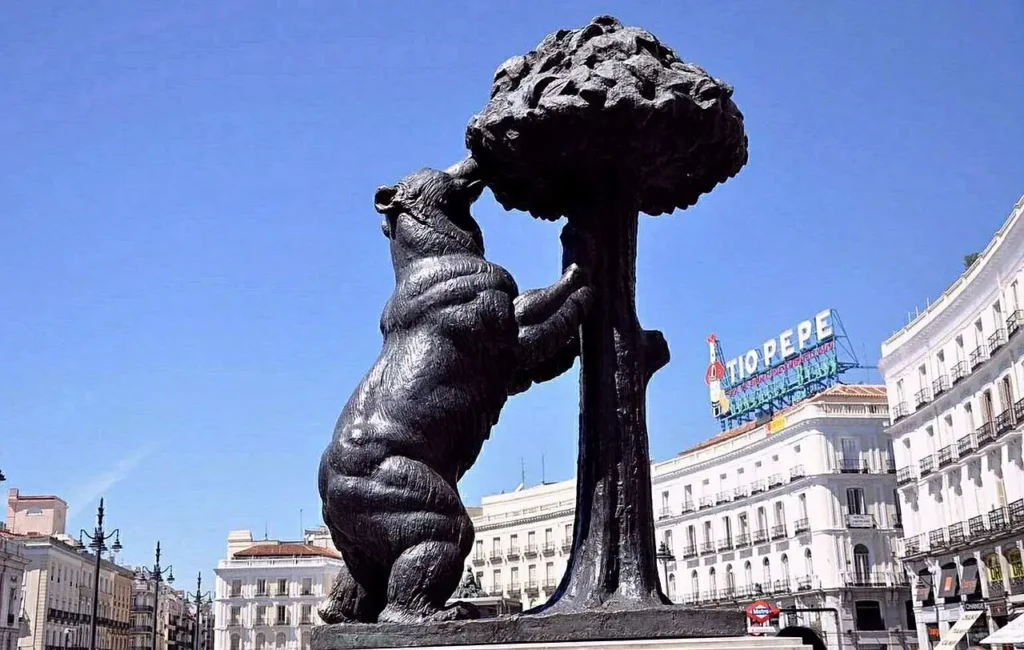
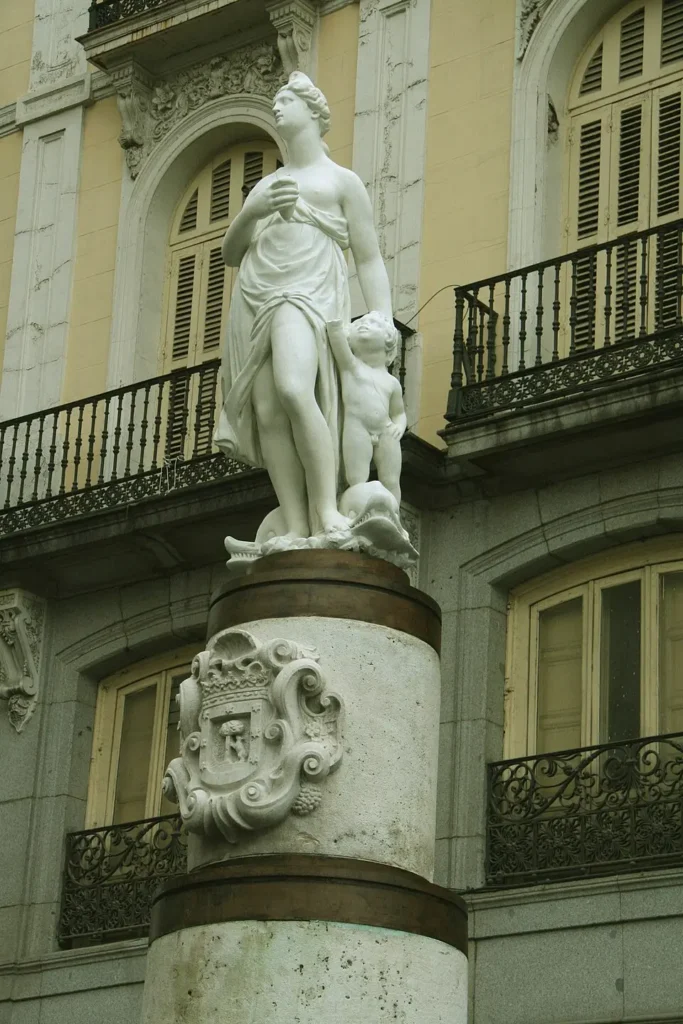
At the center of the square stands the equestrian statue of Charles III, a monarch sometimes nicknamed the “best mayor of Madrid” because of the many improvements he brought to the city during the 18th century. Before leaving the square, take a moment to spot two other Madrid symbols: the famous Statue of the Bear and the Strawberry Tree, the official emblem of the city, and Mariblanca, an elegant statue that once decorated several fountains in the capital. Finally, look up at the buildings surrounding the square to spot the legendary illuminated Tío Pepe sign, which has become one of Madrid’s most recognizable symbols over the decades.
- Diego Delso, CC BY-SA 4.0, via Wikimedia Commons
- Diego Delso, CC BY-SA 4.0, via Wikimedia Commons
- Enric, CC BY 4.0, via Wikimedia Commons
- Luis García, CC BY-SA 3.0, via Wikimedia Commons
- EMEkblom, CC BY-SA 3.0, via Wikimedia Commons
- Carlos Delgado, CC BY-SA 3.0, via Wikimedia Commons
- János Korom Dr. from Wien, Austria, CC BY-SA 2.0, via Wikimedia Commons
- Tamorlan, CC BY-SA 3.0, via Wikimedia Commons
Where to Take a Break?
At Plaza de Santa Ana:
- Lateral
- Tapa Tapa Santa Ana
At Puerta del Sol:
- La Mallorquina
- Casa Labra
- Goiko
My TravelOptim Tip
You can’t leave Puerta del Sol without taking a photo at the Kilómetro Cero (Kilometer Zero) plaque! Place one foot on each side of the plaque to capture your visit to the official starting point of Spain’s national roads. It’s one of Madrid’s most iconic photo opportunities.
3:00 PM – Plaza Mayor
From Puerta del Sol, make your way to Plaza Mayor along Calle de Postas, one of the liveliest and most pleasant routes connecting the two squares. Within just a few minutes, you’ll pass beneath the arcades and emerge onto one of Spain’s most beautiful squares.
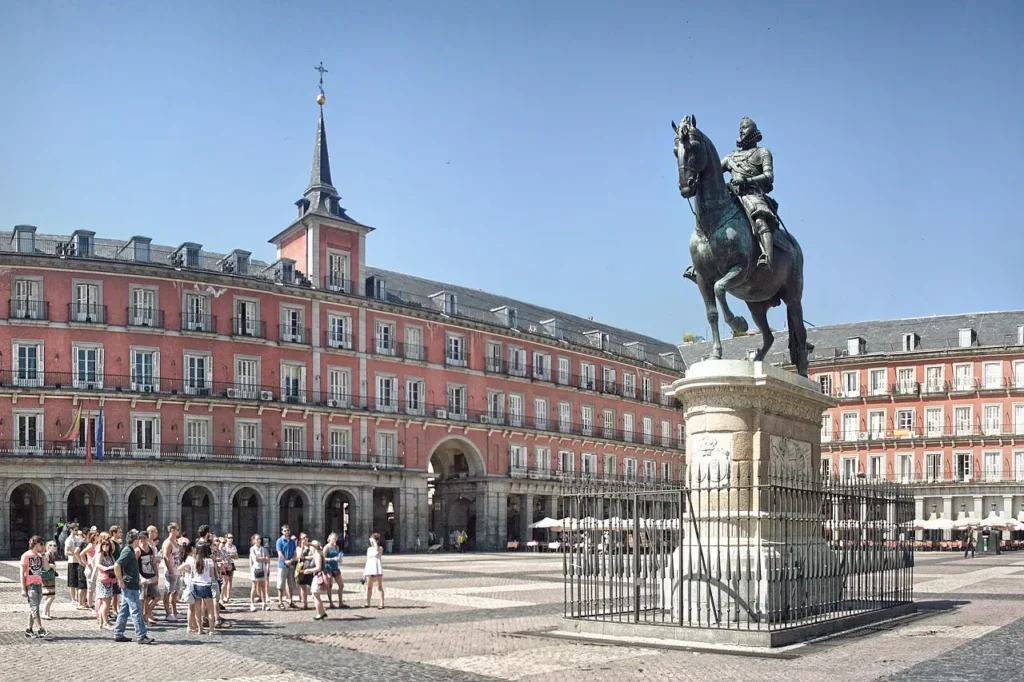
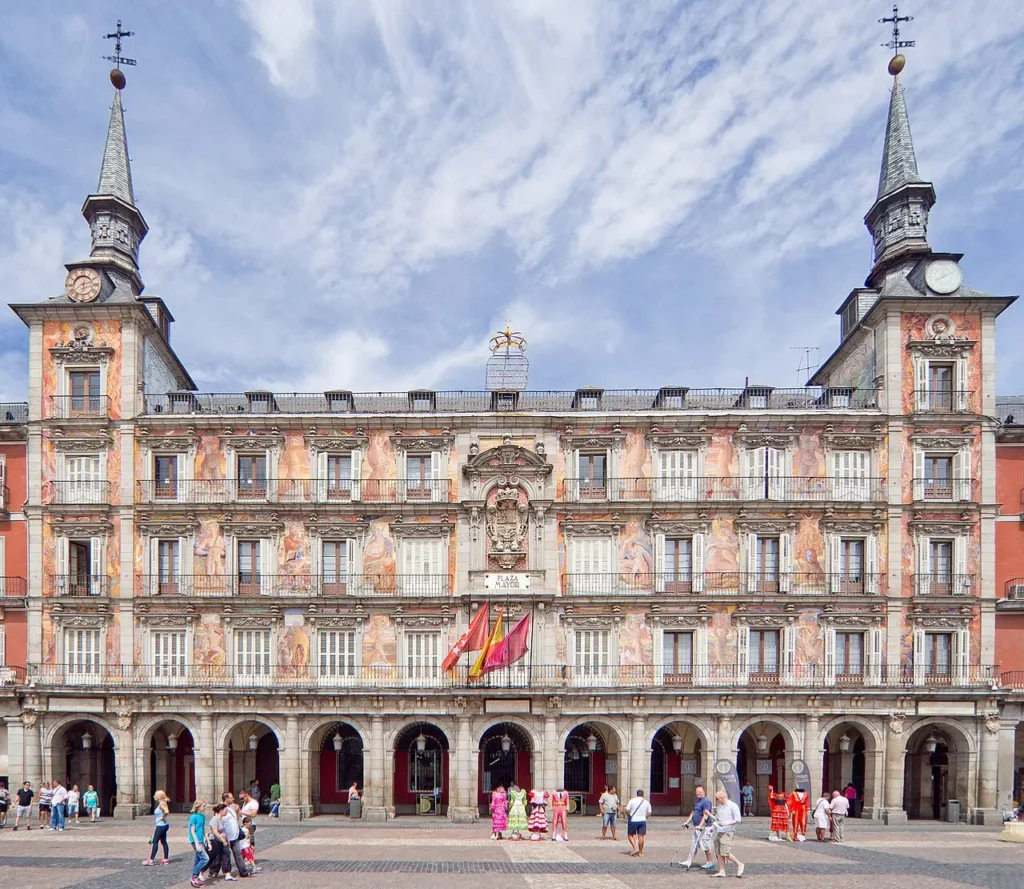
Built in the 17th century, Plaza Mayor is surrounded by elegant red-façade buildings with 237 balconies, giving the square its distinctive character. Start by admiring the equestrian statue of Philip III, which has stood at the center of the square since 1848. Then turn your attention to the Casa de la Panadería, easily recognizable by the beautiful colorful frescoes decorating its façade.
Before continuing your itinerary, take a few minutes to walk beneath the arcades surrounding the square. Today, they are home to numerous cafés, restaurants, and souvenir shops, while also offering some excellent viewpoints for photographing Plaza Mayor from different angles.
- Juanedc from Zaragoza, España, CC BY 2.0, via Wikimedia Commons
- J.L. Mm, CC BY 2.0, via Wikimedia Commons
Where to Take a Break?
- Cafetería Magerit
- Arrabal Madrid
- Sobrino de Botín
- Chocolateria San Ginés
- Café de la Plaza – Patio
- Mercado de San Miguel
My TravelOptim Tip
If portrait artists are working beneath the arcades of Plaza Mayor during your visit, take the opportunity to bring home a unique souvenir from your trip. A pencil sketch generally costs between €15 and €25, while a color portrait or caricature usually costs between €25 and €40, depending on the artist and the format you choose. It’s an original experience—and a much more personal keepsake than a typical souvenir from a shop.
4:00 PM – Almudena Cathedral
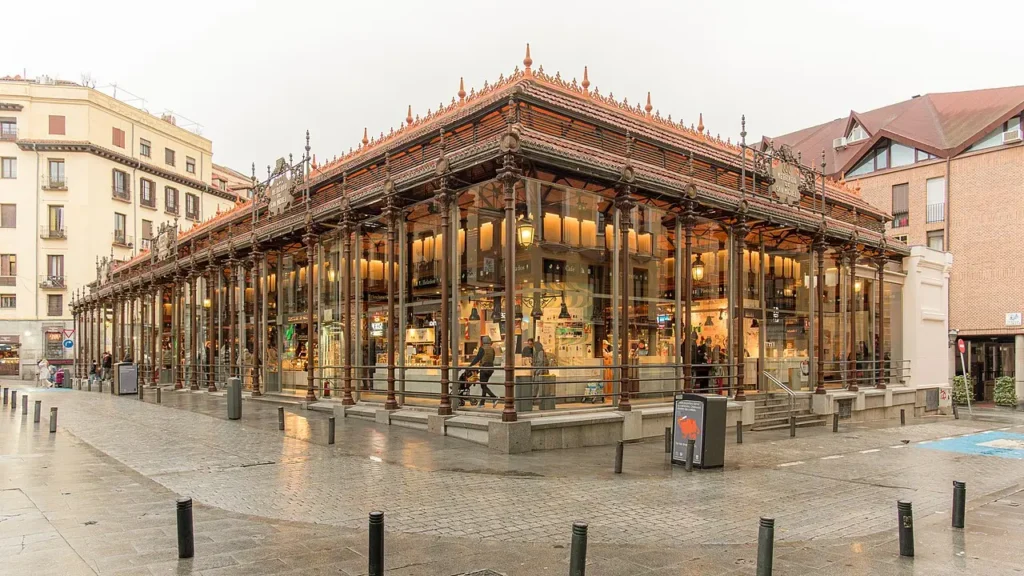
From Plaza Mayor, follow Calle Mayor toward the Royal Palace. After a few minutes, you’ll pass the famous Mercado de San Miguel, one of Madrid’s best-known food markets. Even if you don’t stop inside, take a moment to admire its elegant iron structure, dating back to the early 20th century.
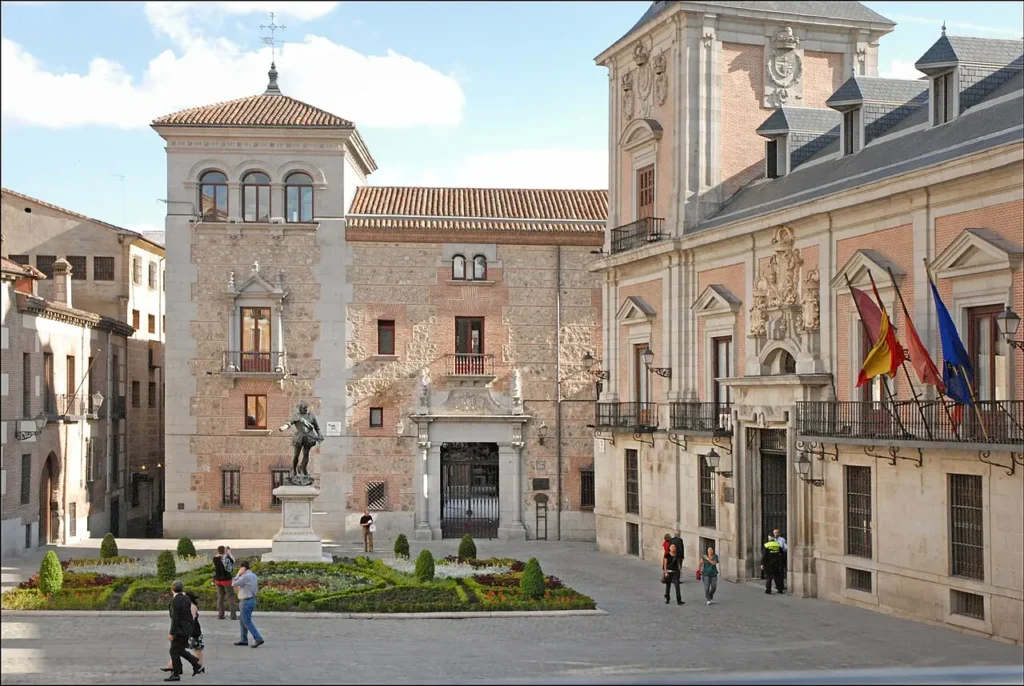
Continue to Plaza de la Villa, one of the oldest squares in Madrid. Once the city’s administrative heart, it is surrounded by some of the capital’s finest historic buildings. Here, you can admire the Casa de la Villa, Madrid’s former City Hall; the Casa de Cisneros, a remarkable Plateresque-style palace connected to the former City Hall by a covered passageway; and the Torre de los Lujanes, considered the oldest civil building in Madrid. At the center of the square stands a statue of Admiral Álvaro de Bazán, one of Spain’s most renowned naval commanders.
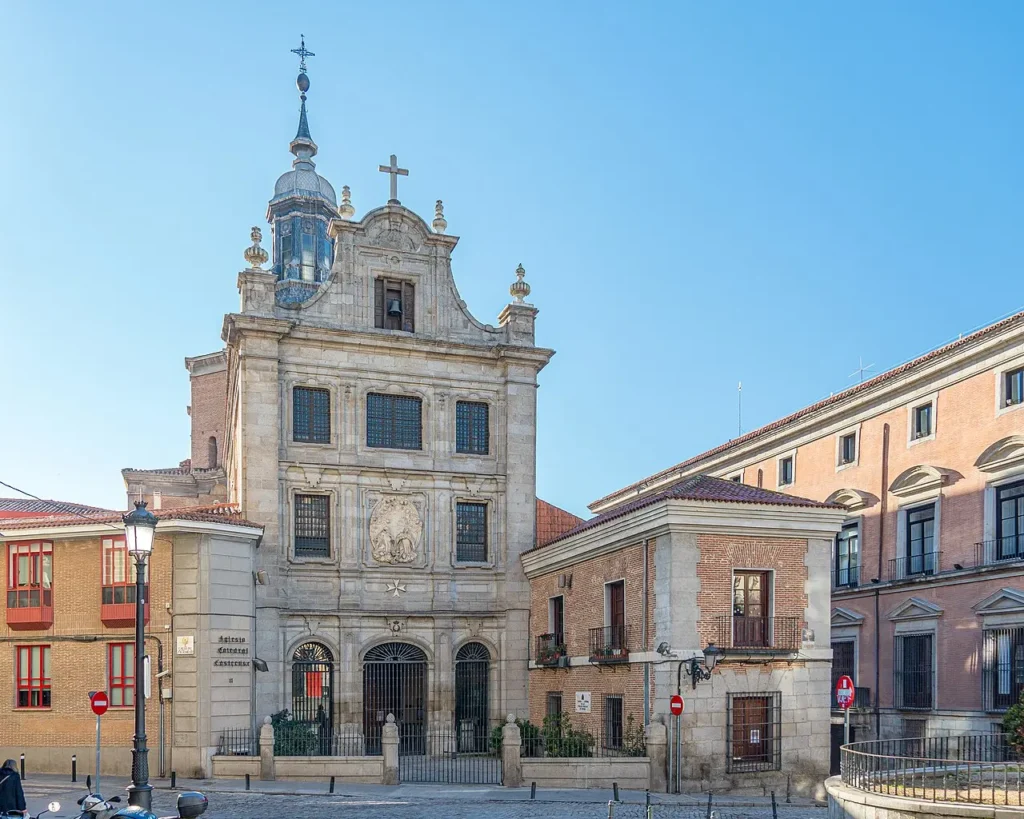
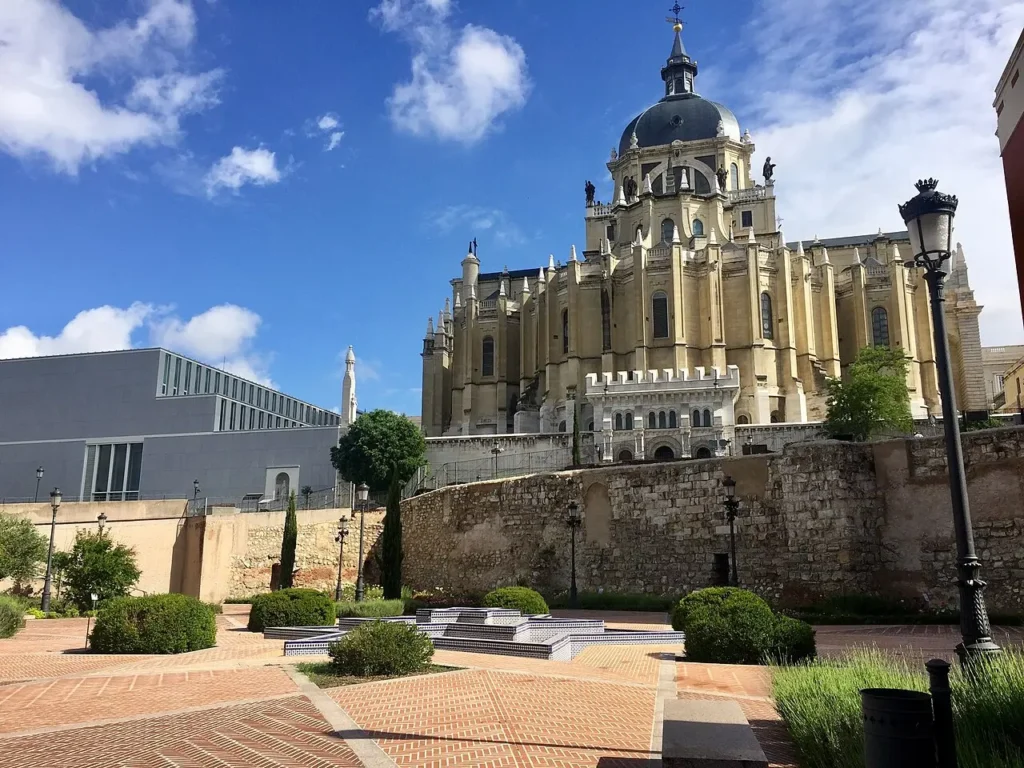
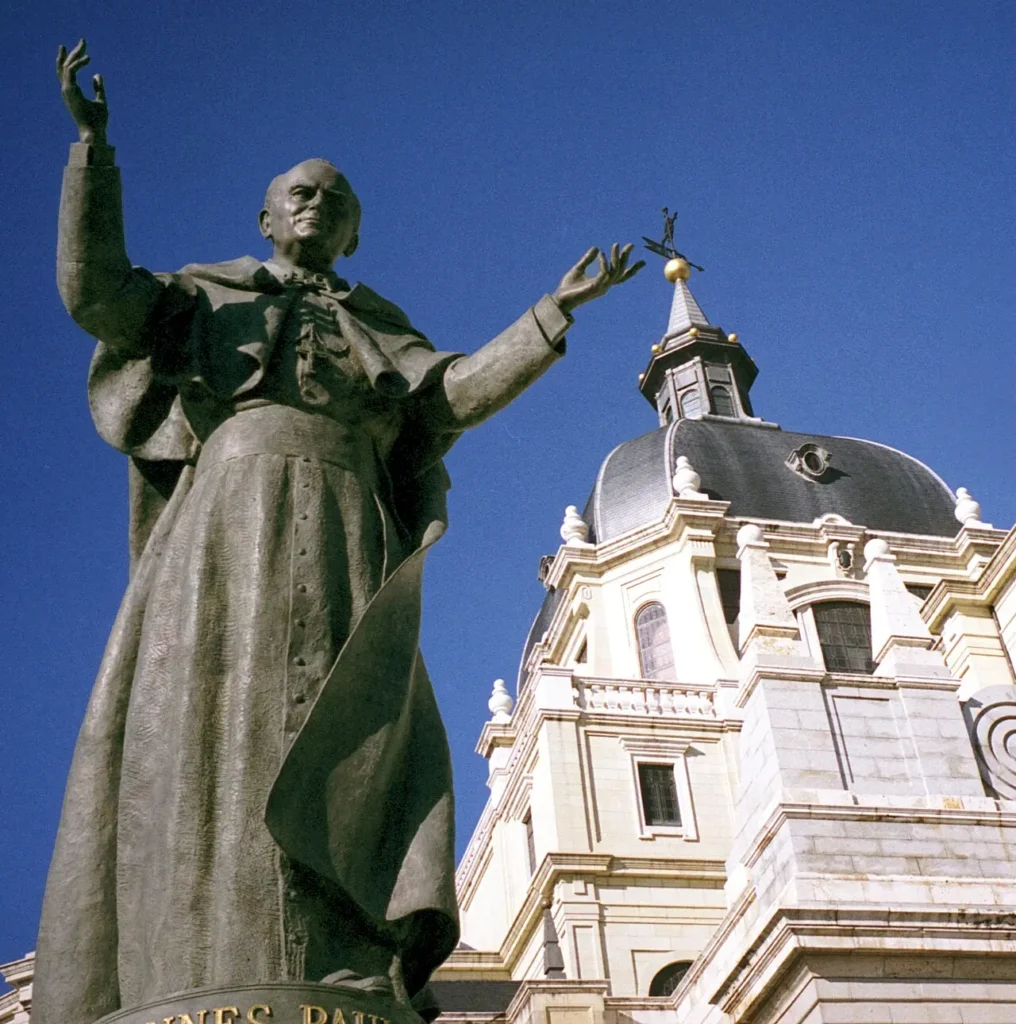
Continue along Calle Mayor. Before reaching the cathedral, you’ll pass the Cathedral Church of the Armed Forces and the remains of Madrid’s Arab Walls, the oldest surviving fortifications in the city. A few more steps will bring you to the square in front of Almudena Cathedral. Before heading inside, take a moment to admire its majestic façade and the statue of Pope John Paul II, erected in memory of his visits to Madrid. You can then step inside Madrid’s main cathedral.
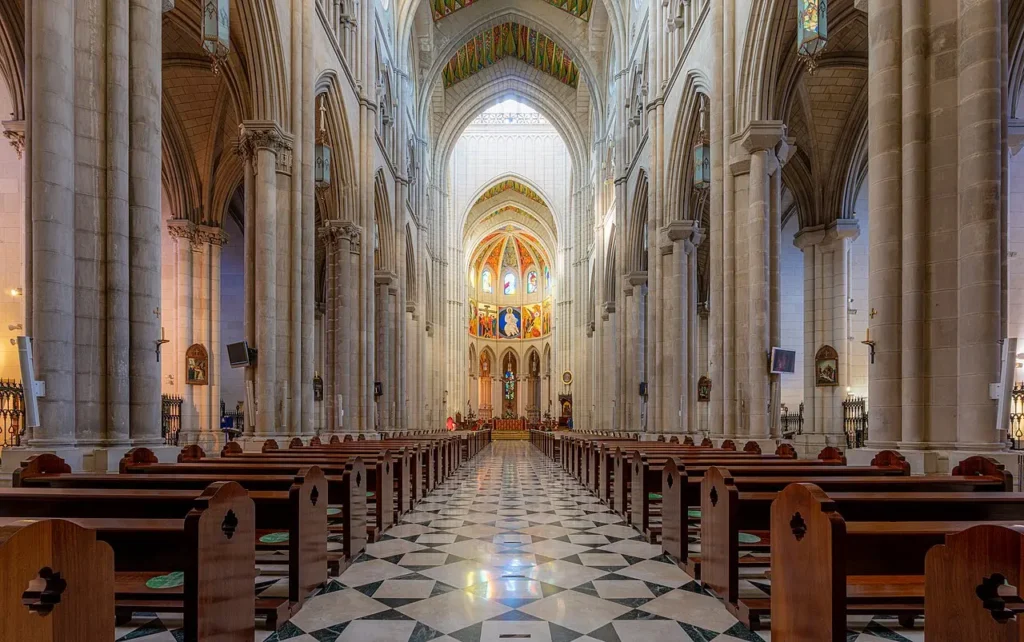
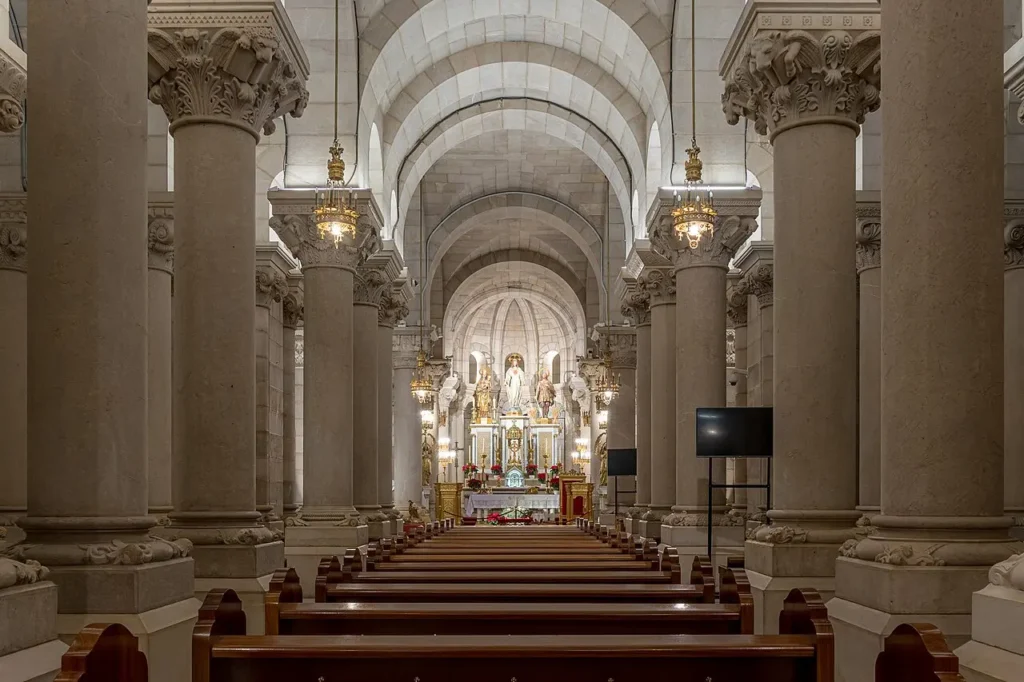
Built opposite the Royal Palace, Almudena Cathedral is Madrid’s principal Catholic cathedral. Its Neoclassical exterior blends harmoniously with the neighboring palace, while the interior is surprisingly contemporary. Entry to the cathedral is free, although a €1 donation is recommended to help with its upkeep. If you’d like to explore further, the museum and dome can be visited with a paid ticket.
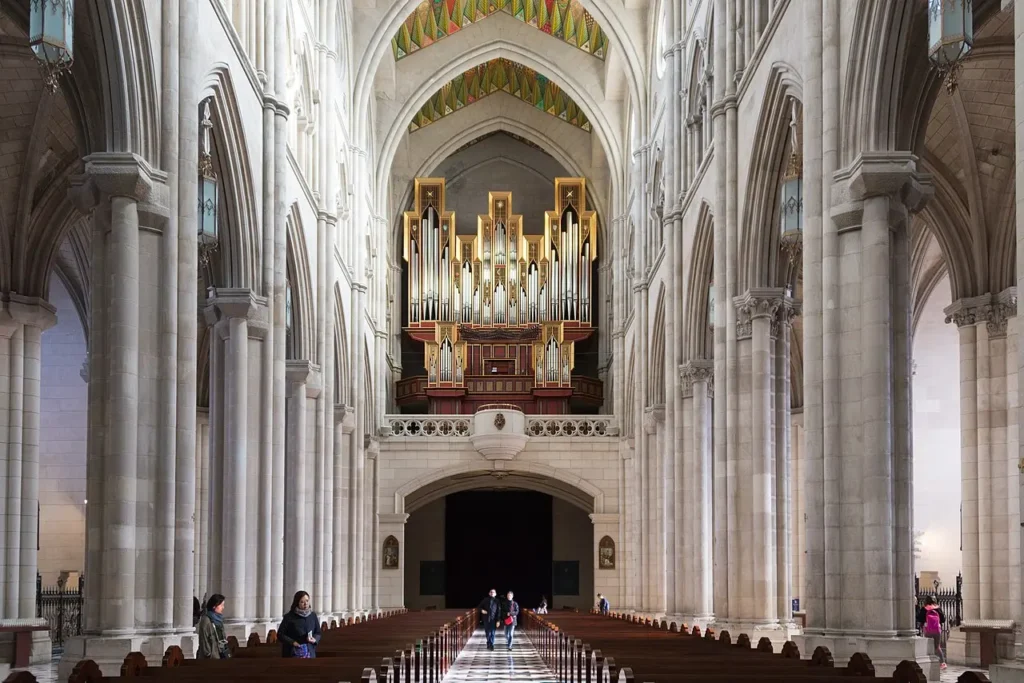
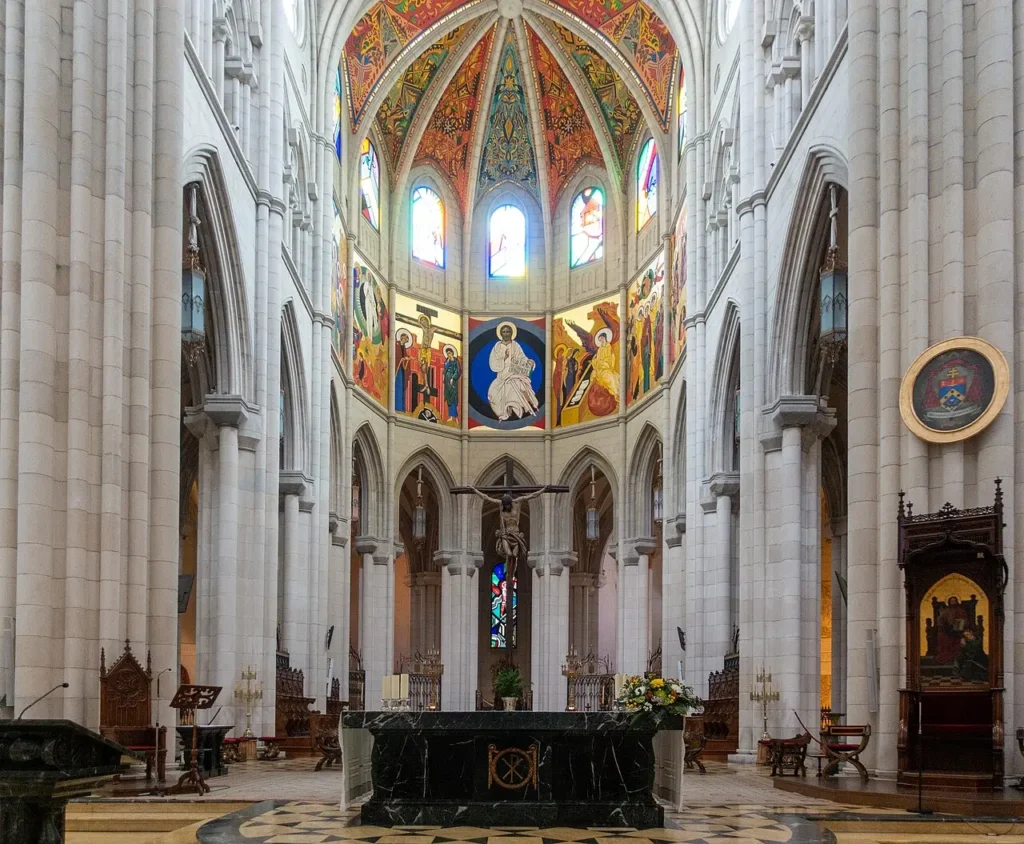
Inside, take time to walk along the central nave, admire the choir and main apse with their striking modern colors, and look up at the magnificent organ. If you also visit the crypt, notice the numerous columns supporting the structure and giving this remarkable space its distinctive atmosphere.
- Fernando, CC BY-SA 4.0, via Wikimedia Commons
- dalbera from Paris, France, CC BY 2.0, via Wikimedia Commons
- Fernando, CC BY-SA 4.0, via Wikimedia Commons
- Riozujar, CC BY-SA 4.0, via Wikimedia Commons
- Photograph by Greg O’Beirne, CC BY-SA 3.0, via Wikimedia Commons
- Fernando, CC BY-SA 4.0, via Wikimedia Commons
- xiquinhosilva from Cacau, CC BY 2.0, via Wikimedia Commons
- Kent Wang from Barcelona, Spain, CC BY-SA 2.0, via Wikimedia Commons
- Fernando, CC BY-SA 4.0, via Wikimedia Commons
Where to Take a Break?
- Mercado de San Miguel
- Havanna Café
- Casa Ciriaco
- Maison Glacée
- El Anciano Rey de los Vinos
- Singular de Mayor 88
My TravelOptim Tip
If your schedule allows, don’t miss the chance to visit the cathedral dome. Included with the museum ticket, it offers one of the best panoramic views over the Royal Palace, Plaza de la Armería, and the rooftops of Madrid’s historic center. It’s also an excellent spot for taking beautiful photos of the city.
5:00 PM – Royal Palace of Madrid
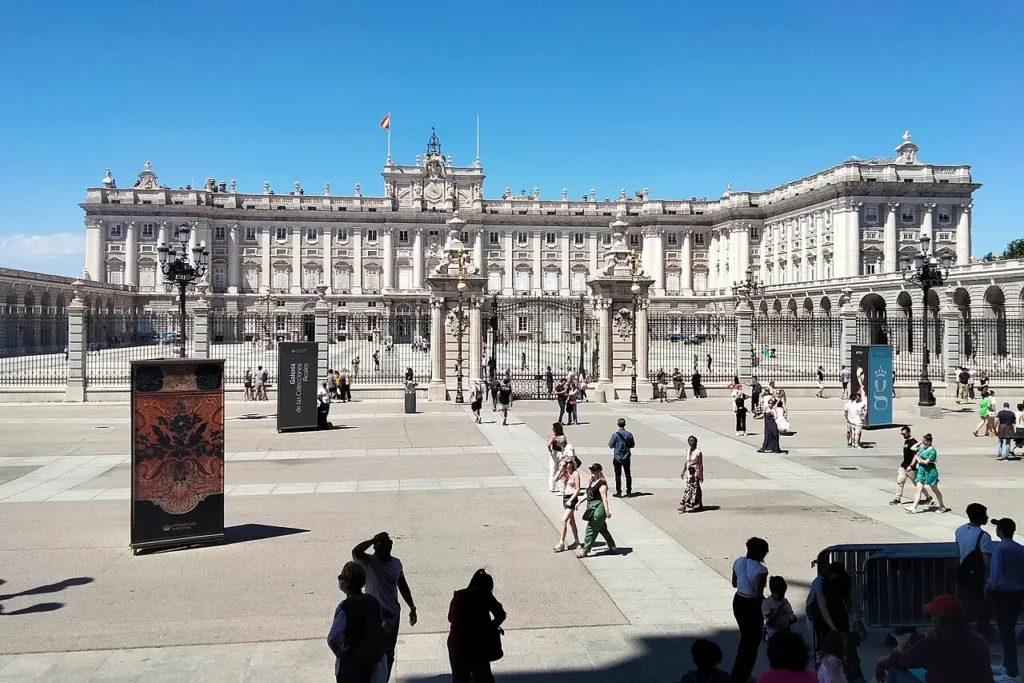
After leaving Almudena Cathedral, cross Plaza de la Armería to reach the entrance to the Royal Palace of Madrid. Flanked by the cathedral on one side and the palace on the other, this vast square offers one of the finest views of Madrid’s royal district. Take a moment to admire the palace’s imposing façades, then make a short detour to the nearby Mirador de la Cornisa. This free viewpoint offers one of the best panoramic views over western Madrid, Casa de Campo, and the surroundings of the Royal Palace. From there, you can continue into the largest royal palace in Western Europe.
Although it is the official residence of the King of Spain, the Royal Palace is now mainly used for state ceremonies. At other times, much of the palace is open to visitors, offering a fascinating glimpse into the splendor of the Spanish monarchy.
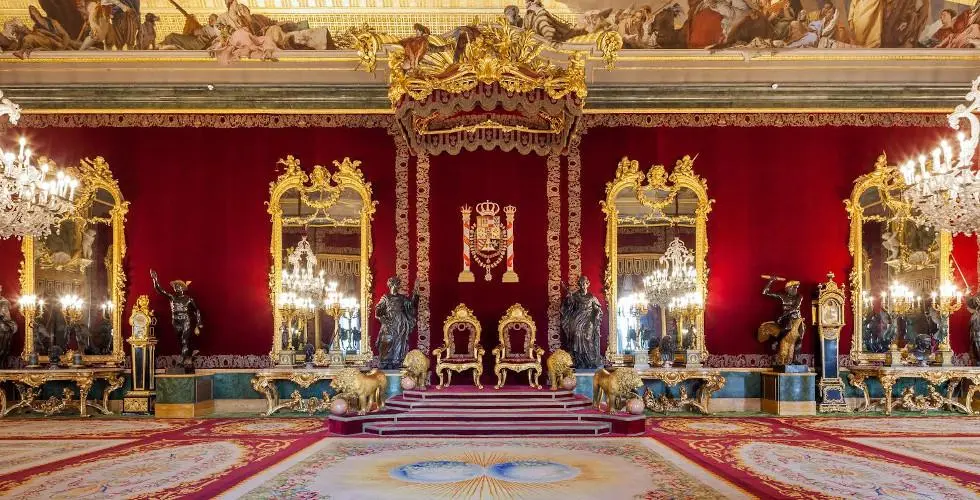
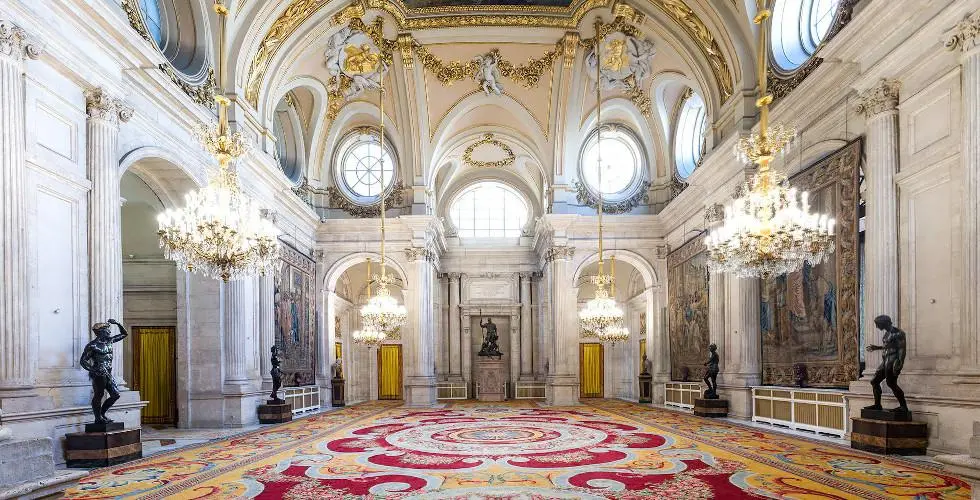
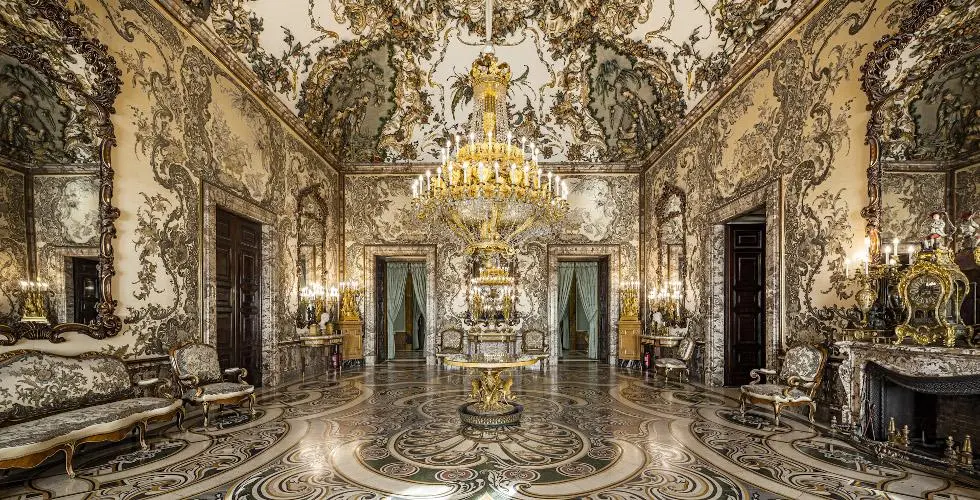
Among its most remarkable rooms, don’t miss the majestic Throne Room, still used for certain official ceremonies; the spectacular Hall of Columns, which has hosted several important historical events; and the refined Gasparini Room, considered one of the most lavishly decorated rooms in the palace.
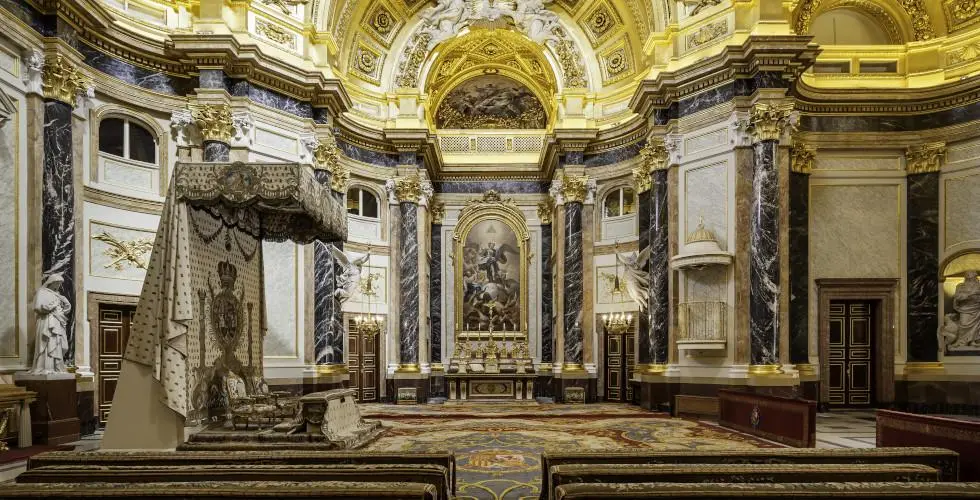
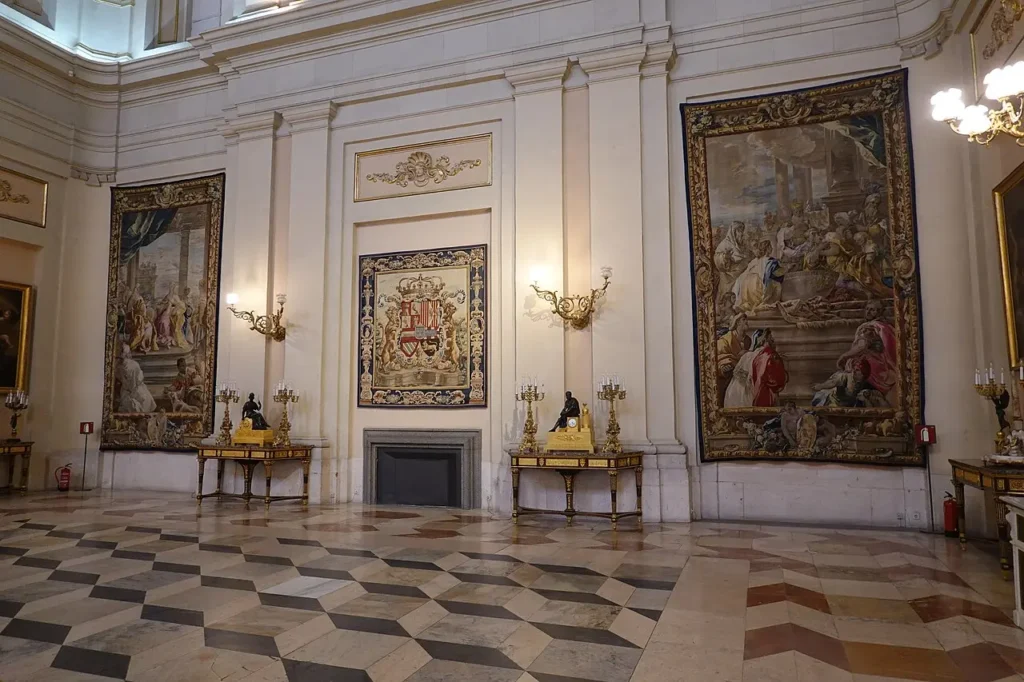
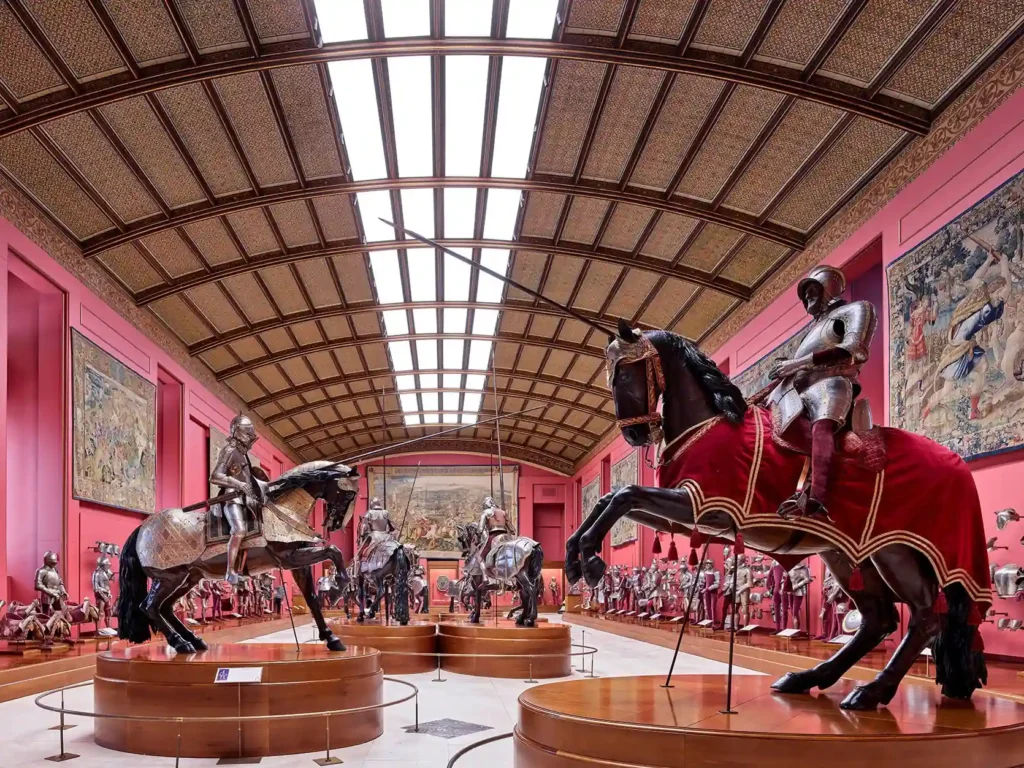
Continue your visit with the Royal Chapel, remarkable for its architecture and decoration, before discovering the Hall of the Halberdiers, once used by the Royal Guard. Finally, finish with the Royal Armoury (Real Armería), home to one of Europe’s most important collections of royal weapons and armor.
- Enric, CC BY-SA 4.0, via Wikimedia Commons
- © Patrimonio Nacional – Site officiel
- © Patrimonio Nacional – Site officiel
- © Patrimonio Nacional – Site officiel
- © Patrimonio Nacional – Site officiel
- Joseolgon, CC BY 4.0, via Wikimedia Commons
- © Patrimonio Nacional – Site officiel
Where to Take a Break?
- Café de Oriente
- La Lonja del Mar
- La Botillería
- Heladería Palazzo
- Sol de Beirut
- Restaurante La Mi Venta
My TravelOptim Tip
Book your tickets online before your visit to avoid long lines. This itinerary is designed to bring you to the palace at around 5:00 PM, giving you enough time to explore it during the summer season, when visits generally continue until around 7:00 PM. During the winter season, however, the palace closes earlier, at around 6:00 PM. If possible, try to reach this stop about an hour earlier so you can enjoy your visit without feeling rushed.
7:00 PM – Temple of Debod
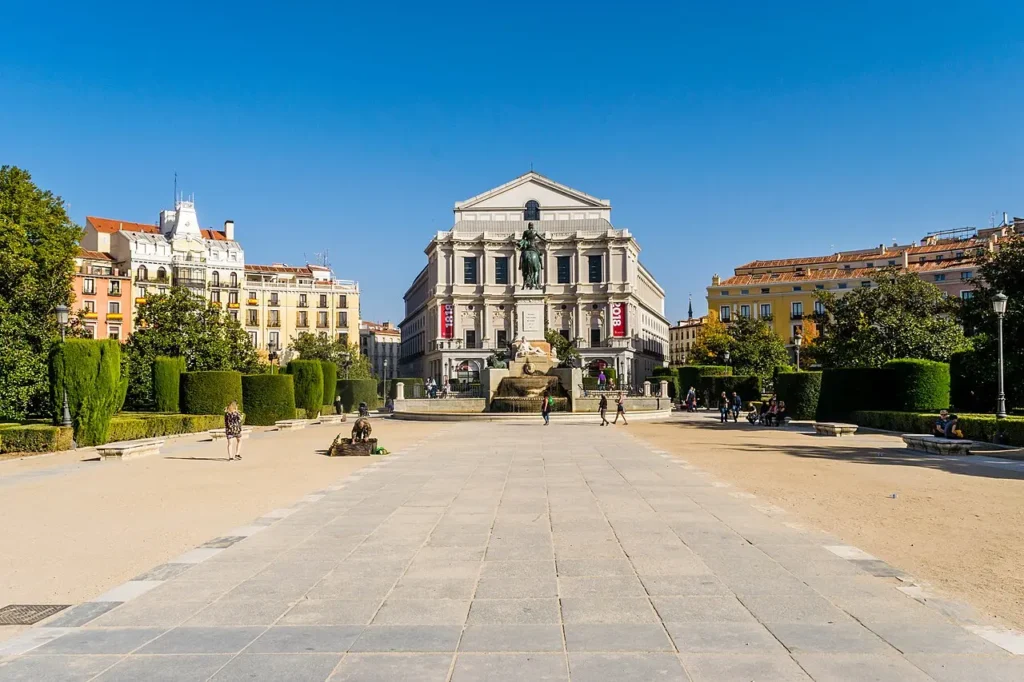
After leaving the Royal Palace, take a few minutes to explore the surrounding area. Start with Plaza de Oriente, one of Madrid’s most elegant squares. Here, you can admire the beautiful façade of the Teatro Real, the city’s main opera house, as well as the equestrian statue of Philip IV, famous for its remarkable balance, with the horse supported only by its hind legs. Before continuing, take some time to walk along the Paseo de las Estatuas, lined with sculptures representing several Spanish monarchs.
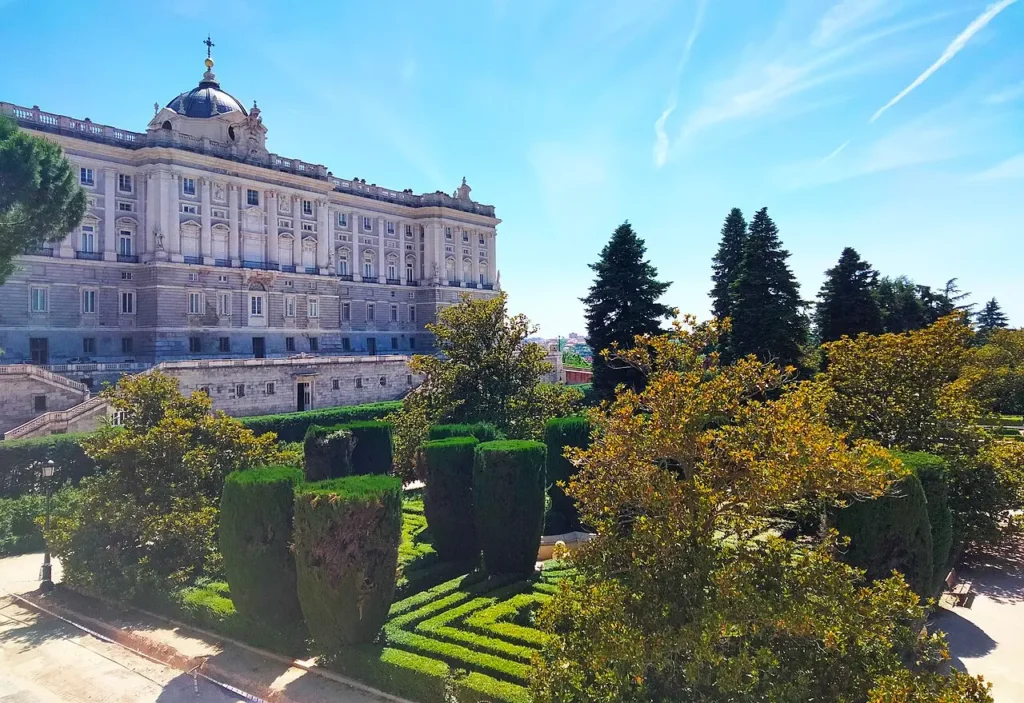
Next, head to the Sabatini Gardens, located on the north side of the Royal Palace. With their perfectly trimmed hedges, fountains, and geometric layout, they are among Madrid’s most beautiful gardens. They also offer one of the best spots for photographing the northern façade of the Royal Palace.
After leaving the gardens, follow Cuesta de San Vicente and then Calle de Irún. You’ll soon see a long staircase leading up to the park surrounding the Temple of Debod. Be prepared to climb a few steps—the view waiting for you at the top is well worth the effort.
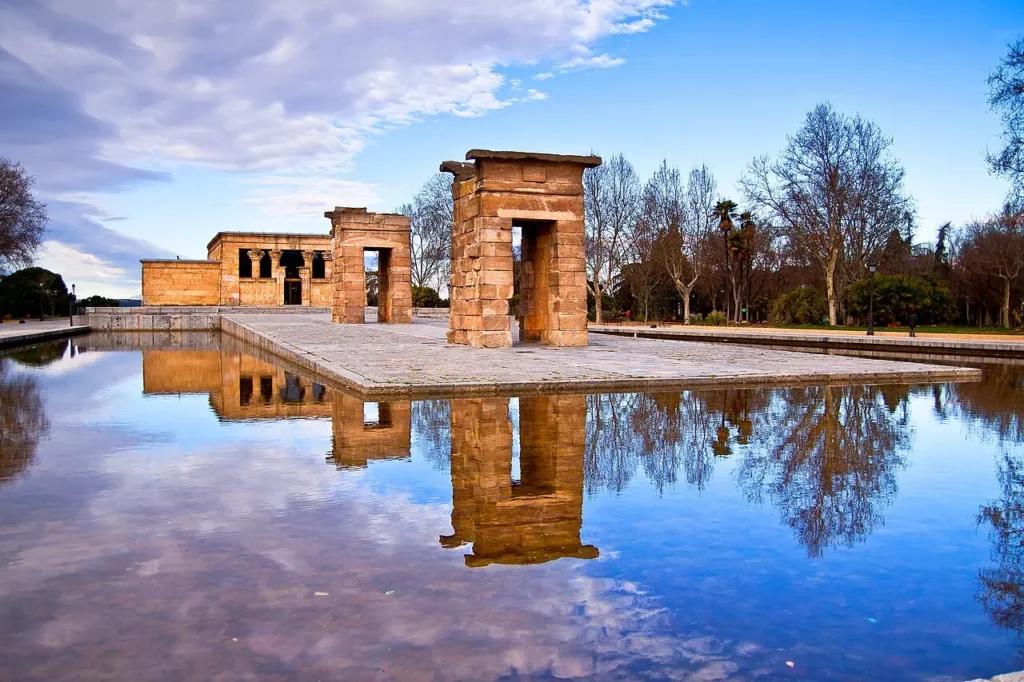
Gifted to Spain by Egypt in 1968 in recognition of the country’s contribution to the rescue of the Nubian temples, the Temple of Debod is an authentic Egyptian temple more than 2,000 years old. Surrounded by reflecting pools, it is one of the most unusual sights in Madrid.
But what makes the Temple of Debod particularly famous is its spectacular setting. From the park’s different viewpoints, you can enjoy sweeping views over Casa de Campo, the Manzanares Valley, the Royal Palace, Almudena Cathedral, and, on clear days, the Sierra de Guadarrama mountains. At sunset, the golden light illuminating the temple and the surrounding landmarks creates one of the most memorable views in Madrid.
- Oliver Gargan, CC BY-SA 4.0, via Wikimedia Commons
- Choniron, CC BY-SA 3.0 ES, via Wikimedia Commons
- Enric, CC BY-SA 4.0, via Wikimedia Commons
Where to Take a Break?
- Café Apapacho
- Café de la Rivière
- Heladería Artesanal TUTTI FRUTTI
- Cafeteria La Cueva de Barragán
My TravelOptim Tip
Try to plan your day so that you arrive at the Temple of Debod about 30 minutes before sunset. This is when the light is at its most spectacular and the panoramic views are at their best. In winter, when the days are much shorter, consider shortening some of your earlier visits—particularly the museum or the Royal Palace—so you don’t miss this special moment, often considered one of the best sunset experiences in Madrid.
8:00 PM – Plaza de España
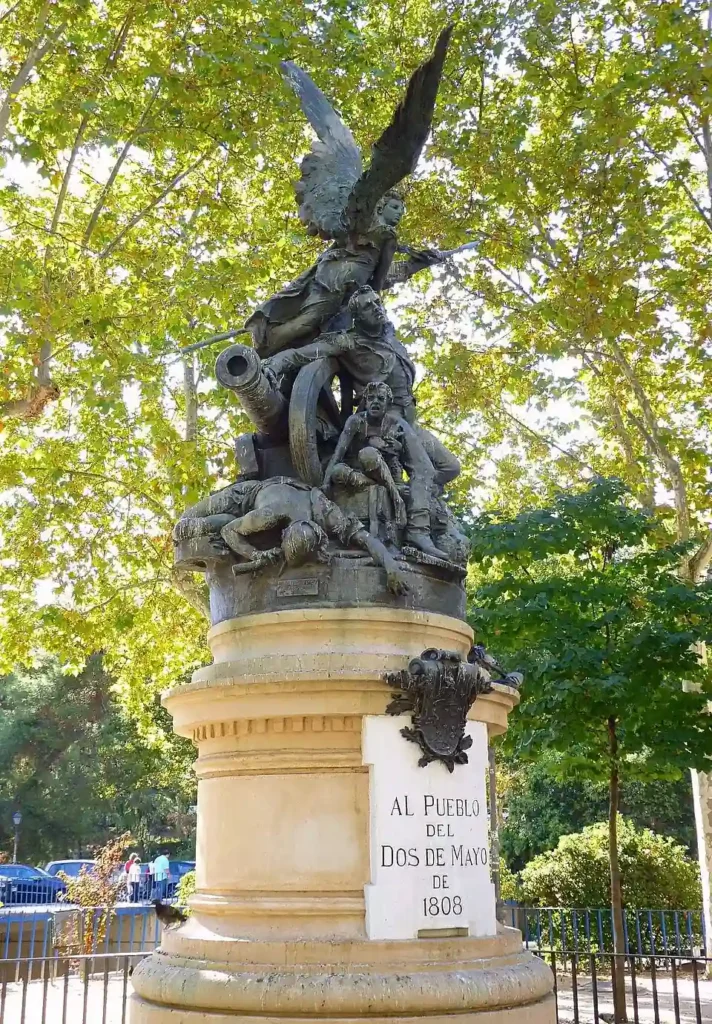
After leaving the Temple of Debod, head down the stairs toward Calle de Ferraz. You’ll walk through the peaceful Parque de la Montaña before making your way to Plaza de España. Along the way, take a moment to see the Monumento al Pueblo del Dos de Mayo de 1808, erected in tribute to the people of Madrid who rose up against the Napoleonic occupation.
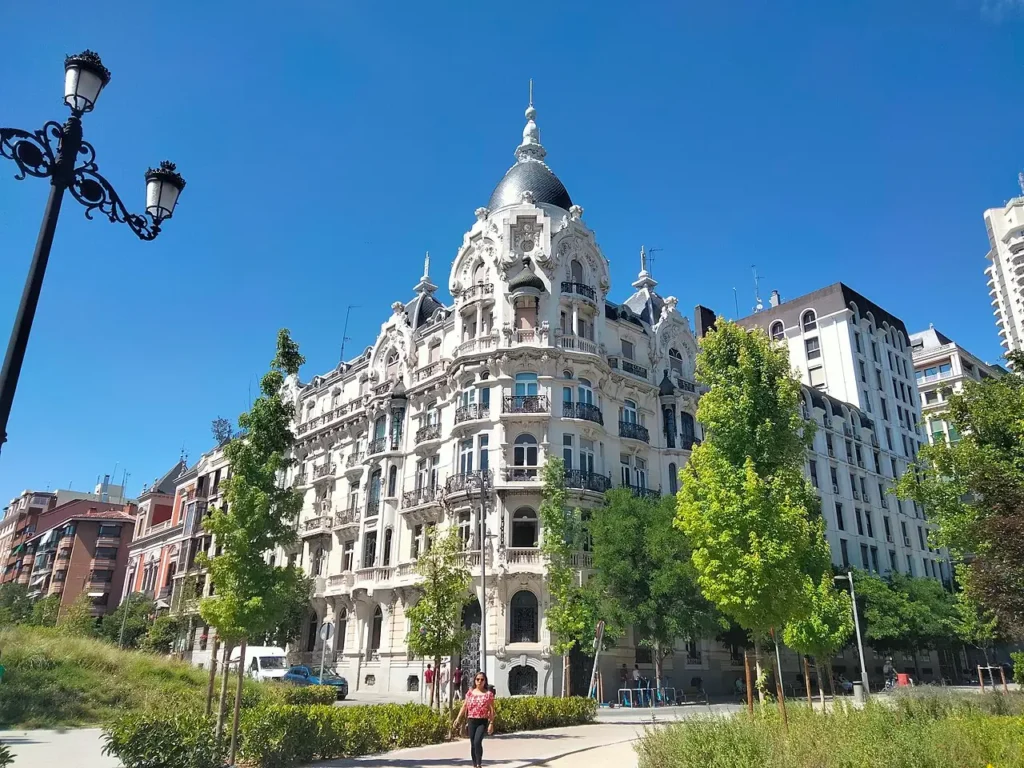
As you approach the square, look up at Casa Gallardo, a remarkable Art Nouveau building located on the corner. With its elegant balconies and intricate sculptural details, it provides a beautiful contrast with the more modern buildings surrounding it.
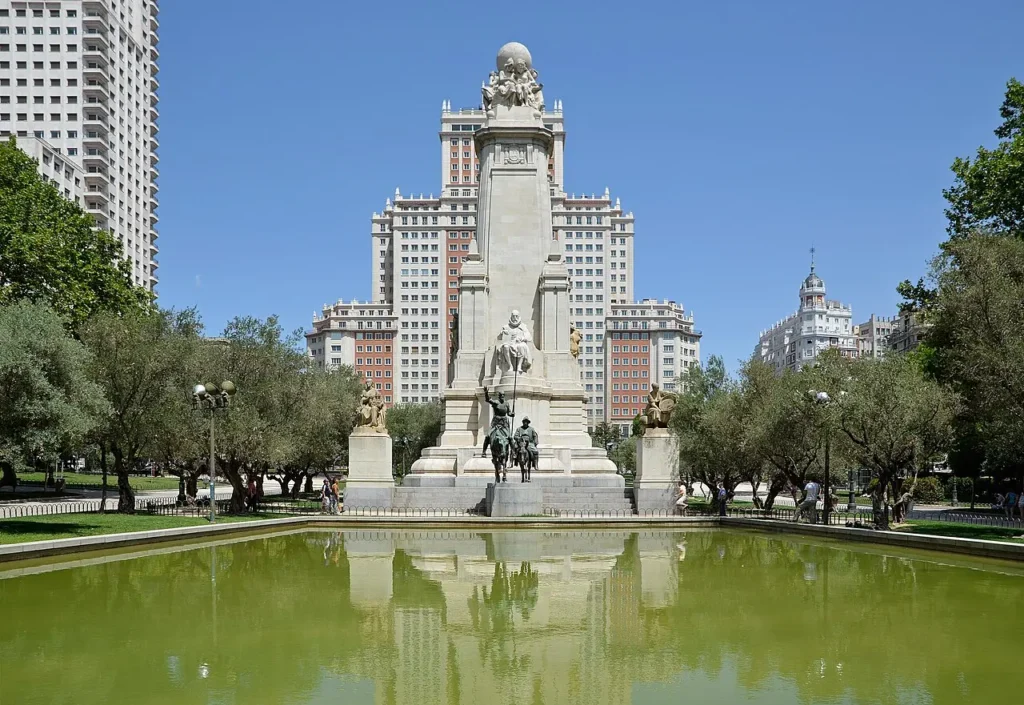
You’ll then arrive at Plaza de España, which has been extensively redesigned in recent years to create more green spaces and pedestrian areas. Its main attraction is the majestic Monument to Cervantes, dedicated to the famous Spanish writer. At its base stand statues of Don Quixote and his faithful companion Sancho Panza, two characters that have become universal symbols of Spanish literature.
Before leaving the square, take a moment to admire the imposing Edificio España, one of Madrid’s most iconic skyscrapers. Standing 117 meters tall, it has dominated the square since the 1950s and remains a defining feature of the surrounding cityscape.
- Zarateman, CC BY-SA 3.0, via Wikimedia Commons
- Enric, CC BY-SA 4.0, via Wikimedia Commons
- Selbymay, CC BY-SA 3.0, via Wikimedia Commons
Where to Take a Break?
- Asgaya Cervecería
- Terracotta Plaza de España
- Descaro Restaurante
- Botania
- Café de Cervantes
My TravelOptim Tip
For one of the best photos of Plaza de España, stand facing the Monument to Cervantes and frame the Edificio España in the background. This will give you a great shot featuring two of the most iconic landmarks of this recently renovated square.
9:00 PM – Gran Vía
From Plaza de España, head directly onto Gran Vía, Madrid’s most famous avenue. After a day filled with gardens, palaces, and historic squares, the atmosphere changes completely. Here, you’ll find grand buildings, theaters, illuminated signs, shops, and the lively energy of Madrid at night.
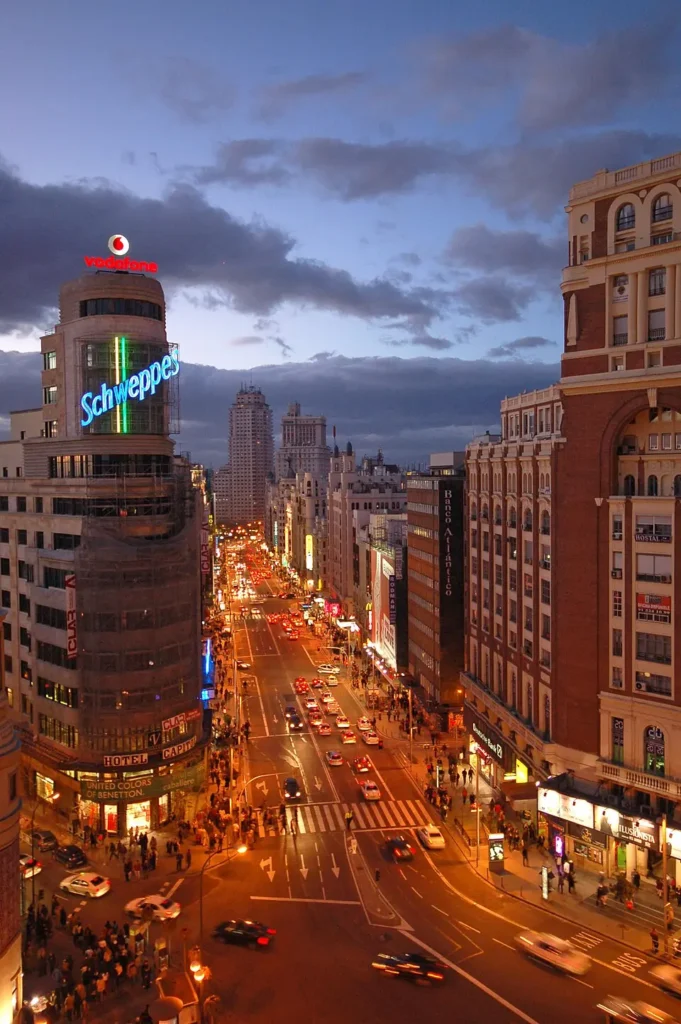
As you walk along Gran Vía, you’ll soon reach Plaza del Callao, one of the busiest and most vibrant intersections in Madrid. Take a moment to admire the famous Edificio Carrión, instantly recognizable by its iconic illuminated Schweppes sign, which has become one of the most recognizable images of the Spanish capital.
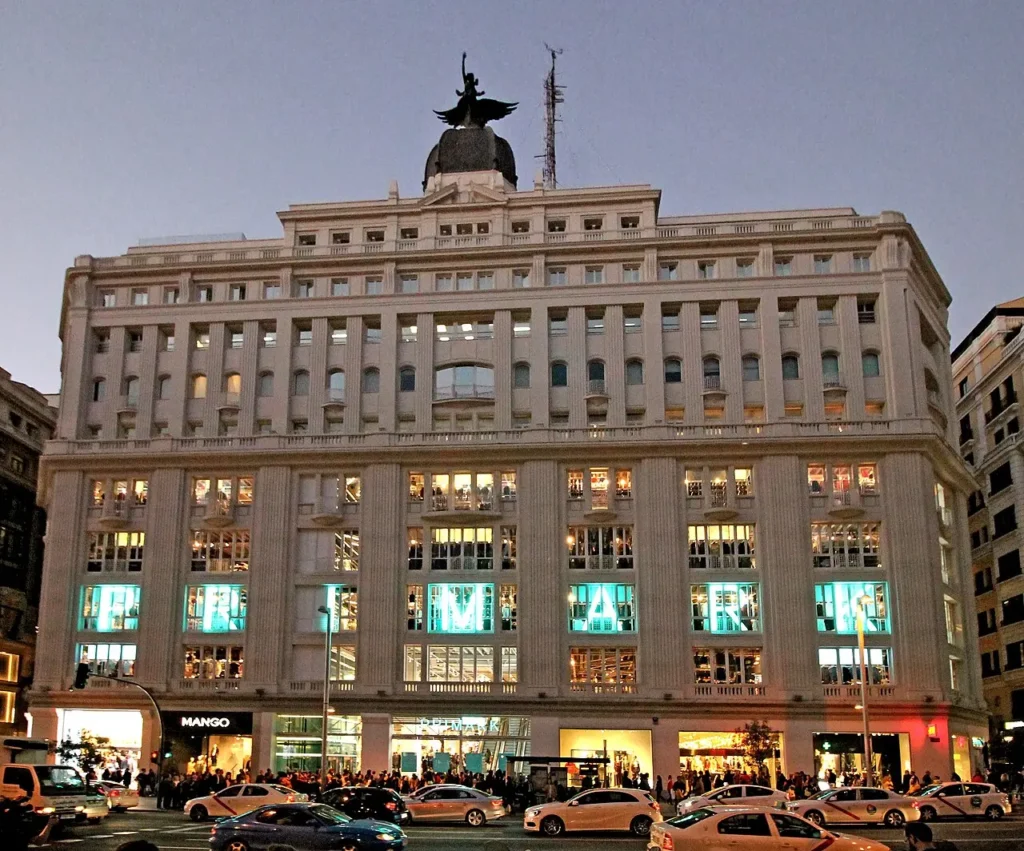
Continue along Gran Vía until you reach the impressive Edificio Madrid-Paris, whose elegant white façade is now home to the largest Primark in Spain. It’s a popular stop for anyone interested in shopping.
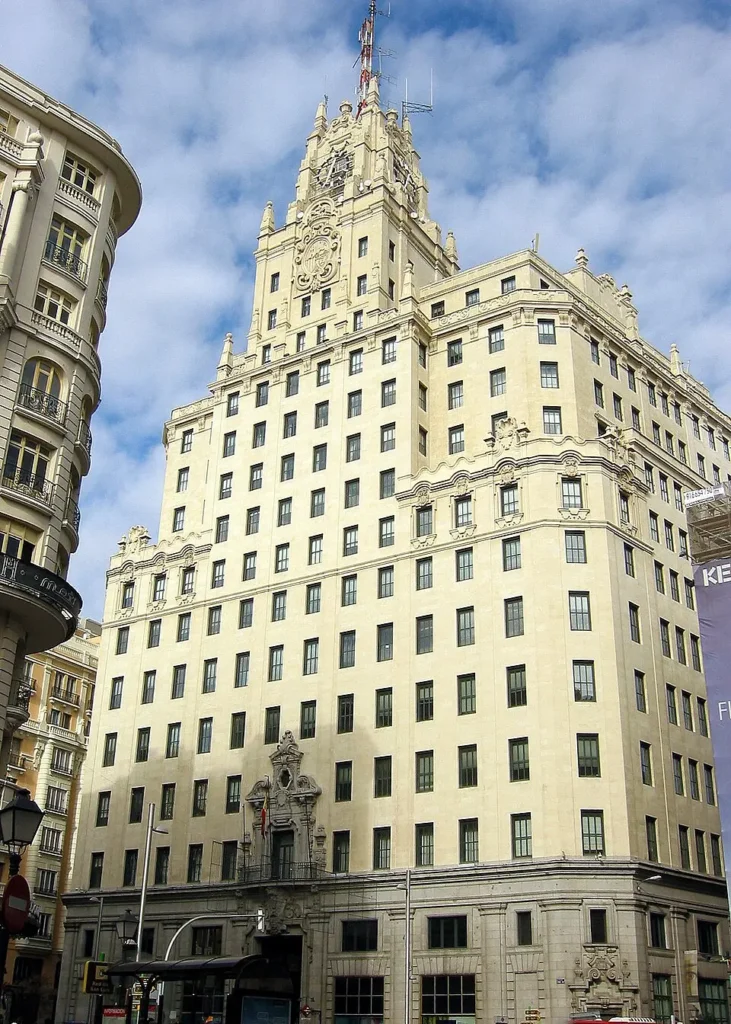
A few steps farther on, you’ll pass the Edificio Telefónica, Madrid’s first skyscraper and a symbol of the city’s modernization in the early 20th century. Its distinctive silhouette still dominates this section of the avenue and signals your arrival at Gran Vía metro station, served by Lines 1 and 5, where this itinerary comes to an end.
After a full day of exploring Madrid on foot, you’ll find yourself right in the heart of the city, surrounded by shops, restaurants, and theaters—the perfect place to continue your evening, depending on how much energy you have left.
- César Astudillo, CC BY-SA 2.0, via Wikimedia Commons
- Luis García, CC BY-SA 4.0, via Wikimedia Commons
- Manuel M. Vicente from Spain, CC BY 2.0, via Wikimedia Commons
Where to Take a Break?
- Oven Mozzarella Gran Via 55
- Chocolatería VICENS
- Ella Sky Bar Madrid
- llaollao
- Gran Café Shanghai
My TravelOptim Tip
Gran Vía is one of the best places in Madrid to do some shopping at the end of the day. Major stores such as Primark, Zara, Mango, and Stradivarius generally stay open late, often until around 10:00 PM. This makes it a great option if you’d like to end your itinerary with a little shopping without cutting into your sightseeing time.
Explore the Full Itinerary on the Interactive Map
Explore all 10 stops on your Madrid one-day itinerary using an interactive map. The route covers approximately 9 km (5.6 miles), from Retiro Park to Gran Vía, highlighting major landmarks, metro stations, and recommended places to stop for food or drinks.
Zoom in on different neighborhoods, discover nearby attractions, and use the map on your phone to follow the route at your own pace.
You can plan your day in advance and navigate Madrid more easily once you’re there.
In Conclusion
In just one day, you’ll have discovered some of Madrid’s most iconic landmarks, wandered through its beautiful squares, explored the historic Royal Quarter, visited one of its renowned museums, and ended your day on the famous Gran Vía. Of course, Madrid has much more to offer, but this itinerary provides an excellent introduction to the Spanish capital.
Feel free to adapt the route to your interests, schedule, and travel style. The recommendations throughout the itinerary are designed to help you make the most of your visit while giving you the freedom to enjoy Madrid at your own pace.
Plan Your Trip with the TravelOptim Madrid App
Want to explore more of Madrid or create a personalized itinerary?
I created TravelOptim Madrid, an interactive web app that helps you discover the city’s must-see attractions, explore ready-made itineraries, view places on an interactive map, and build your own list of places to visit.
Accessible directly from your browser, with no download required, it can help you organize your trip before you leave and guide you as you explore Madrid.